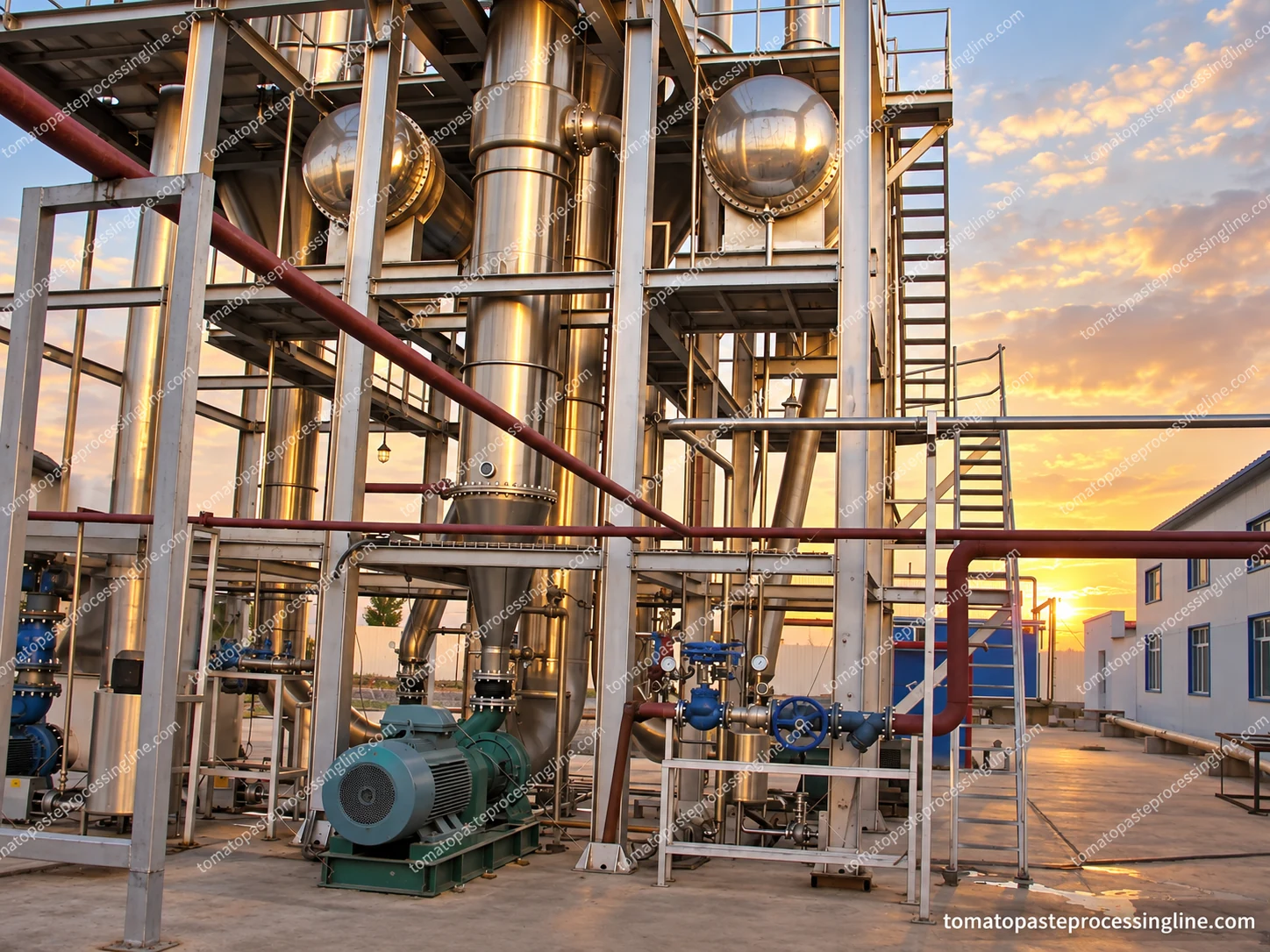
Define the actual feed to the evaporator
The concentration section receives refined pulp rather than the entire incoming crop. Sorting, skins, seeds and preparation losses have already changed the mass flow. Use the accepted pulp rate and composition to establish evaporator duty; whole-fruit intake belongs in the upstream balance.
°Brix is a refractometric soluble-solids proxy, not a complete measurement of every insoluble solid or added ketchup ingredient. State the sampling and concentration basis consistently at inlet and outlet before converting a balance into water-removal duty.
Keep concentrate moving through the heated section
Forced-circulation arrangements use a pump-driven circuit to move product through the heat-transfer section and connected evaporation vessels. This is a relevant equipment-family option for tomato paste and other viscous concentrates. Product behaviour at the highest intended concentration governs the final choice.
Falling-film configurations serve lower-viscosity duties within the wider family. Select a single- or multiple-effect arrangement around the feed, required water removal and available utilities. The heat-transfer and circulation arrangement must remain suitable as the pulp becomes more concentrated.
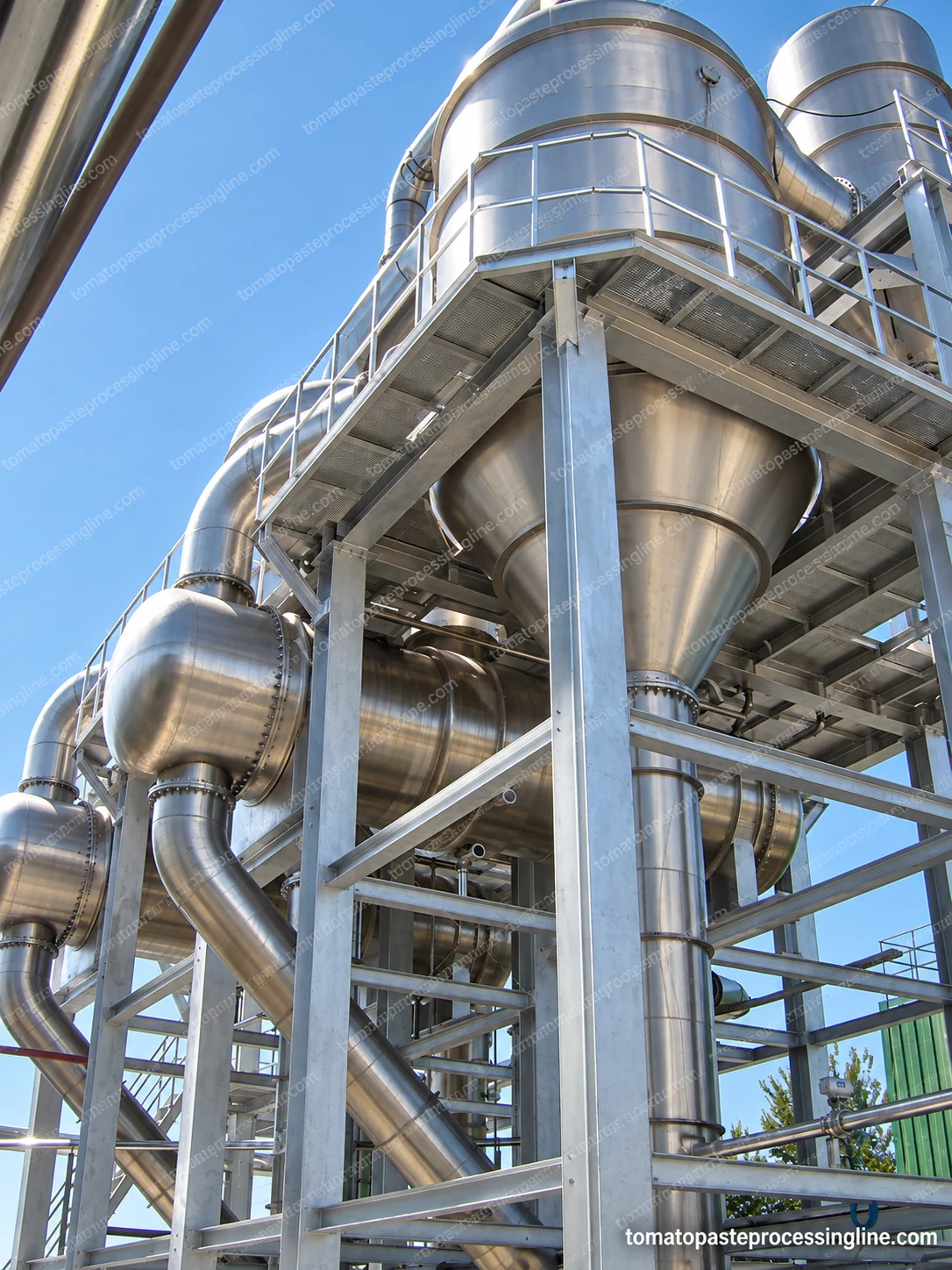
Separate performance points from utility conditions
| Specification item | State the basis | Use in design |
|---|---|---|
| Evaporation rate | Water removed, kg/h, at defined inlet and outlet conditions | Heat-transfer and vapour-handling duty |
| Concentrate rate | Product mass or volume flow with its own measurement basis | Outlet pumping, thermal treatment and filling |
| Heating and cooling services | Available pressure, temperature and flow | Heating, condensation and vacuum arrangement |
| Viscosity and fouling | Representative concentrated product and run condition | Circulation, passage choice and cleaning interval |
Plan product recovery and cleaning around the assembly
Include startup dilution, unstable operating material, shutdown recovery and cleaning returns in the piping arrangement. A nominal steady-state balance omits these streams unless they are explicitly measured. They affect useful production time and the amount of saleable product.
Leave service access to the circulation pump, instruments, lower connections and elevated vessels. The final construction and installation drawings should identify platform clearances, loads, drains and removable maintenance components.
Further detail
Questions about this equipment and process
Does a 5 t/h fresh-tomato line require a 5 t/h paste evaporator outlet?
No. Refined feed, removed water and paste output are different streams. Their relationship depends on composition and the losses or rejects upstream.
Should a bought-in paste ketchup line include evaporation?
Usually the purchasing task is formulation from an existing concentrate. Add concentration only if the intended recipe and process require a separate water-removal duty; do not import the fresh-fruit line by default.