Move the harvest without feeding the defects
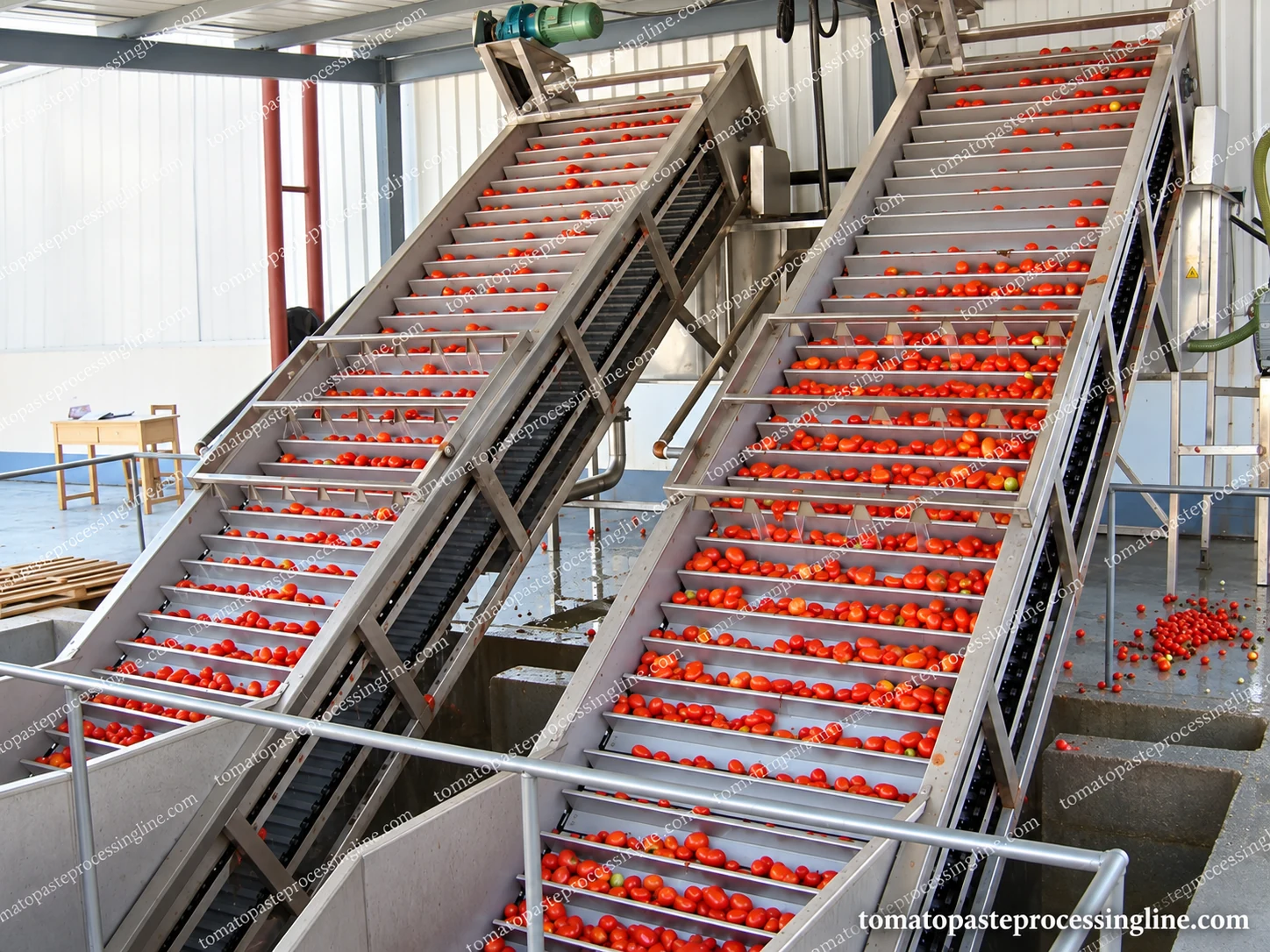
Receiving and elevation bring tomatoes to the washing and inspection section. Controlled transfers reduce unnecessary drops and keep the downstream crusher supplied evenly. Spray washing removes loosened surface contamination; inspection removes unsuitable fruit and foreign material before they enter the pulp stream.
The belt width, elevation, transfer height and accessible working space follow the plant arrangement. Fruit intake is a mass rate before sorting and skin-and-seed removal. It should remain visible in the production record even when the process instruments downstream measure liquid flow.
Create the pulp that the evaporator can handle
The knife crusher opens the fruit and releases juice and pulp. Transfer from crushing into break treatment is part of the process design: time, temperature and flow history influence texture before the material reaches the pulper. Hot-break and cold-break operation are selected for the intended product, rather than sold as different end products.
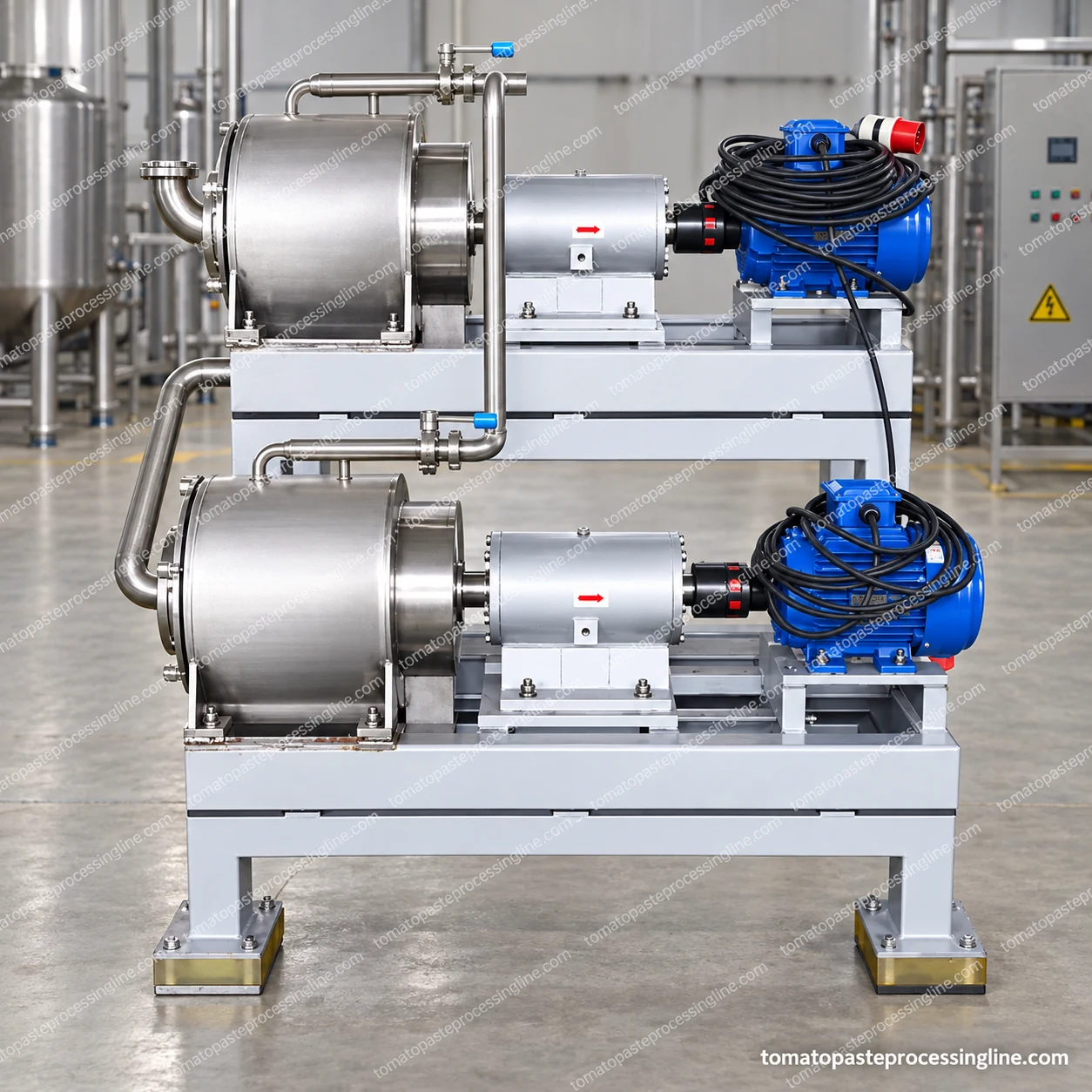
The pulper and finisher separate screened pulp from skin, seeds and coarse material. A two-stage assembly allows coarse separation followed by finer finishing. Screen selection and loading affect texture, reject moisture and the amount of material available for concentration. Buffering then steadies the evaporator feed without treating a storage tank as additional processing capacity.
Size concentration by the water that must leave
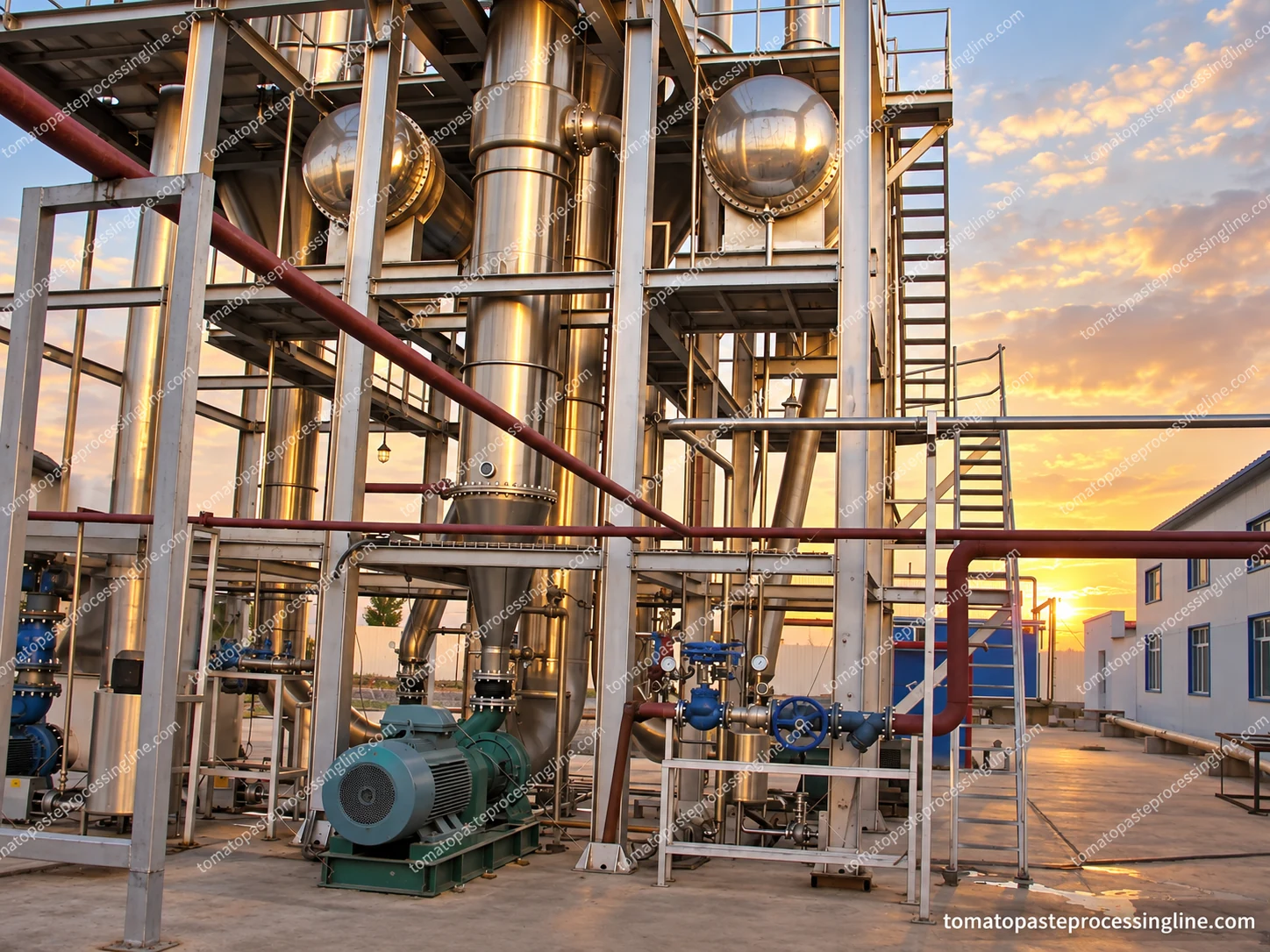
Screened feed enters a vacuum evaporation system selected for its viscosity, suspended material, concentration range and fouling behaviour. Feed flow, concentrated-product flow and evaporated-water flow are different duties. Raising the outlet concentration increases the water-removal requirement for the same inlet stream.
Circulation, vapour separation, condensate removal and vacuum operation must work together as the product thickens. Heating surfaces and the cleaning circuit are selected with the intended run length and product condition in view. The operating envelope includes startup and reduced-feed operation as well as the normal production point.
Connect the paste outlet to a defined packaging process
Concentrated paste is pumped through the selected continuous thermal system, with heating, holding and cooling coordinated with product flow. The final treatment is established for the actual product and packaging process; the earlier break step serves a different purpose.
For aseptic bags, the product connection, filler operating state, bag spout and changeover sequence must preserve the intended sterile boundary. Container handling and filling cycles also affect sustained output. A large upstream evaporator cannot compensate for a filling station that repeatedly stops the product stream.
Make cleaning and access part of the line
A complete arrangement separates open fruit handling from closed pulp, concentration and thermal circuits. Belts, rollers, guards and removable screens need physical cleaning access. Closed pipework and vessels need defined CIP supply and return paths, drainage and verification points.
Engineering connects the process layout to steam or hot water, cooling, suitable process water, compressed air, drains and electrical services. Commissioning then checks coordinated feed control, transfer levels, thermal response and packaging interruptions against the agreed tomato and paste specifications.
Further detail
Questions about this equipment and process
Can the line also supply screened tomato puree?
A puree outlet can be considered before concentration, with its transfer, final treatment and packaging requirements defined separately. It is not enough to bypass the evaporator and assume the paste packaging process remains appropriate.
What starts the line sizing?
The fresh-fruit intake profile, usable processing hours, representative tomato condition and required paste specification. Screened-feed solids and losses then connect intake to evaporation and packing duty.