Compare products at the same concentration and test condition
Hot-break processing generally favours retention of a thicker tomato structure, while a lower-temperature break route can serve products with different texture and sensory priorities. The final result also depends on the tomato variety, maturity, solids, screening and downstream heat history. A route name alone does not specify viscosity.
A useful comparison uses samples at the same concentration and measurement temperature, with a consistent test method. Apparent viscosity and flow behaviour depend on the measurement conditions; colour and separation tendency add information that one consistency number cannot provide.
| Decision | Relevant observation | Process consequence |
|---|---|---|
| Thicker structured base | Consistency at a defined concentration and test temperature | Coordinate break response, particle handling and finishing |
| Lighter or differently textured base | Texture, colour and sensory result after the whole process | Evaluate lower heat exposure with the required later treatment |
| Repeatable seasonal operation | Variation in fruit solids and condition | Use recorded feed and heat conditions rather than a route name alone |
The interval after crushing is part of the design
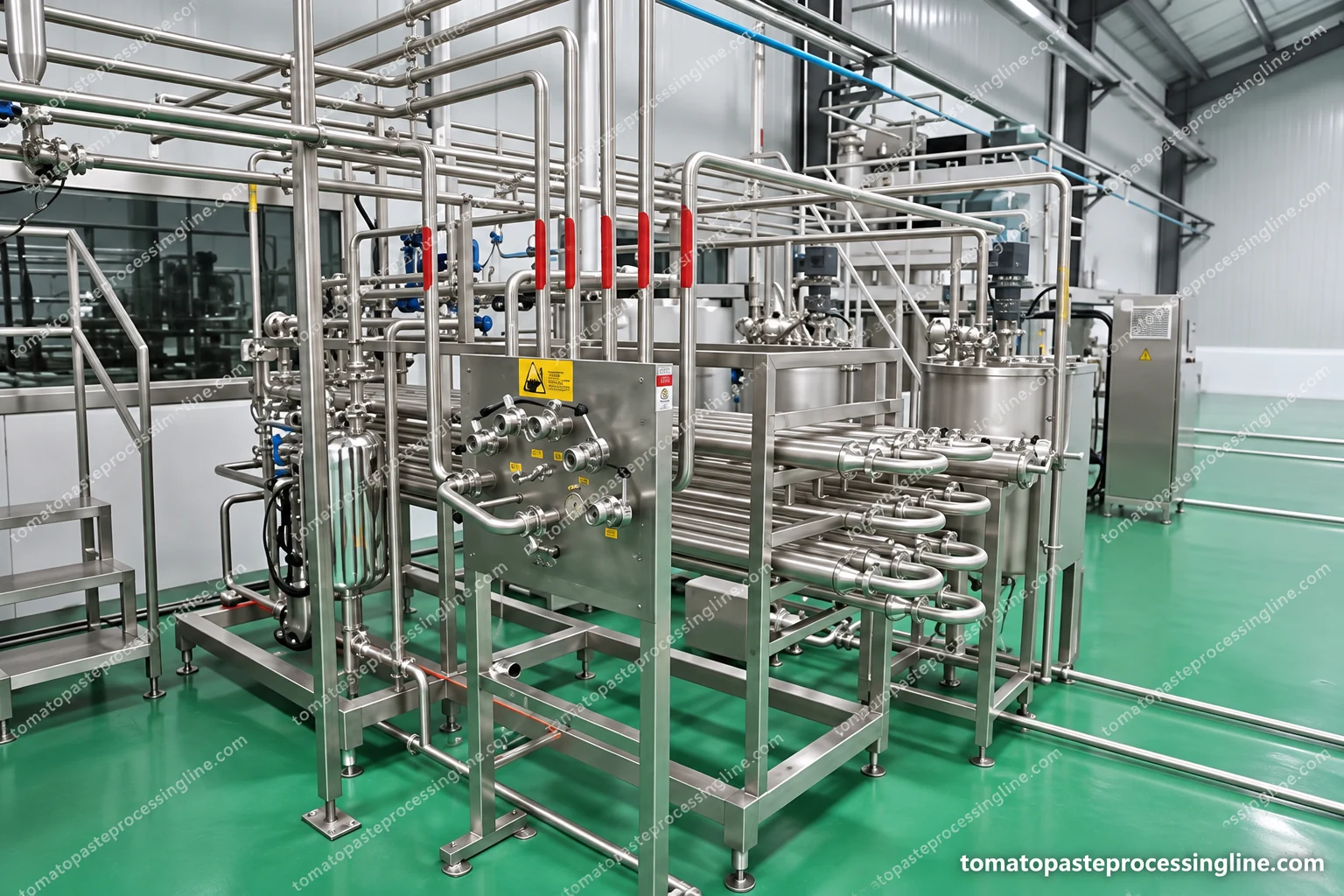
Crushing mixes the tomato tissues and releases the material that then passes through the break system. Uneven feeding, a long uncontrolled hold or repeated interruptions can change the history before the nominal outlet temperature is reached. The crusher, transfer connection and preheater should therefore be treated as a connected section.
Heating response must be considered across the intended flow range. A sensor reading at one position does not by itself describe the treatment received by every part of a variable, pulpy stream. Flow measurement, pipe configuration and the selected holding arrangement are part of the operating definition.
Carry the texture decision through pulping and evaporation
A fine screen changes the particle population that contributes to tomato texture. Aggressive finishing, a changing feed condition or excessive reject can alter the base before evaporation. Increasing the concentration may make a product thicker, but it does not reproduce the same particle and pectin history.
The selected evaporator must handle the consistency produced upstream. A thicker pulp can affect circulation and heat transfer. Representative product trials and comparable inlet and outlet measurements connect the break choice to an evaporation operating window.
Keep break treatment separate from final preservation
Break treatment is a front-end quality operation. Final thermal treatment is established for the finished product and package, with its own flow, holding and operating controls. A chosen break condition does not replace the final process definition.
During commissioning, useful records connect fruit condition, crusher feed, preheater response, screen selection and final consistency. Changing several of these at once makes a thin or variable paste difficult to diagnose.
Further detail
Questions about this equipment and process
Can one temperature define hot break for every tomato?
A usable process definition includes the material, heat-up behaviour, time, flow and intended product properties. The selected operating schedule should be assessed on representative tomatoes and the complete process, rather than copied as a universal temperature.