A reprocessing route from a concentrated ingredient
The reported equipment scope begins with paste unloading and suction transfer, followed by dilution, blending and cooking. The prepared product then passes through tubular thermal treatment before the can-filling and seaming operations.
Spray postpasteurization and cooling, drying, coding and packing complete the reported sequence. CIP and the supporting water and compressed-air systems form part of the project description.
Filling heads work within a container-handling system
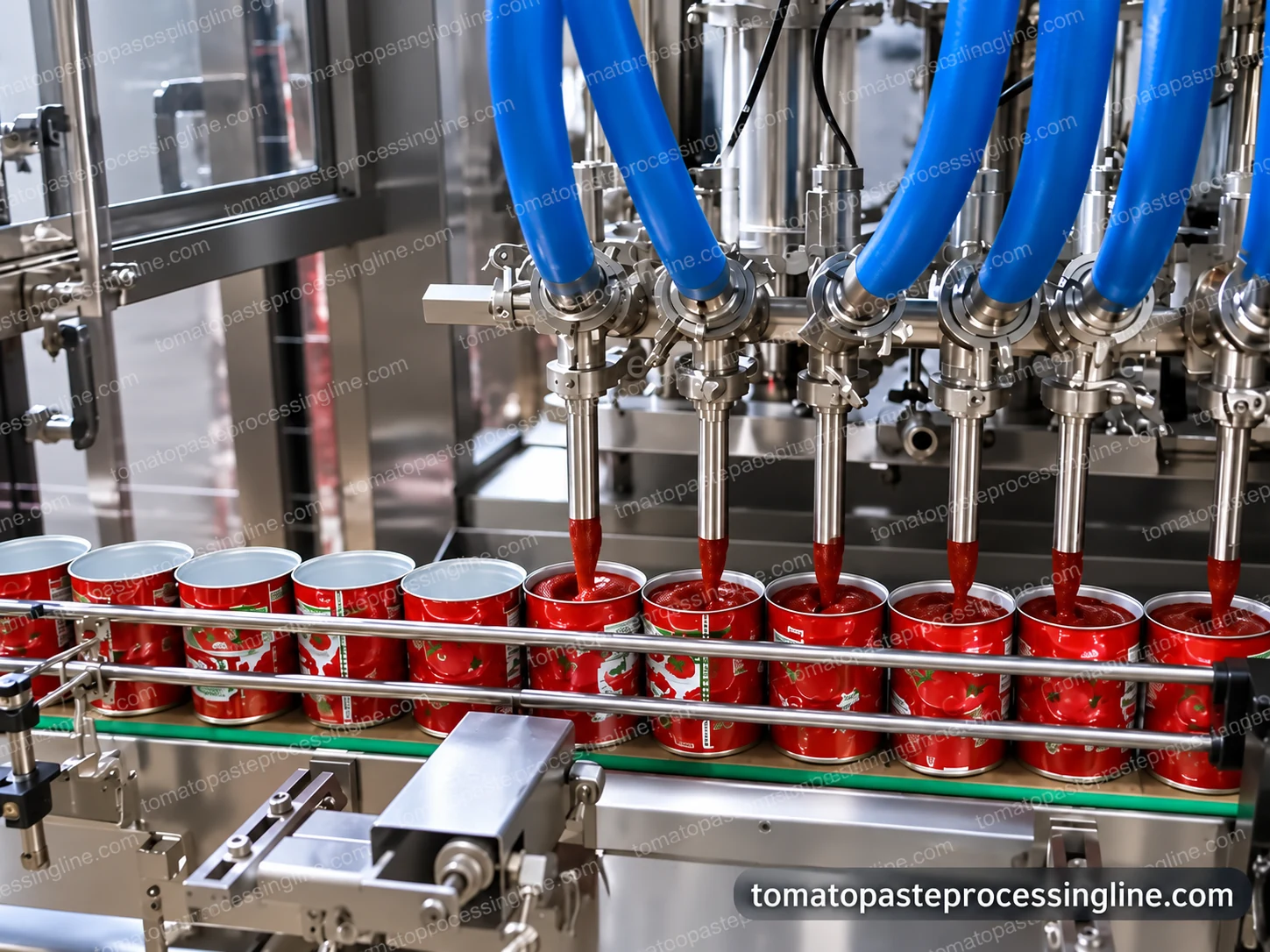
The filling image shows several nozzles positioned over cans on a conveyor. Product supply must remain stable while the containers enter, fill and leave the station. The upstream mixing and heating arrangement therefore needs to support the packing sequence, including its interruptions.
The two reported can sizes require their own filling and handling settings. Comparing containers per hour without the net fill mass would hide the product-flow difference between those formats.
The input material determines which plant sections are needed
Purchased paste already contains the concentrated tomato base. This purchase task therefore centres on unloading, recipe processing and packaging rather than fresh-fruit washing, pulping or evaporation.
For a similar project, the useful engineering starting points are the paste specification, intended recipe, chosen container and production schedule. Those conditions connect the batch preparation cycle to the continuous heating and filling demand.
Apply the example to a defined new configuration
The project provides a concrete example of bulk-paste reprocessing and can filling. A new line uses its own product, package and utility definition to establish equipment sizes, the thermal process and operating sequence.
The same comparison should include cleaning access, format change parts, closure inspection and the handover records. These details turn a list of machines into a workable production scope.
The reported line starts with bulk paste and ends with cans
The reference receives tomato paste in 200 L / 220 L aseptic bags and reports 400 g and 2.2 kg tin cans as finished formats. Its stated 1 t/h is a reported line reference, without a disclosed recipe, timed acceptance run or pack-specific sustained rate. The incoming bags do not identify an aseptic bag filler supplied in this can-line scope.
| Part of the reported route | Reported scope | Boundary to confirm for a new purchase |
|---|---|---|
| Purchased paste preparation | Unloading/suction transfer, dilution, blending and cooking | Incoming paste specification, formulation and batch schedule |
| Heating and retail packing | Tubular thermal treatment, can filling and seaming | Validated recipe, net fill and container/closure specification |
| Finishing and support | Spray postpasteurization/cooling, drying, coding, packing, CIP and supporting services | Thermal schedule, utilities, site connections and acceptance ownership |
September 2022 is the supply reference, not a complete chronology
The available project description identifies September 2022 as the supply date. Contract, shipment, installation, commissioning and customer acceptance dates are not individually disclosed. There is no basis here for turning the supply date into a signed startup milestone.
The retained can-filling image is a presentation retouch of the project material. It illustrates the packing arrangement, rather than a witnessed production run or proof of fill accuracy. No verified running video, original FAT/SAT sheet, customer signoff or measured output result is supplied in the inspected material.
Use the reference to define the next supply scope
A similar enquiry can identify the purchased paste, intended tomato ketchup or base, can format and required operating schedule. Keep formulation and thermal-process responsibility explicit. Chili-sauce recipes and particulate handling require a separate product brief; this reference establishes no result for those products.
Further detail
Questions about this equipment and process
Does this case include processing fresh tomatoes into concentrated paste?
The reported input is already-concentrated paste in aseptic bags. Fresh-fruit preparation and evaporation are a separate supply task.