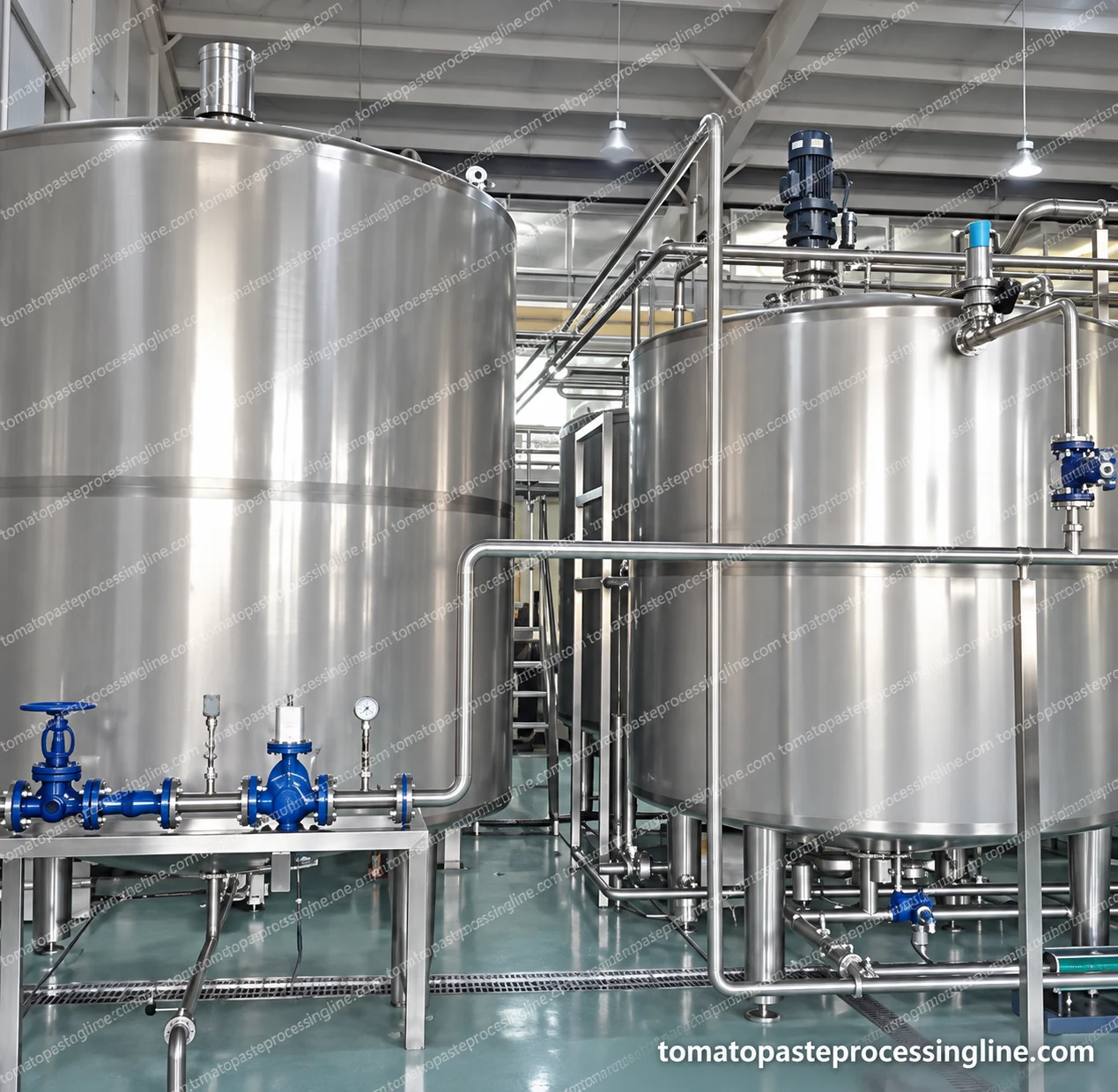
Use the volume available during production
The useful buffer is the volume between selected low and high operating levels, not the entire geometric vessel volume. Size it against the temporary difference in incoming and outgoing flow and the permitted product residence.
Level measurement connects the tank to upstream feed and downstream pump control. Define which operation slows or stops at each limit, how the buffer empties at shutdown and where the remaining product is recovered.
Select transfer for pulp and paste separately
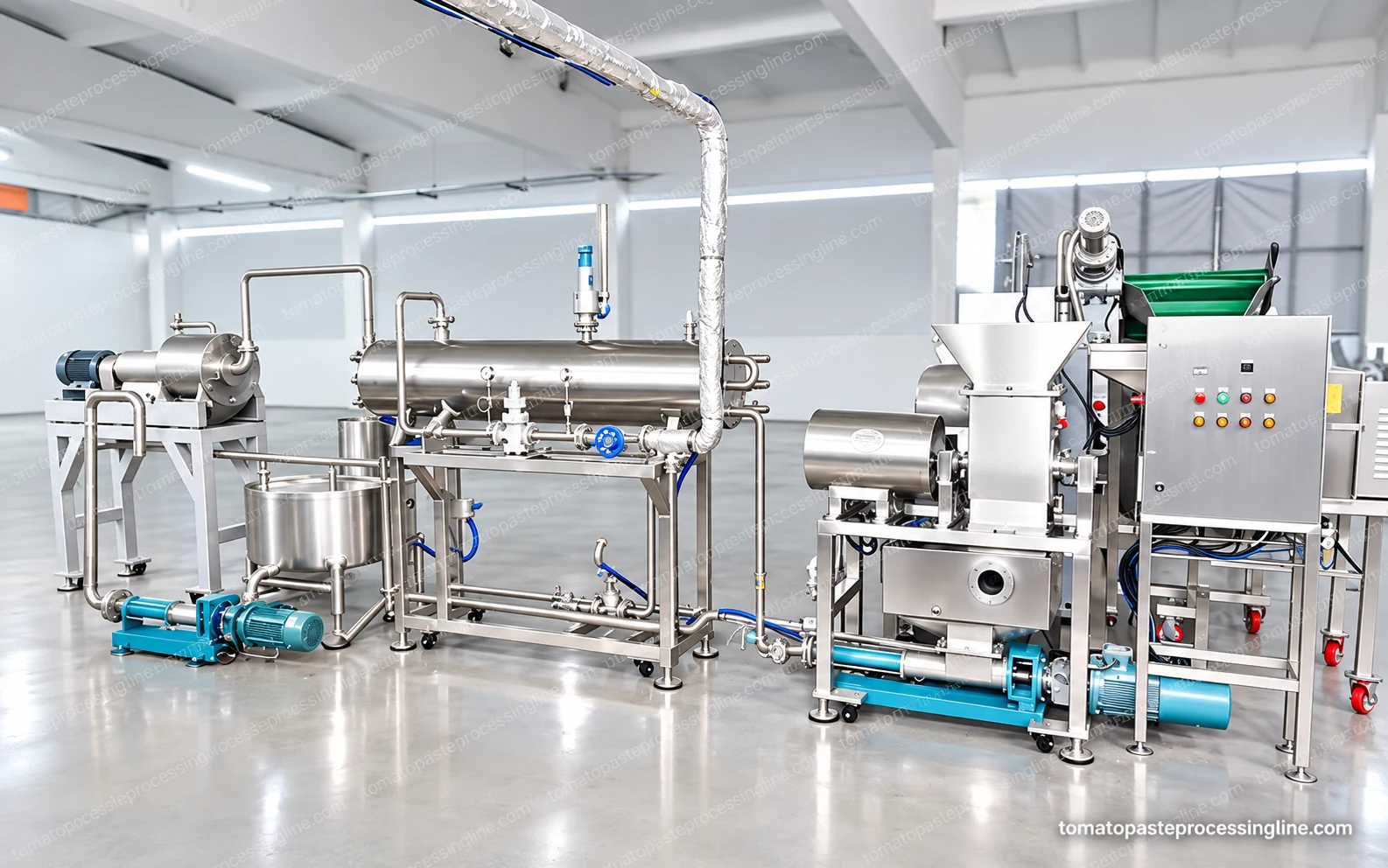
Screened tomato pulp and concentrated paste can require different pumping arrangements. The selected pump must move the actual product through the pipework, valves and next machine at the required flow. Suction condition and low-level operation matter as much as nominal motor power.
The Moldova puree-preparation example reports screw transfer pumps between its processing steps and a buffer vessel. That is a specific transfer application for the supplied preparation section, rather than a single pump specification for every tomato product.
Buffer and transfer interface schedule
| Item | Specify | Operating reason |
|---|---|---|
| Working volume | Normal, low and high levels | Absorb the agreed flow mismatch |
| Product properties | Temperature, particles and viscosity | Select pump and product-passage duty |
| Inlet and outlet | Pipe connections, pressure and destination | Keep the next machine supplied predictably |
| Cleaning and draining | Supply, return and product recovery routes | Avoid retained product in isolated branches |
Make the vessel and connections serviceable
Access to lids, drives, seals, outlets and instruments should remain clear after neighboring machines are installed. Mixing, heating or cooling is selected for the process need; working volume, impeller geometry and jacket arrangement are specified in the chosen vessel design.
At each product change, verify the transfer route as well as the tank interior. Product held in a valve branch or pump can affect the next batch even when the main vessel has been drained.
Further detail
Questions about this equipment and process
Can a pulp pump automatically be reused for concentrate?
Only after checking the concentrate viscosity, temperature, suction condition and discharge resistance. A suitable dilute-pulp duty does not establish performance with thick paste.
Does a larger vessel always improve continuity?
It provides more possible holding volume, but can also extend residence and cleaning time. Useful operating range should address a defined flow mismatch rather than simply maximize storage.