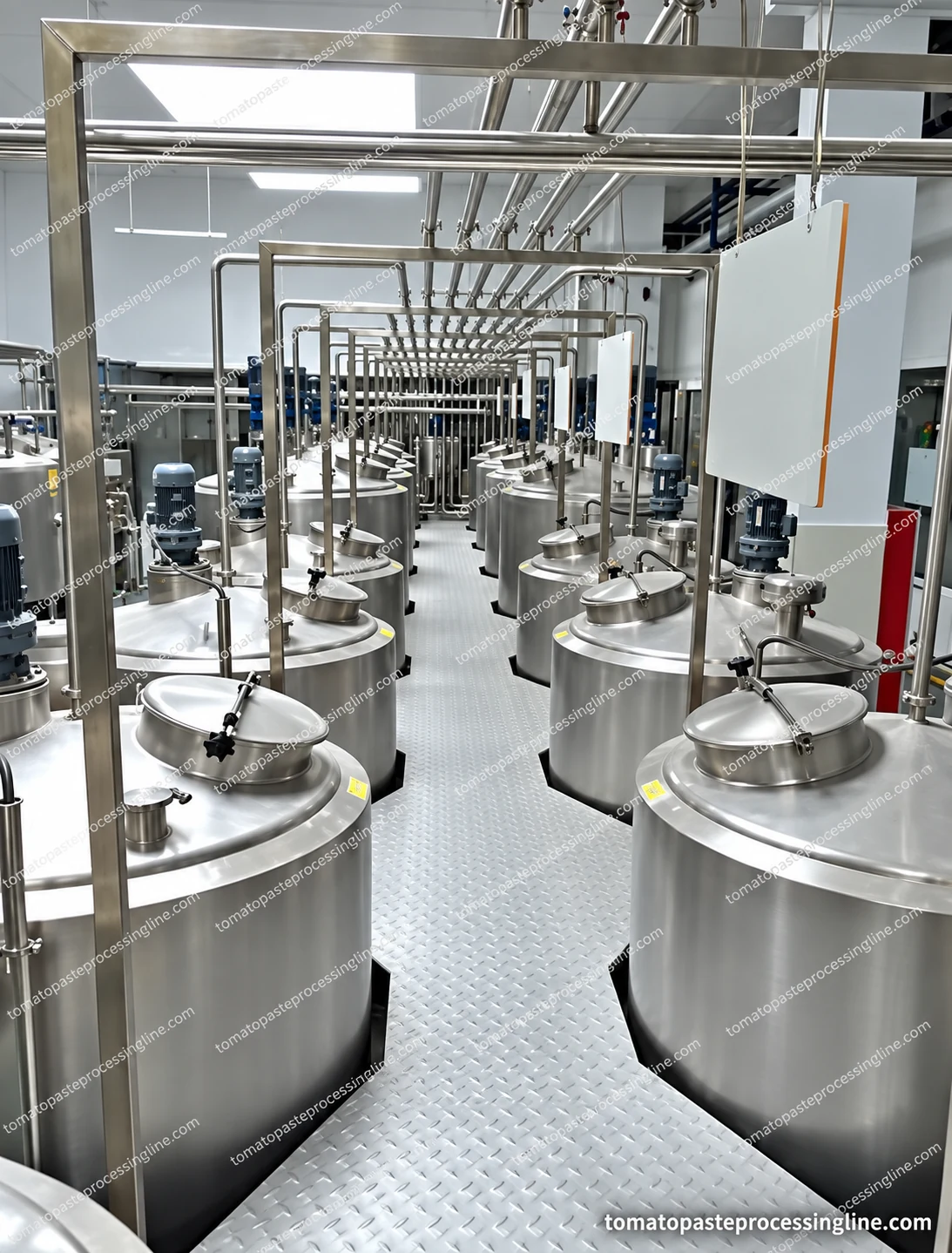
Unload paste into a controlled mixing operation
Bulk containers supply a concentrated and often viscous ingredient. The unloading arrangement must keep the transfer path short, manage the opened bag or container and deliver paste at a rate the mixing stage can accept. Product transfer and container handling are considered together.
Mixing vessels bring paste, water and the specified ingredients into one batch. Usable volume is distinct from total vessel volume: room is needed for additions, circulation and the intended mixing action. A sequence of prepared batches can supply continuous downstream equipment, provided the batch cycle and buffer strategy support that flow.
Set the mixing method from the formula
Sugar and salt dissolution, spice dispersion and the distribution of tomato solids are different mixing tasks. Ingredient size and the permitted finished texture determine whether mixing alone is sufficient or whether further size reduction is useful. Addition order and temperature form part of the recipe process, rather than a fixed instruction for every ketchup.
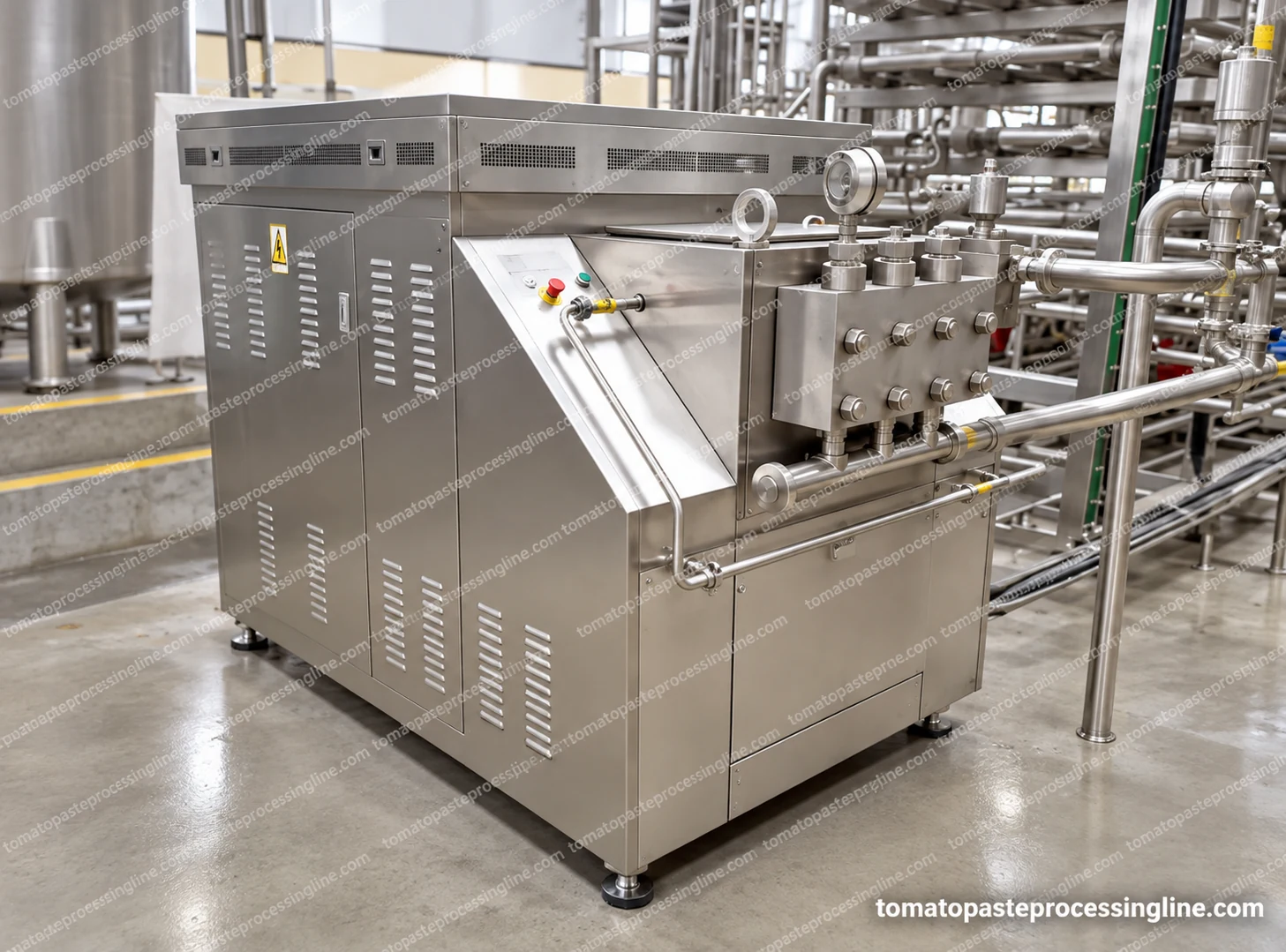
A high-pressure homogenizer provides a defined type of particle and dispersion treatment. It is selected with flow, viscosity, particle size and the desired texture in view. A sauce intended to retain visible pieces should not automatically receive the same finishing sequence as a smooth ketchup.
Control air and heat between the mixer and filler
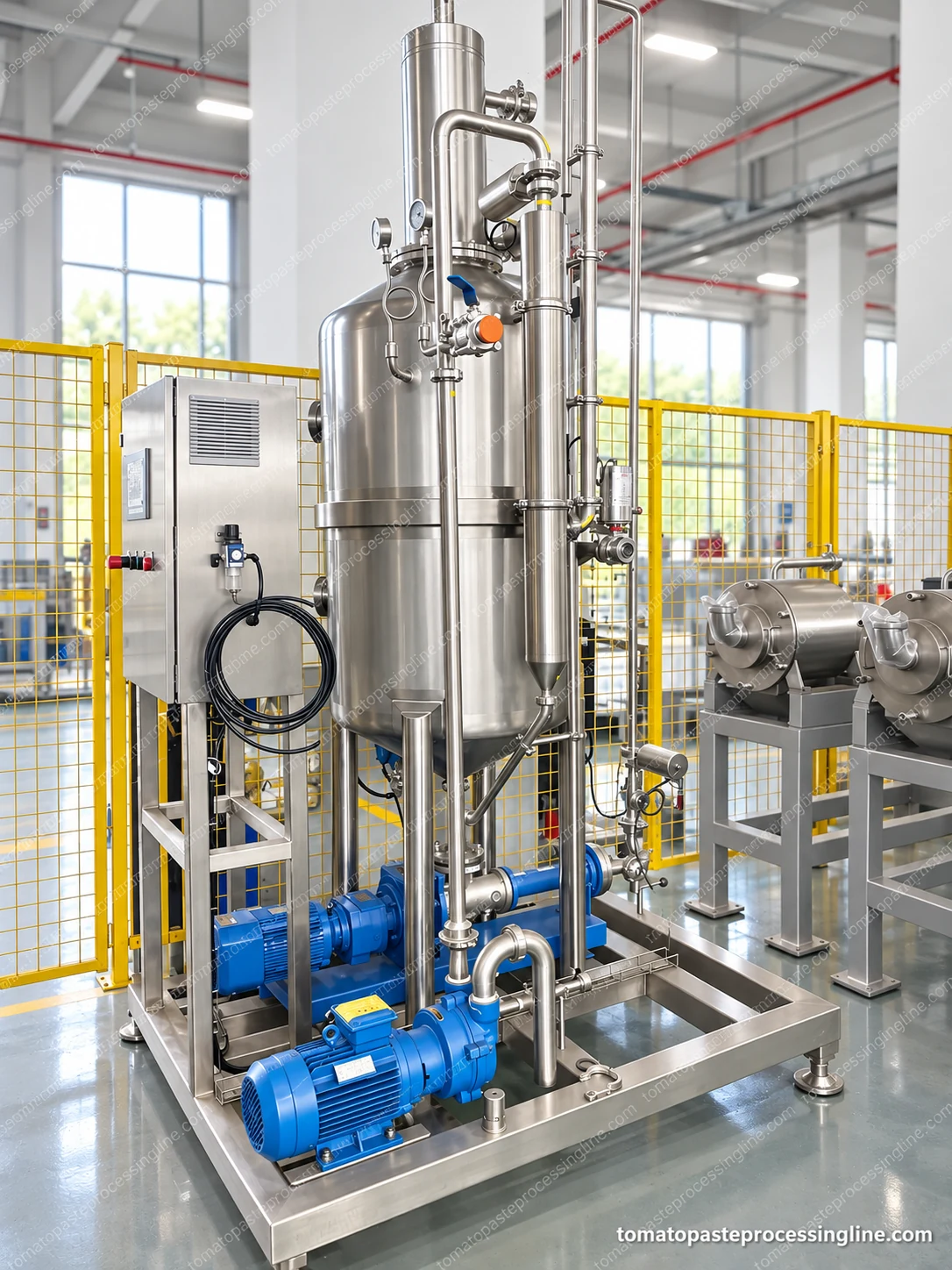
Mixing and ingredient addition can entrain air. Where the product needs deaeration, a vacuum vessel is integrated with feed control, product temperature and the downstream pump. Deaeration is a selected process operation; it does not replace a correct mixing method or provide the final preservation treatment.
Continuous heating is matched to the viscosity and particle condition after formulation. The feed temperature, hold arrangement and cooling or hot-filling interface are coordinated with the finished container. The product specification and a validated process determine the thermal schedule.
Treat the pack as part of the process
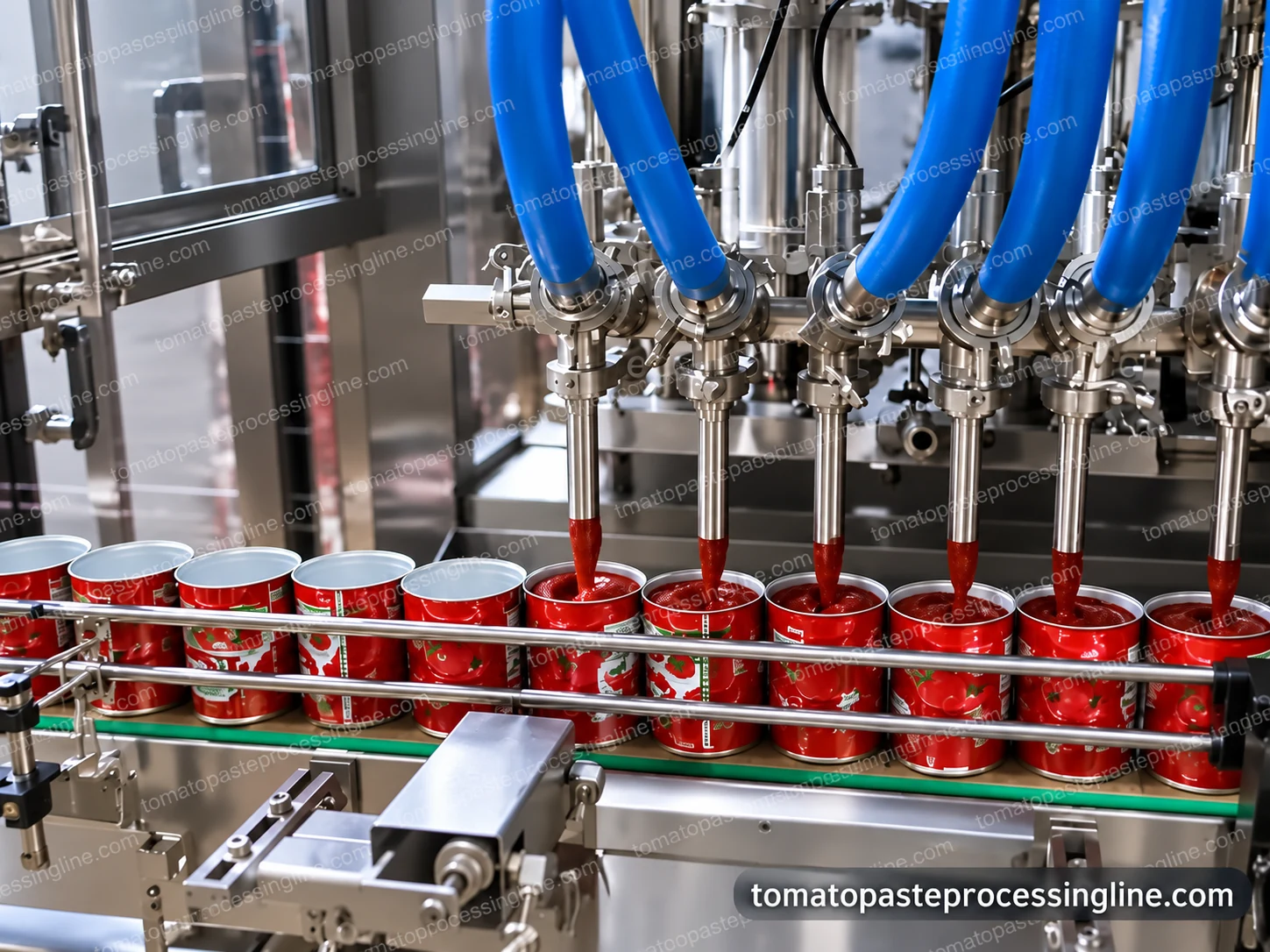
The retail section meters the sauce into the selected container and passes it to the appropriate closure operation. Nozzle geometry, product strings or drips, headspace and container transport matter as much as nominal filling rate. Closure inspection and downstream handling belong in the line definition.
Actual bulk-paste reprocessing experience includes tomato products packed in tin cans. Other formats require their own filling and closing arrangement. A change in pack weight affects units per hour even when product mass flow remains the same; the heating and packing rates must therefore be compared on a common basis.
Plan the batch cycle and cleaning cycle together
Recipe changeovers can involve more than colour. Sugar, salt, spices, oil or other ingredients can change residue behaviour and cleaning needs. The mixer, transfer line, homogenizer and thermal section should be grouped into usable cleaning circuits, with separate access to filling contact parts and container handling.
Engineering establishes batch preparation time, downstream demand, ingredient storage and access for adding materials. Commissioning compares mixing uniformity, texture, stable product feed and package handling with the agreed recipe and production sequence.
Further detail
Questions about this equipment and process
Does a ketchup line need a tomato pulper?
Not when the purchased paste already has the required refined texture. Extra screening or texture treatment is selected only when an ingredient or finished-product requirement makes it necessary.
Can one mixer supply a continuous filler?
It depends on usable batch volume, preparation and discharge time, filler demand and cleaning sequence. A buffer or alternating batch arrangement may be needed to maintain supply.