Remove residue from open conveyors and washing equipment
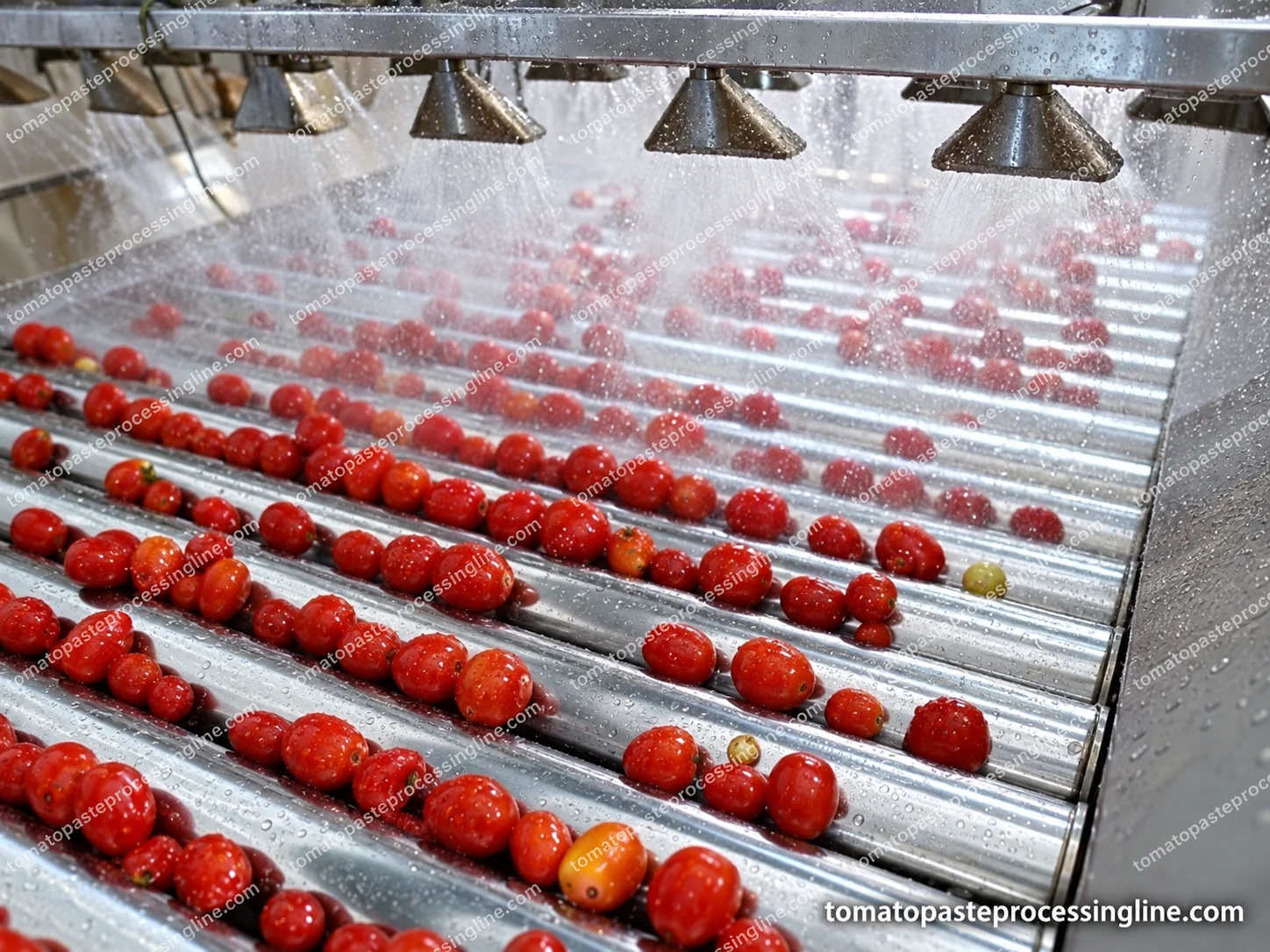
Fruit fragments and loose material collect at transfers, beneath belts and around rollers, spray fittings and drains. Cleaning access is designed into guards, collection areas and the space below equipment. Drainage should carry the removed material away without creating a persistent pool beneath the product route.
The inspection conveyor also needs access to the return side and the areas beside the working surface. Spraying the visible top surface alone does not describe a complete cleaning operation. Access and safe isolation follow the installed equipment instructions.
Inspect the parts that separate skin and seeds
The crusher and pulper bring the product into contact with working elements and screened passages. Screen perforations, seating surfaces, residue exits and covers deserve attention when the equipment is opened. Skin and fibres can remain in locations that are poorly represented by the clarity of a final rinse.
After cleaning, inspection and correct assembly restore the intended separation paths. The layout leaves room to withdraw and handle the screen without obstructing another machine. Appropriate spare screens and wear parts can be identified from the actual installed configuration.
Define CIP by its complete circulation path
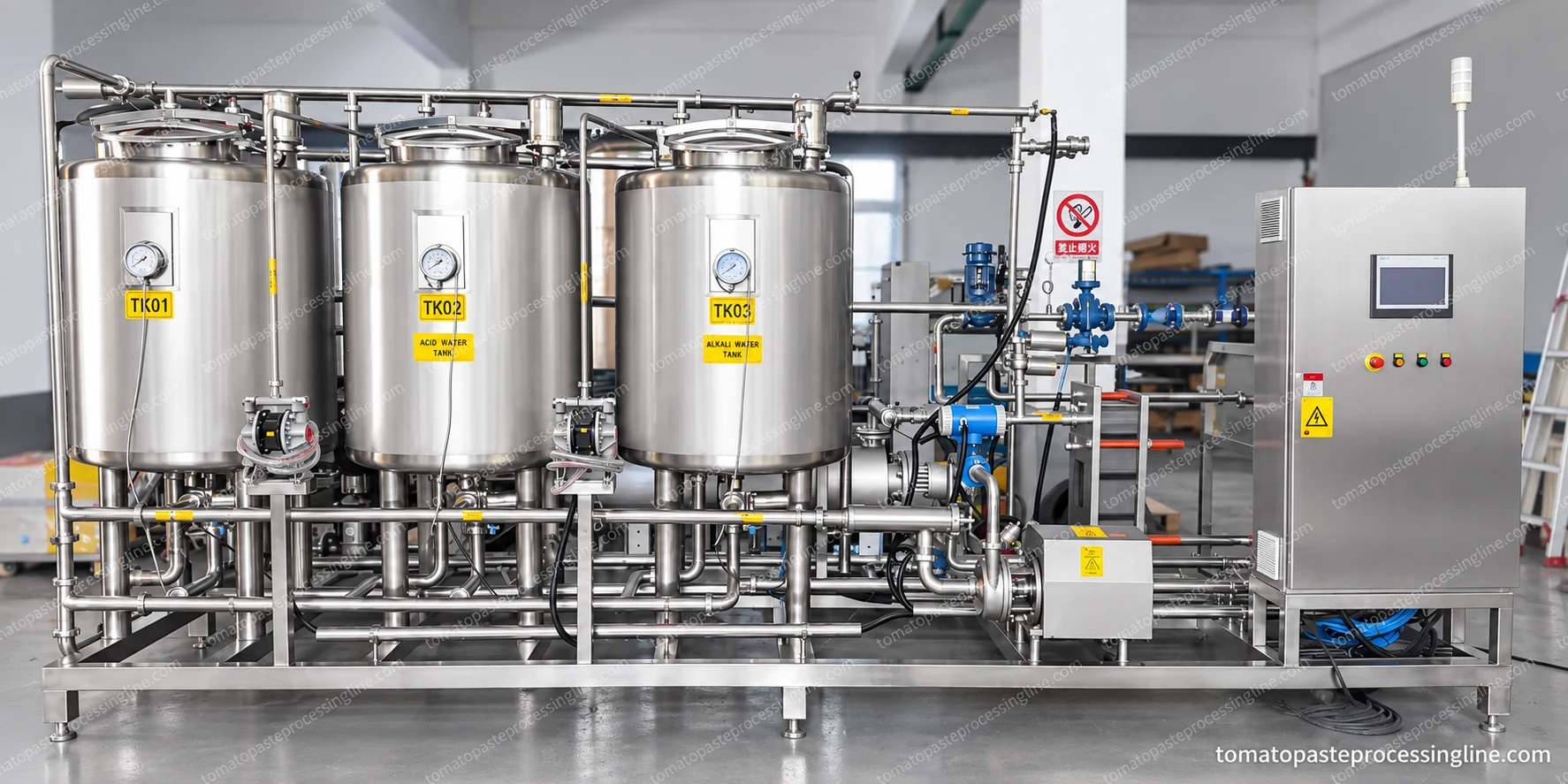
Vessels, product pipework, evaporation equipment and thermal systems need selected cleaning circuits with a supply, a return and defined valve states. Circuit length, restrictions, temperature response, contact coverage and drainage affect how the cleaning operation works. The station and the connected equipment are sized as a system.
Cleaning parameters follow the actual soil and equipment requirements. Tomato residue, heated deposits and a formulated sauce with added ingredients can require different procedures. Verification should relate the recorded cycle to the circuit being cleaned, rather than assume that a tank marked CIP covers every downstream branch.
| Circuit feature | Design purpose | Operating record |
|---|---|---|
| Defined supply and return | Circulate through the intended equipment | Circuit identity and valve state |
| Heating and chemical preparation | Reach the selected cleaning conditions | Relevant time, temperature and concentration checks |
| Drainable connections | Remove product and cleaning liquid | Drainage and residual-product observations |
| Accessible inspection points | Assess surfaces not represented by one sensor | Inspection and cleaning verification result |
Distinguish recipe cleaning from the aseptic operating sequence
A ketchup changeover can change ingredients as well as tomato colour and viscosity. Mixer, transfer, homogenizer and filler contact parts must be considered together, with the cleaning procedure matched to the recipe and its residues. The product schedule influences how often each circuit is needed.
Cleaning removes product soil; the defined sterilization and aseptic preparation steps serve a different function. Their sequence, interfaces and operating records are established for the selected thermal and filling equipment. Restart requires the relevant line state to be restored, not merely the end of a rinse timer.
Further detail
Questions about this equipment and process
Can the whole line be described as automatic CIP?
Closed process circuits can be configured for CIP. Open fruit handling, removable screens and particular filling or closure parts need their own cleaning and inspection procedures. The selected scope identifies both.