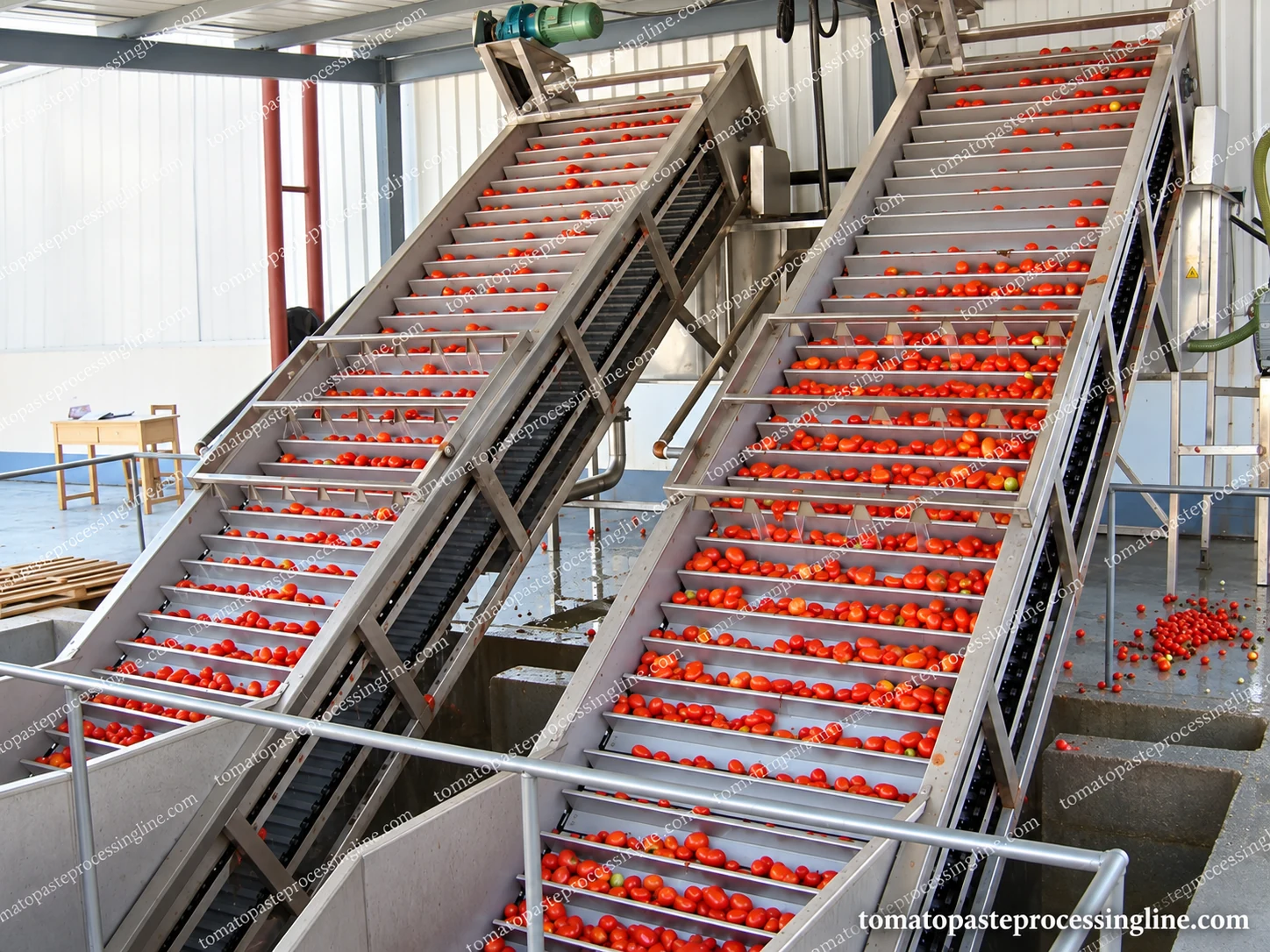
A lift is defined by both ends of the conveyor
The receiving point sets the loading condition; the upper discharge sets the transfer into the next operation. In between, the incline and cleats support fruit as it travels. The photo shows parallel conveyors in an installed handling arrangement, with side containment and access around the drives.
Width, lift height, inclination and conveying speed are coordinated with available space and the accepted fruit size. They should produce a manageable layer rather than a deep pile that rolls back or spills over the sides. A short, controlled discharge helps limit impact on ripe tomatoes.
Match continuous line feed to irregular receiving
Truck or bin unloading can deliver short peaks much larger than the steady process rate. An elevator is a transfer device within that receiving system; its selection should distinguish peak arrival from the intended continuous fresh-fruit flow.
Coordinate starting and stopping with the downstream inlet. If an inspection belt or crusher pauses, the feed response should prevent fruit accumulating at a blocked chute. Define how the retained fruit is cleared before the line resumes.
Dimensions and operating points to set together
| Configuration point | Machine consequence | Check during layout or trial |
|---|---|---|
| Inlet and outlet elevation | Incline length and discharge geometry | Clearances to both adjoining machines |
| Tomato size and firmness | Cleat spacing, side gaps and loading depth | Fruit damage and loss at transfers |
| Feed rate and speed | Distribution along the carrying surface | Stable feed during normal production and restart |
| Wet-area duty | Drainage and access beneath the return | Water and fruit residues stay out of drive access |
Leave the return and drive accessible
Plan cleaning access to cleat corners, side guides, the return path and the discharge chute. Wet tomato tissue can collect where the conveying surface changes direction. Removing that buildup is part of the open-equipment cleaning plan, separate from closed product-pipe CIP.
Guarding, maintenance isolation and access to the upper drive belong in the final arrangement. Confirm them against the installation height and neighboring platforms rather than relying on a machine footprint alone.
Further detail
Questions about this equipment and process
Can an elevator discharge directly to a crusher?
It can be arranged around the crusher inlet when the incoming fruit has already received the required cleaning and inspection. Inlet level, feed distribution and the stop/start response must match.
Is the conveyor rated by the same number as finished paste output?
No. Its duty is whole-fruit transfer. Concentration reduces product mass later in the line, so fresh-tomato feed and final paste output use separate capacity bases.