Arrange access around the work people perform
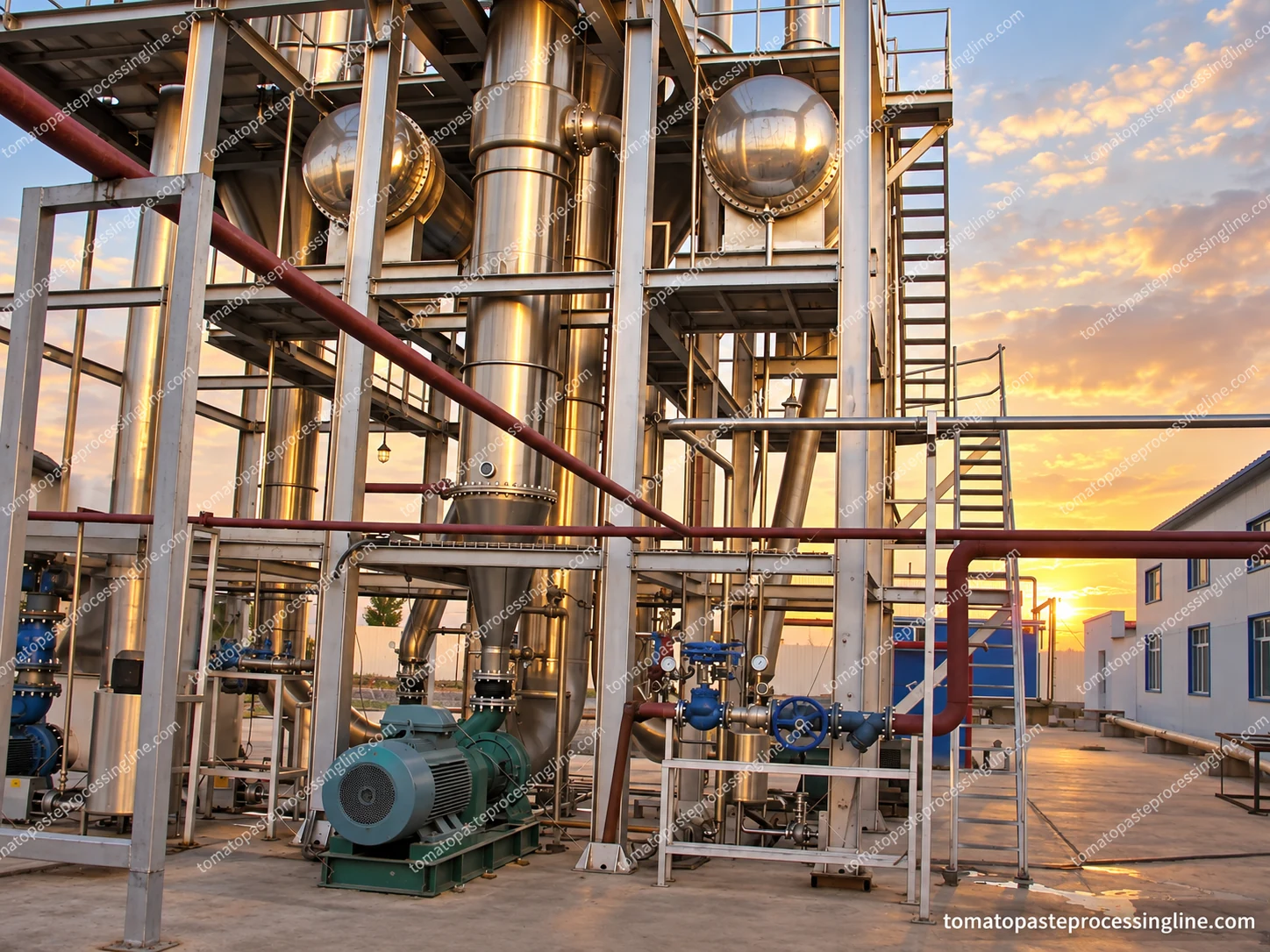
The fresh-fruit section needs receiving and inspection space, water management, accessible reject collection and guarded transfers. The pulper needs room for screen extraction. Evaporation and thermal equipment need service access to valves, pumps, instruments and the relevant cleaning connections.
In the ketchup area, bulk-container exchange and ingredient addition create different movements from fresh-fruit handling. Finished packs must move through closure, cooling where required and packing without obstructing operators or maintenance. A layout should show these activities as well as equipment footprints.
Calculate utilities for the actual operating cases
Thermal duties determine steam or hot-water demand, while cooling duties depend on the product route and its outlet condition. Evaporation adds a water-removal load that should be calculated separately from final heating. Water for washing, ingredients and cleaning has different functions and quality requirements.
Normal production, warm-up, reduced feed and cleaning are useful cases for utility coordination. The ability to start several users together can matter more than an average consumption figure. Return paths, condensate, cooling-water conditions and drainage belong to the same assessment.
| Plant service | Connection to equipment | Condition to define |
|---|---|---|
| Steam or hot water | Preheater, evaporator, thermal and selected mixing duties | Supply condition, peak demand and return arrangement |
| Cooling | Condensation, product cooling or postfill section | Inlet condition, available flow and heat rejection |
| Water | Fruit washing, formulation and CIP | Quality, supply and segregated recovery where applicable |
| Electrical and air | Drives, control systems and actuated devices | Installed load, connection, air condition and pressure |
| Drainage | Cleaning returns, open washing and process discharges | Flow path, access and appropriate separation |
Use interlocks to manage real interruptions
Conveyor and crusher feed should follow the receiving capacity downstream. Level and demand signals coordinate buffer transfer. Product flow and thermal readiness coordinate the heating section. At the packing end, a stop or container change needs a defined upstream response.
A process description should explain startup, normal running, reduced feed, controlled stop, cleaning and restart. The instrumentation and valve states are selected to make those sequences observable. This is more useful than describing the whole line only as automatic.
Commission the connected process on an agreed basis
Mechanical and utility checks establish that the installed line is ready for the planned commissioning work. The process run then uses defined material, product targets, operating duration and measurement points. Flow, temperatures, concentration, texture, rejects and packaging output should describe the same run.
Handover includes the agreed drawings, operating information, instrument and component references, settings and maintenance requirements. Training follows the actual control sequence and the operations needed for cleaning and format or recipe changes.
Further detail
Questions about this equipment and process
What is needed to start a layout discussion?
The chosen process route, approximate duty, packaging format and available building information are useful starting points. Equipment access, receiving and packing movements, utility locations and cleaning drainage can then be developed together.