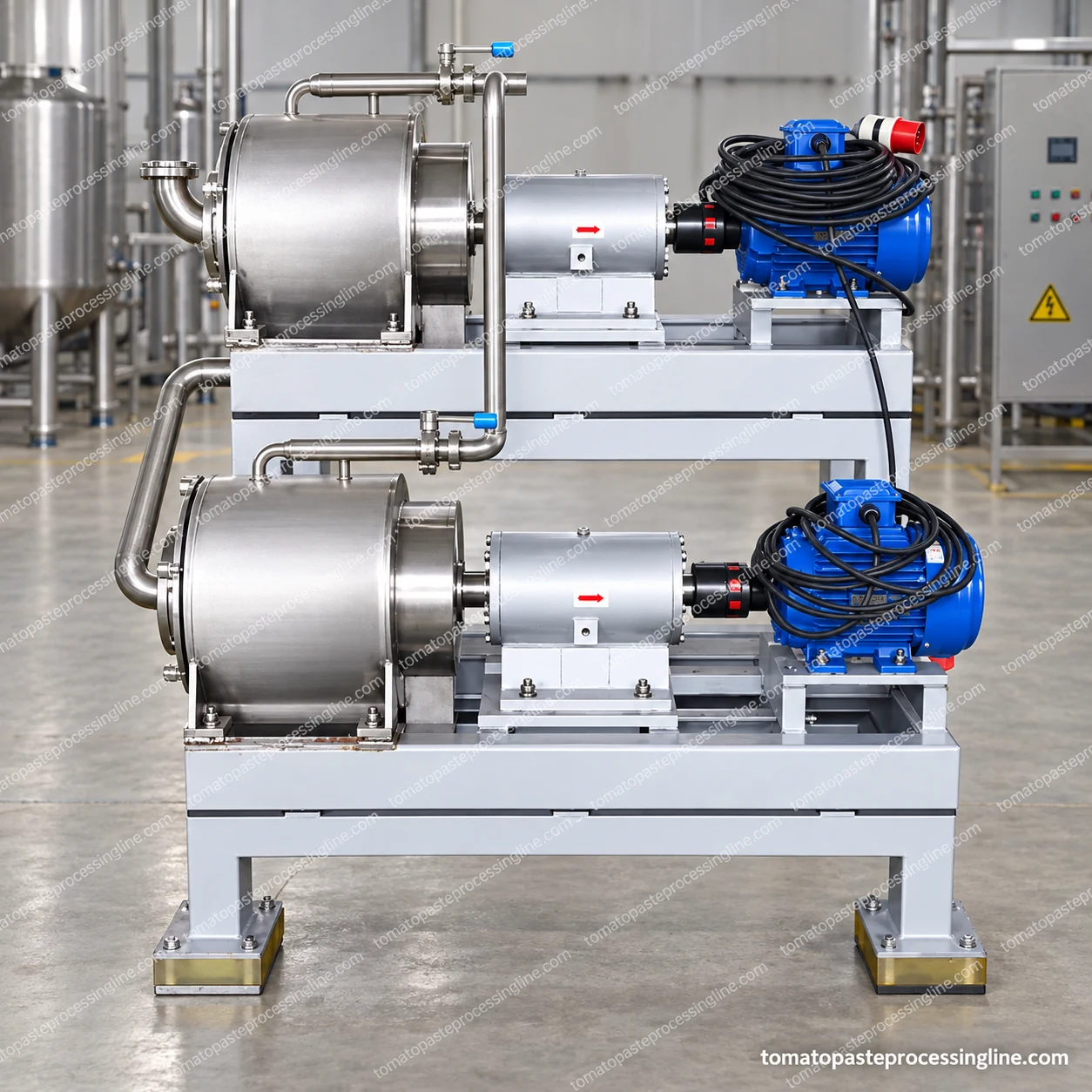
Use the second stage to achieve the chosen finish
Inside each chamber, a driven rotor works the prepared material against the selected screen. Accepted pulp passes through the openings while retained coarse material leaves through a separate reject path. The first stage separates pulp from skins and seeds; the second provides further screening for the selected texture. Match the stages so that the finishing chamber receives a steady, manageable load.
For puree or a passata-style texture, define the accepted particle profile rather than automatically choosing the finest screen. Refining can alter body, reject wetness and feed to the evaporator. More screening is useful only when it contributes to the intended product.
DJ series references
The listed rates are generic fruit-processing references. They are not a tomato recovery guarantee or an identification of the pictured machine’s model. Confirm the selected stage configuration with representative tomatoes, break condition and screen arrangement.
| Model | Reference rate, t/h | Stage drive power, kW |
|---|---|---|
| DJ-3 | 1–3 | 4.0 × 2 |
| DJ-5 | 5 | 7.5 × 2 |
| DJ-10 | 10 | 18.5 × 2 |
| DJ-15 | 15 | 30 + 18.5 |
| DJ-25 | 25 | 45 + 37 |
Measure the pulp and the skin-seed stream together
A useful refining trial records incoming prepared material, accepted pulp and each wet reject stream. Include feed temperature, screen apertures and operating settings with those measurements. That makes changes in texture or recovery comparable from one run to the next.
Check retained pulp in the reject alongside skin or seed fragments in the accepted stream. A screen with a smaller opening can alter throughput and texture; it should not be treated as an automatic improvement in yield.
Leave space to remove the screens
The chamber ends, screen supports, seals and reject outlets require inspection access. Deposits or damaged screening surfaces can change the result before a motor or throughput alarm appears. Specify the screen set, service clearance and replacement parts with the machine.
Clean the product circuit and inspect removable parts according to the selected configuration. Open discharge chutes and separated skins and seeds need their own handling and cleaning route.
Further detail
Questions about this equipment and process
Does a puree preparation section always use two stages?
No. The pictured product is a combined two-stage assembly. A single-stage pulper is also a distinct configuration, as reported in the Moldova preparation example; stage count follows the required finish.
Can screened pulp flow be treated as whole-fruit throughput?
No. Skin, seed and other rejects leave the product stream during preparation. Record the feed and accepted pulp on their respective measurement bases.