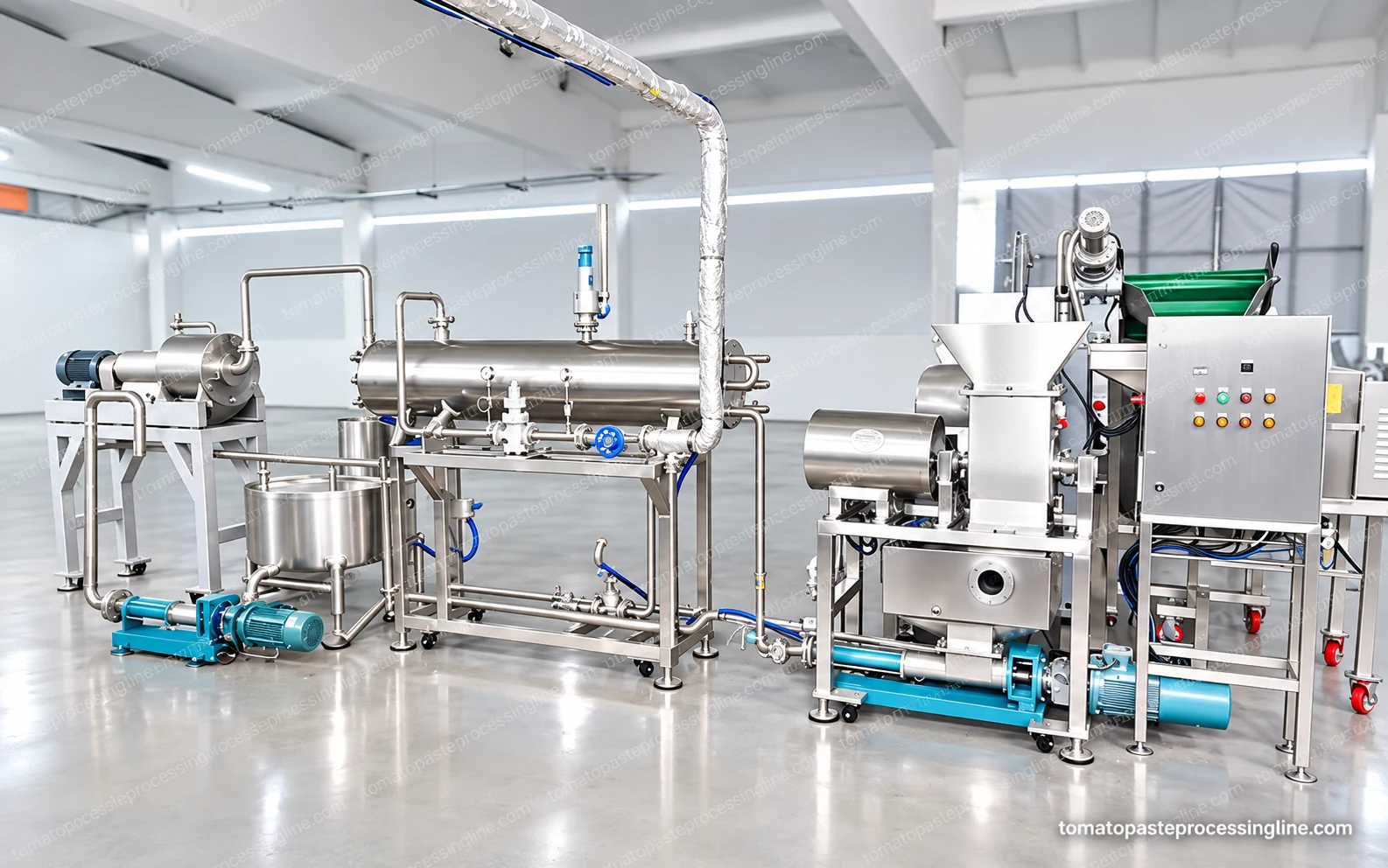
Control the material before it enters the screen
Tomatoes arrive washed and inspected, or a reception and washing section is included upstream. The crusher breaks the fruit into a pumpable stream. Transfer and preheating then condition that material for pulping, with a flow path sized for its particles and consistency.
For multi-material operation, tomato, apple and pumpkin feeds are not interchangeable merely because they share some equipment. Feed preparation, particle size, softening needs and operating settings follow each material. Changeover access and residue removal should be designed before a second crop is added to the production schedule.
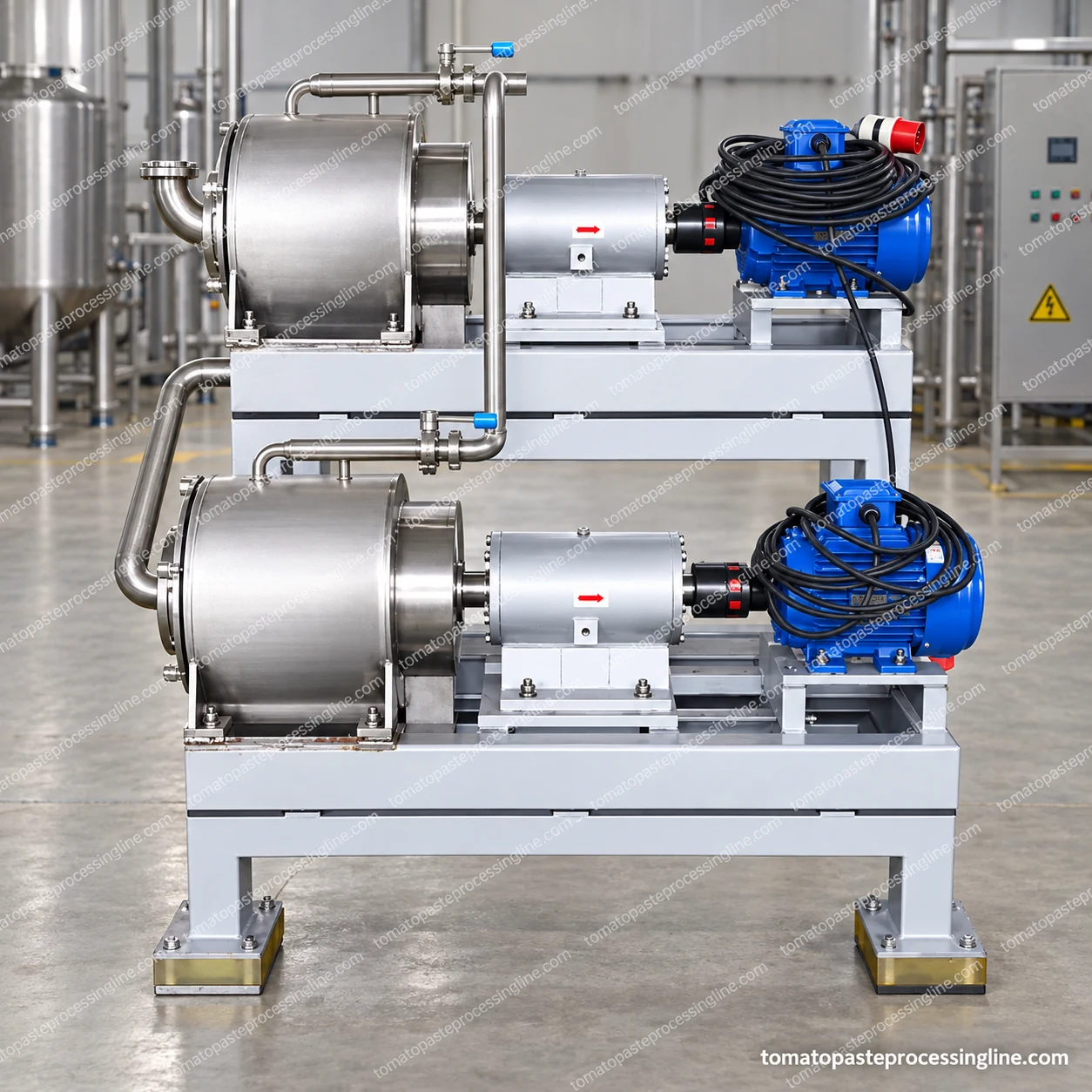
Define texture at the pulper outlet
Pulping separates the usable fine phase from skin, seeds and coarse material. A single-stage or combined two-stage arrangement is chosen for the intended finish and incoming feed. More stages do not automatically mean a better product: the acceptable texture, solids loading and reject condition determine the work required.
The outlet specification should make texture measurable. Screen selection can be paired with observations of coarse particles, seed or skin carryover, flow behaviour and colour under consistent sampling conditions. The reject stream provides a useful operating signal when it becomes unusually wet or the main product flow falls.
Transfer puree at a condition the receiving line can use
The buffer vessel accommodates normal differences between the preparation section and the receiving process. Product level, pump control and downstream demand should act together so that the tank neither empties into an unstable transfer nor accumulates unnecessary warm holding time.
The handoff identifies product temperature, expected texture, flow basis and the receiving connection. Pump selection follows the actual puree, including viscosity, particles and suction conditions. An existing filler or thermal unit can then be checked against that inlet condition rather than against the fresh-fruit intake rate.
Extend an existing plant with a defined section
This supply scope can be installed ahead of an established blending or final-treatment line. It concentrates the purchase on preparation equipment and its utility, control and cleaning interfaces. Concentration is added only where the required product actually needs water removal.
A reported 2024 Moldova project demonstrates this type of section for apples, tomatoes and pumpkins: crushing, automatic tubular preheating, single-stage pulping, screw transfer and buffering. It is a useful example of an integrated front end, with final product processing handled as a separate downstream task.
Keep screens and transfer routes accessible
Daily operating checks focus on stable feed, preheater response, screen loading and the transfer condition. The machine arrangement leaves room to remove screens and inspect the crushing and pulping components. Pipework and vessels connect to the appropriate cleaning circuit; open preparation equipment is cleaned through its accessible surfaces.
Acceptance uses representative material and the actual downstream demand. The useful outcome is a stable puree stream with the agreed texture and transfer conditions, supported by accessible maintenance and cleaning, rather than a front-end nameplate rate alone.
Further detail
Questions about this equipment and process
Is this a complete packaged-food line?
Its endpoint is prepared puree at the agreed receiving interface. Final product treatment, ingredient blending and packaging are separate modules that can be coordinated with an existing or new downstream line.
Can a single-stage pulper be suitable?
Yes. The feed and finished texture determine the screen and number of stages. The reported Moldova front end uses a single-stage pulper; double-stage equipment is a separate configuration choice.