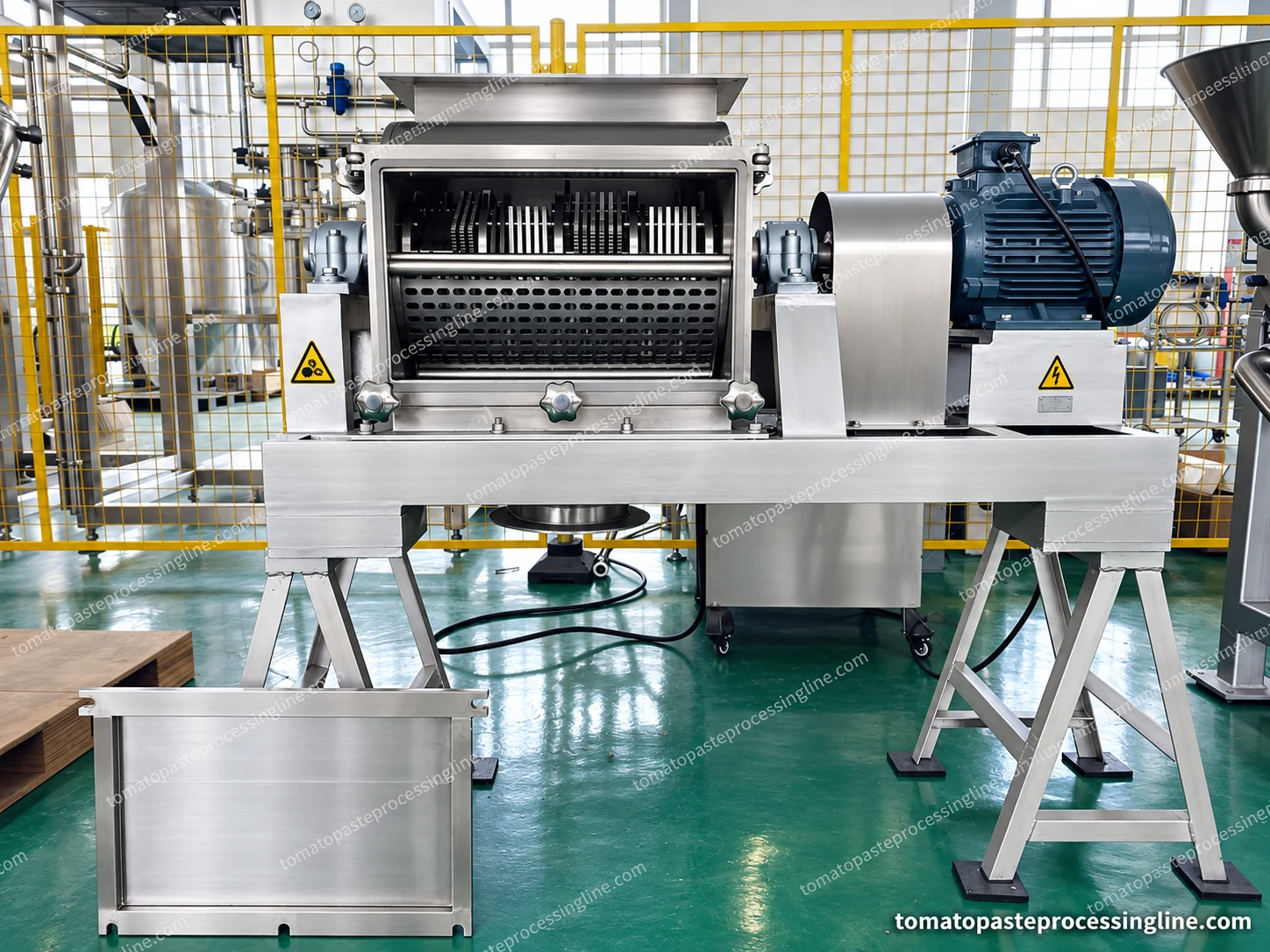
Choose among three distinct supply scopes
A full paste line prepares fresh fruit, concentrates the screened feed and delivers paste through the defined thermal and packaging process. A ketchup line starts with a tomato base and recipe ingredients, then mixes and finishes that product for its selected pack.
A puree preparation section ends earlier: it provides screened material to another process. That makes it suitable for a plant retaining its downstream blending, heating or packing equipment, provided the receiving conditions match.
| Purchase task | Core included work | Main sizing question |
|---|---|---|
| Fresh tomatoes to paste | Fruit handling, crushing, break treatment, screening, evaporation and defined final process | What screened feed and water-removal duties follow from the harvest and paste specification? |
| Bulk paste to ketchup or sauce | Unloading, ingredients, mixing, selected finishing, heating and retail packing | Can the batch cycle supply the selected container line at its required product condition? |
| Fresh-material puree preparation | Crushing, preheating, pulping, transfer and buffering | What flow, temperature and texture does the receiving process require? |
Keep product, break treatment and pack as separate choices
Hot break and cold break describe front-end processing approaches, while paste and ketchup describe different product and formulation tasks. An aseptic bag or a retail can describes packaging. Combining these labels into one product name can hide an unsuitable or unnecessary machine.
Select the desired texture and concentration, then coordinate the break, screen and evaporation conditions. For ketchup, establish the formula and texture before choosing homogenization or deaeration. Choose the final container with its required thermal and closure process.
Compare quotations on a common operating case
Price differences can come from different feed assumptions, concentration duties, automation, materials, utility scope or packaging equipment. Put those differences beside the machine list before comparing the total. A tank’s total volume, a pump’s nominal flow and a finished pack rate are not equivalent capacity statements.
A practical proposal develops from the starting material, intended product, approximate rate and packaging preference. More detailed drawings, utility data and acceptance conditions follow as the equipment scope takes shape. That keeps the first discussion simple while giving engineering a clear basis for the final configuration.
Further detail
Questions about this equipment and process
Can the first enquiry cover only one machine?
Yes. Identify the machine and the material it will receive or supply. The upstream and downstream conditions can then be used to establish the appropriate configuration and connections.