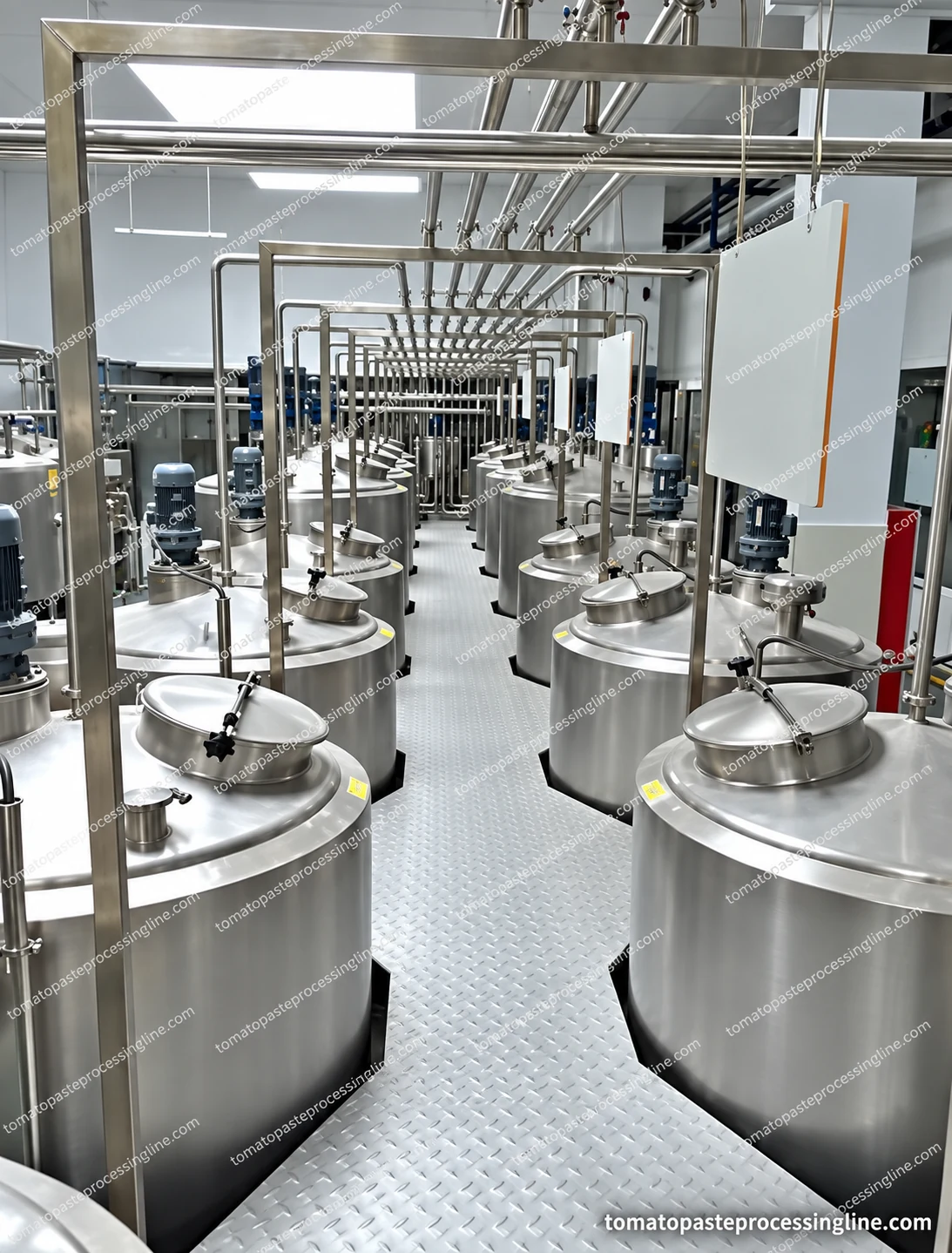
Separate ingredient preparation from final blending
Bulk paste unloading, water dosing and dry-ingredient preparation establish the material entering the mixer. Sugar or salt dissolution and spice dispersion can need different addition methods. A recipe with retained pieces also requires a transfer path and filling nozzle that can pass those pieces.
Ingredient order, temperature and mixing time are defined with the recipe process. They influence the risk of lumps, entrained air and uneven texture. The target is a repeatable batch with the intended composition, rather than maximum mixer speed.
Match a batch operation to continuous demand
A mixing vessel’s useful working volume must accommodate the additions and mixing action. Total vessel volume is not the batch output available to the line. Preparation, mixing, discharge and cleaning all contribute to its cycle time.
Where heating and filling run continuously, the supply arrangement can use coordinated batches and buffering. Low-level protection and demand control should prevent a transfer pump from starving or a mixer from discharging into a full receiving vessel. The piping arrangement also needs to allow the intended recipe changeover.
Use homogenization for a defined texture change
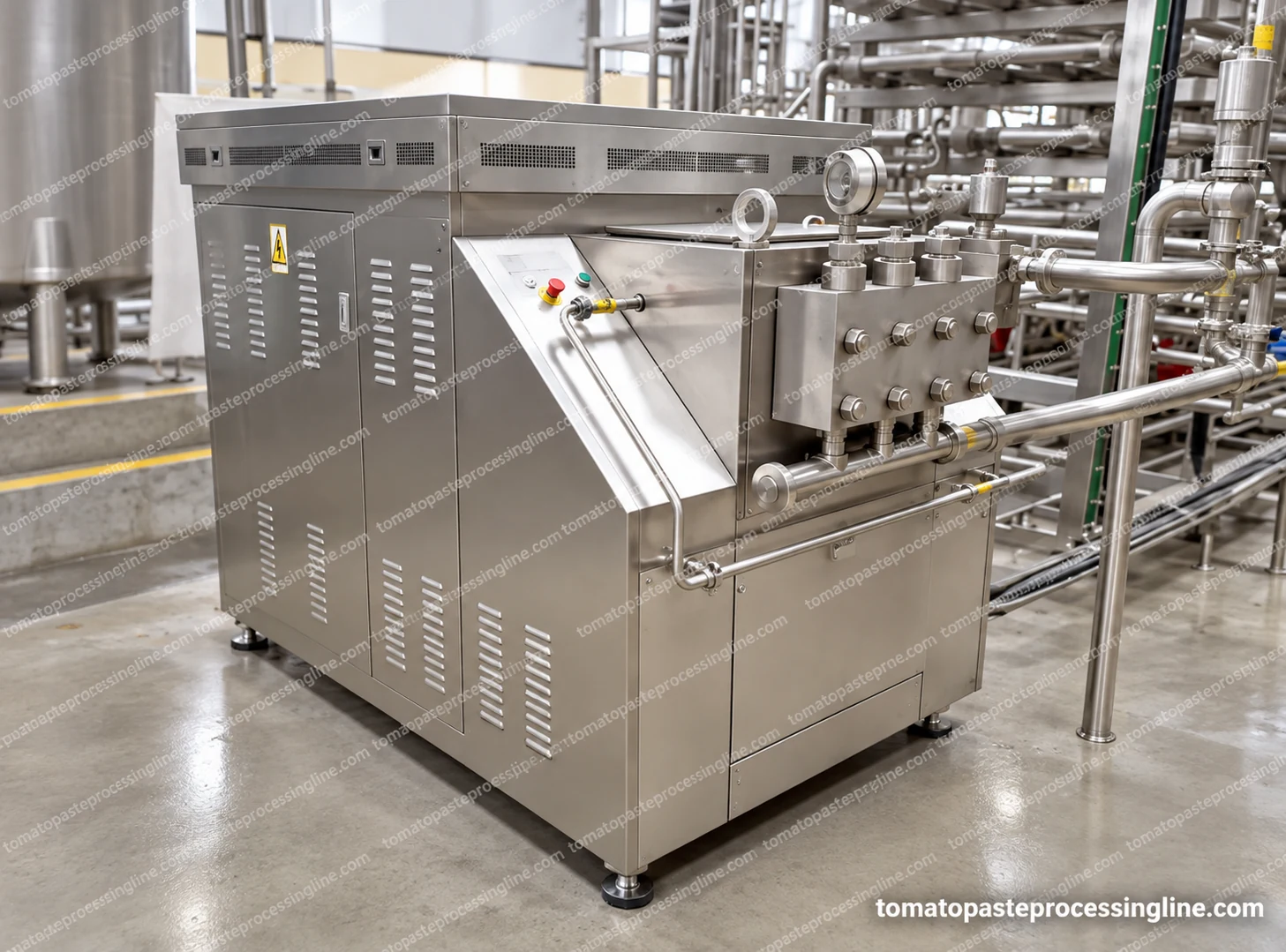
Industrial high-pressure homogenization works on the flowing mixture through its pump and homogenizing elements. It can be selected where the product needs additional dispersion or particle treatment. Flow, viscosity, temperature and particle condition are considered together with the desired result.
This operation is different from removing tomato skin and seeds in a pulper. It is also different from a colloid mill. For a textured sauce, preserving inclusions may be more important than further refinement, so the selected process can bypass a finishing operation that would remove the desired character.
Read the batch at more than one measurement point
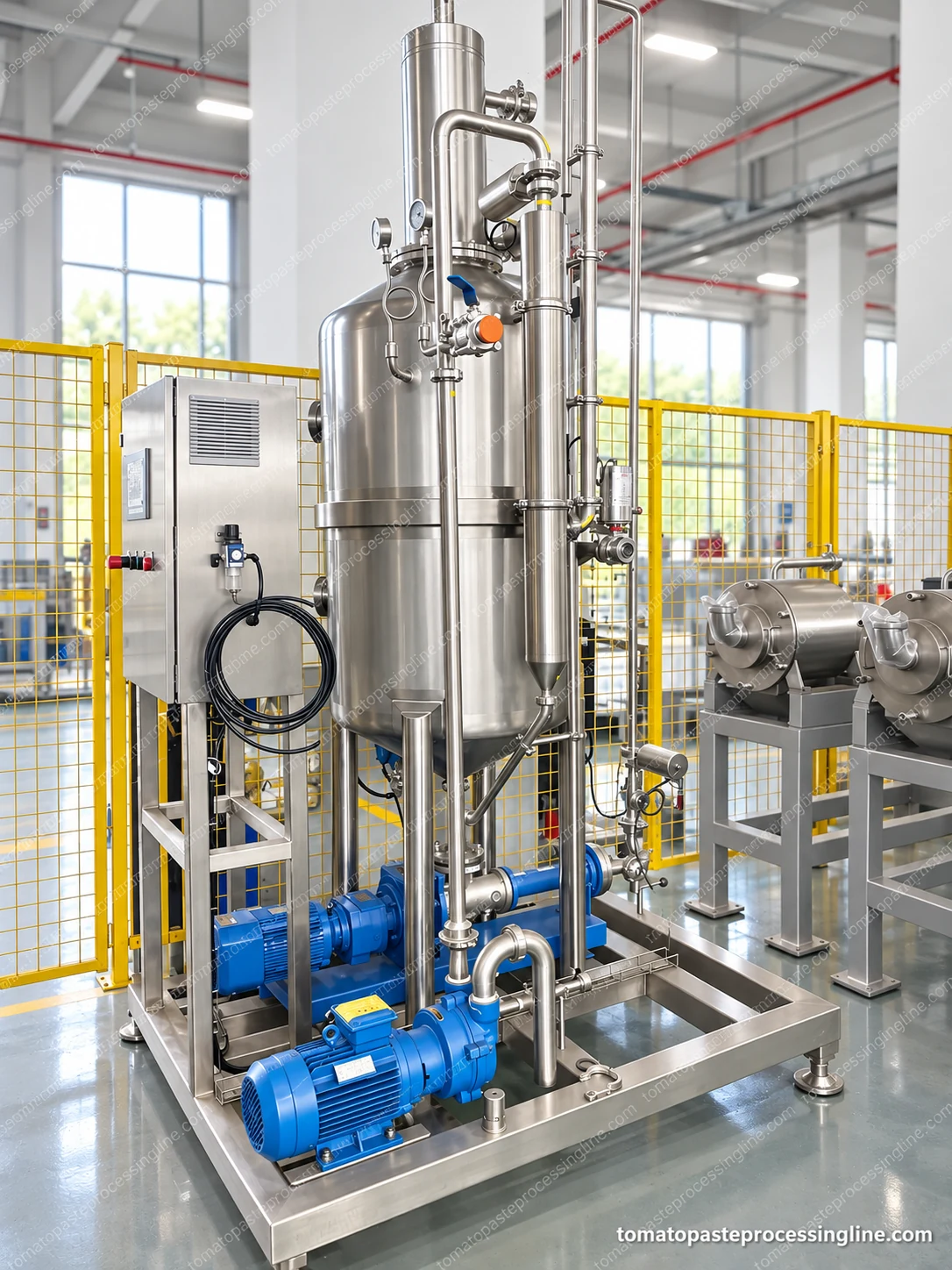
An entrained-air problem can show up as foam, unstable pump feed or inconsistent filling. Selected vacuum deaeration can address the air-removal task, but it should be coordinated with the mixer and product temperature. Improving an air-entraining addition or transfer can be just as relevant.
Recipe checks may include ingredient mass records, suitable concentration measurements, acidity, texture and samples from the filled product. Refractometer readings in ketchup include the influence of added soluble ingredients, so they cannot be interpreted as the tomato content alone. The final heating and packaging process remains part of the product definition.
Further detail
Questions about this equipment and process
Does a ketchup recipe always need a homogenizer and a deaerator?
No. Each operation should solve a defined texture, dispersion or air-removal requirement. The recipe, ingredients and required packaging result determine whether it is included and where it sits in the line.