See the actual equipment from tomato elevation and crushing through pulp finishing, evaporation, thermal processing and filling. Follow each machine to the material it handles and the connections it needs.
Receive, wash and inspect
Bring fresh tomatoes to a controlled, accessible feed for the extraction section.
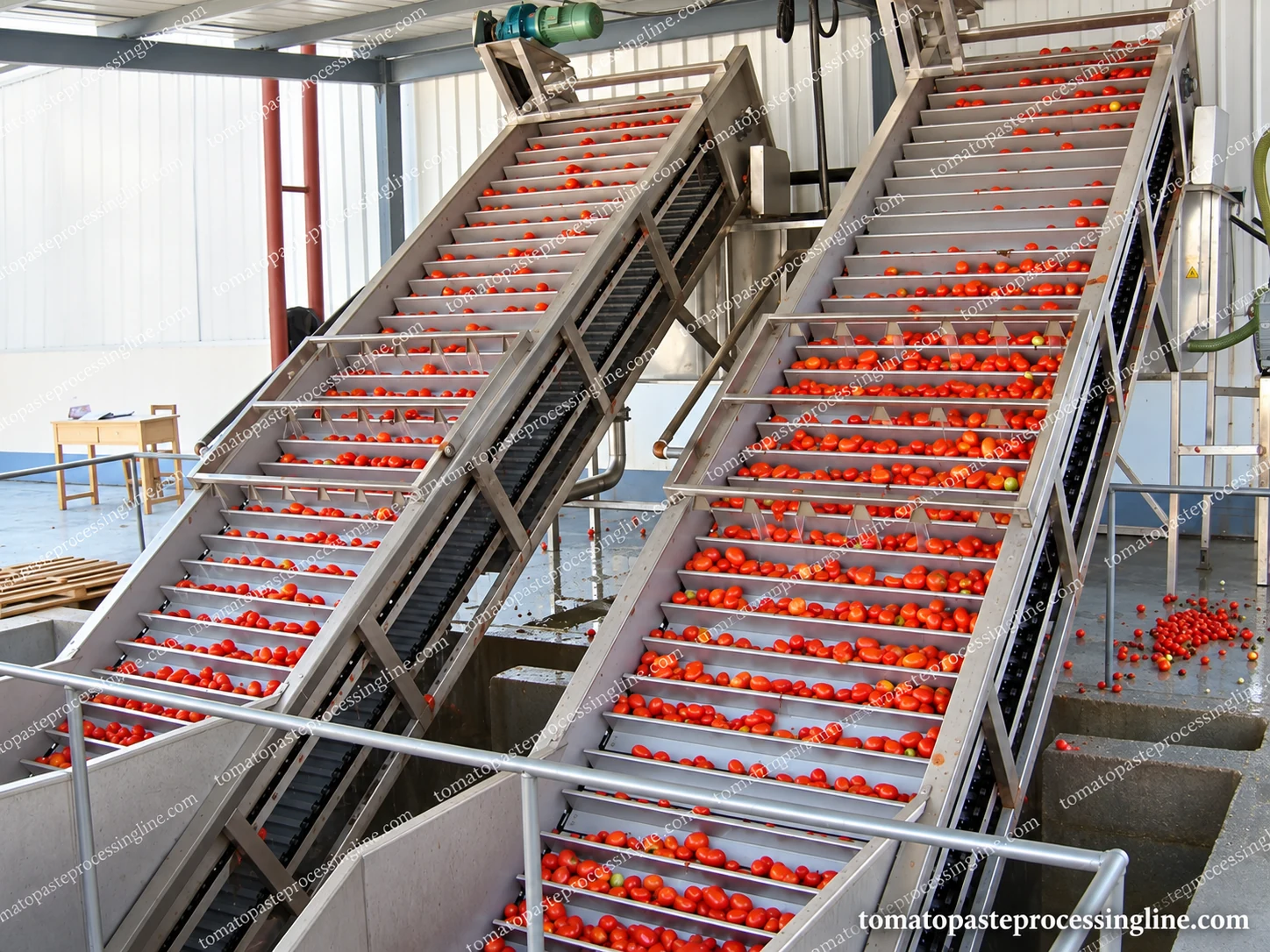
Tomatoes moving on two inclined conveyors; transverse cleats support the fruit during elevation.
Transfer whole tomatoes to the elevation required by the washing, inspection or crushing section. The illustrated conveyors use transverse cleats to carry fruit up an incline. Their loading and discharge arrangements are selected around the tomato feed and the next machine, so fruit arrives as a controlled stream.
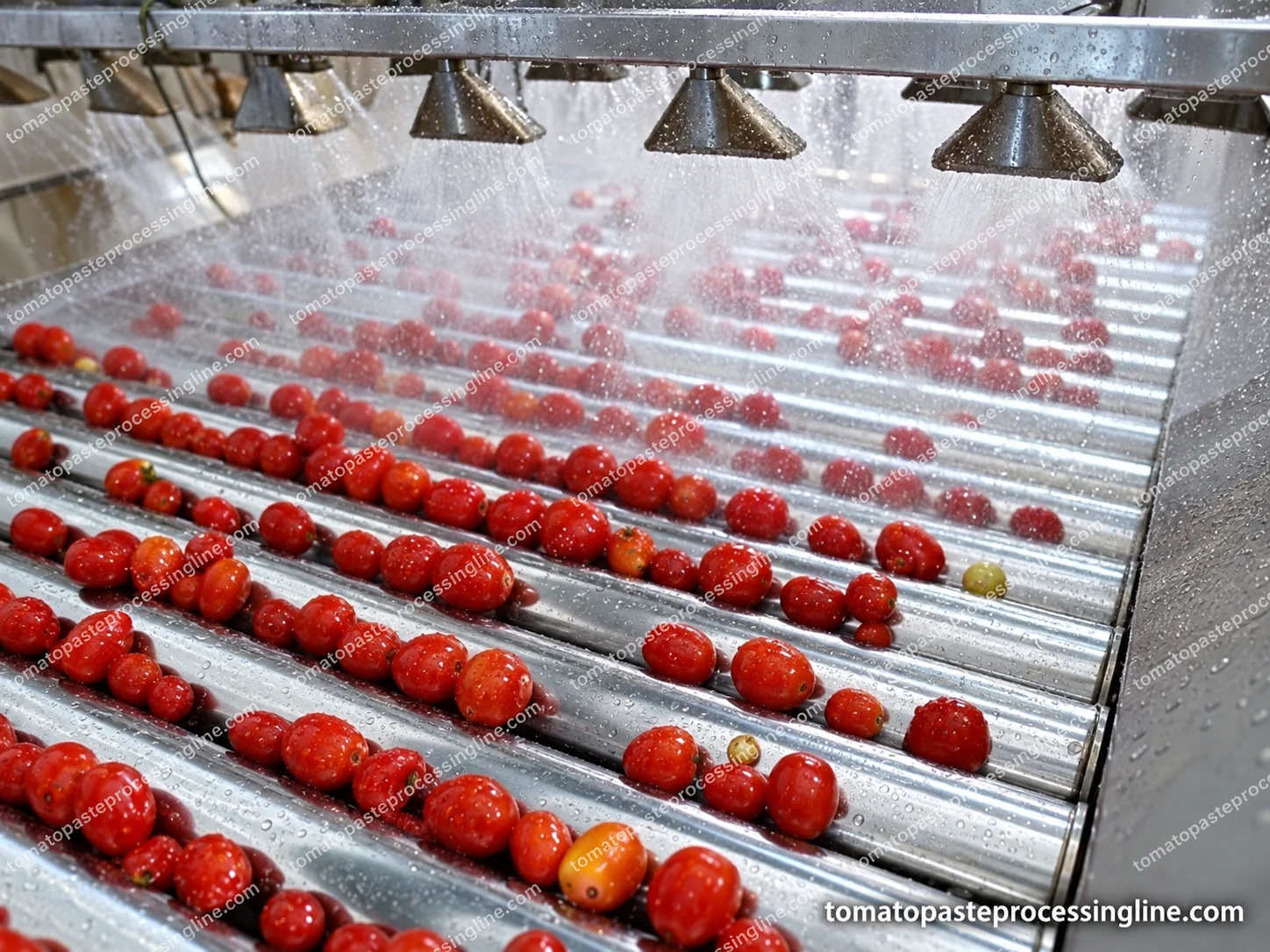
Tomatoes pass beneath spray headers on a roller section before extraction. The rollers support and present the fruit while sprays contact the exposed surfaces. This is a washing-section configuration to integrate with receiving, drainage and inspection, with the water route selected for the actual incoming fruit condition.
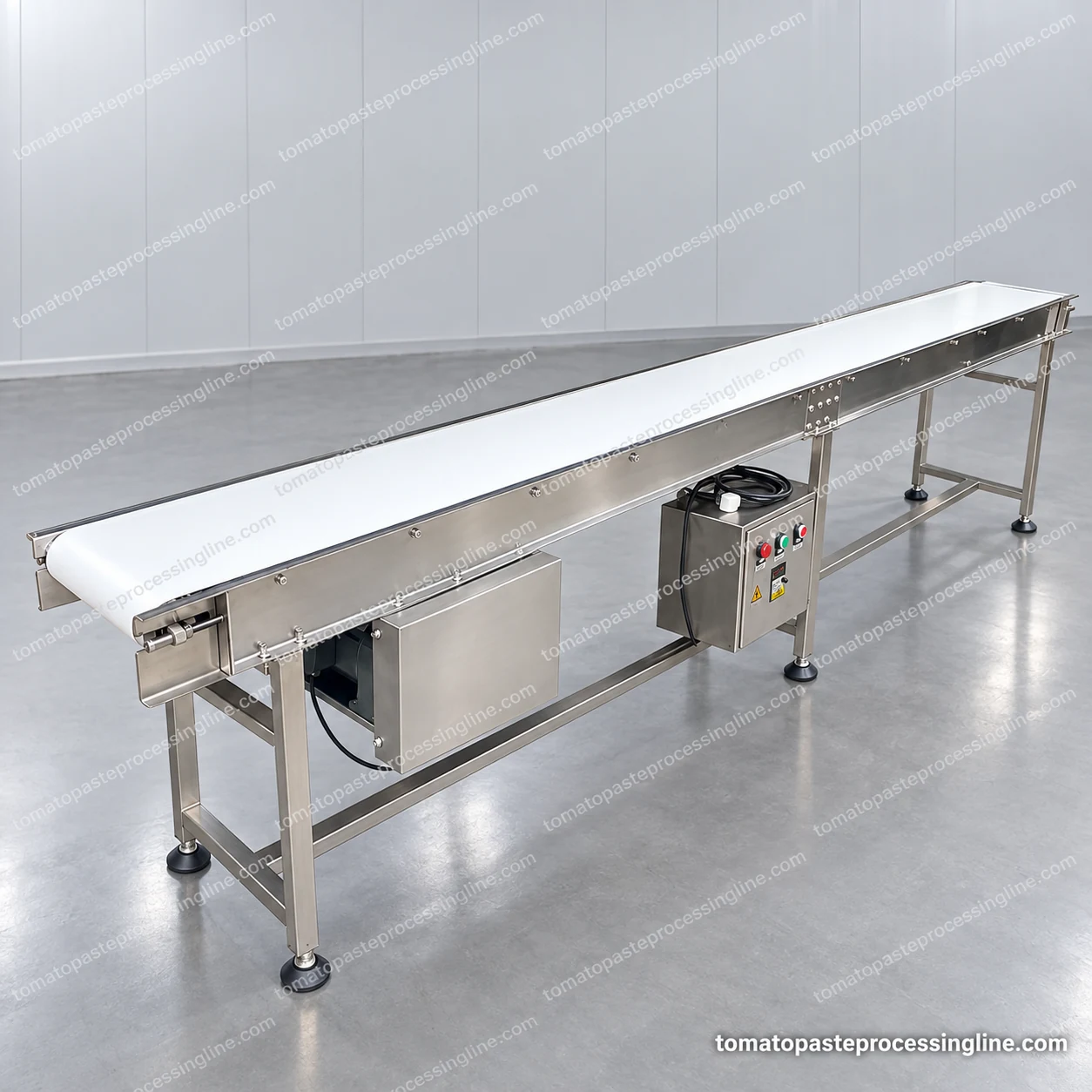
Present washed tomatoes on a straight belt so visible defects and foreign material can be removed before crushing. The machine provides the transport surface; the inspection arrangement adds operator positions, lighting and reject collection around it. Useful inspection rate depends on how well the fruit is presented.
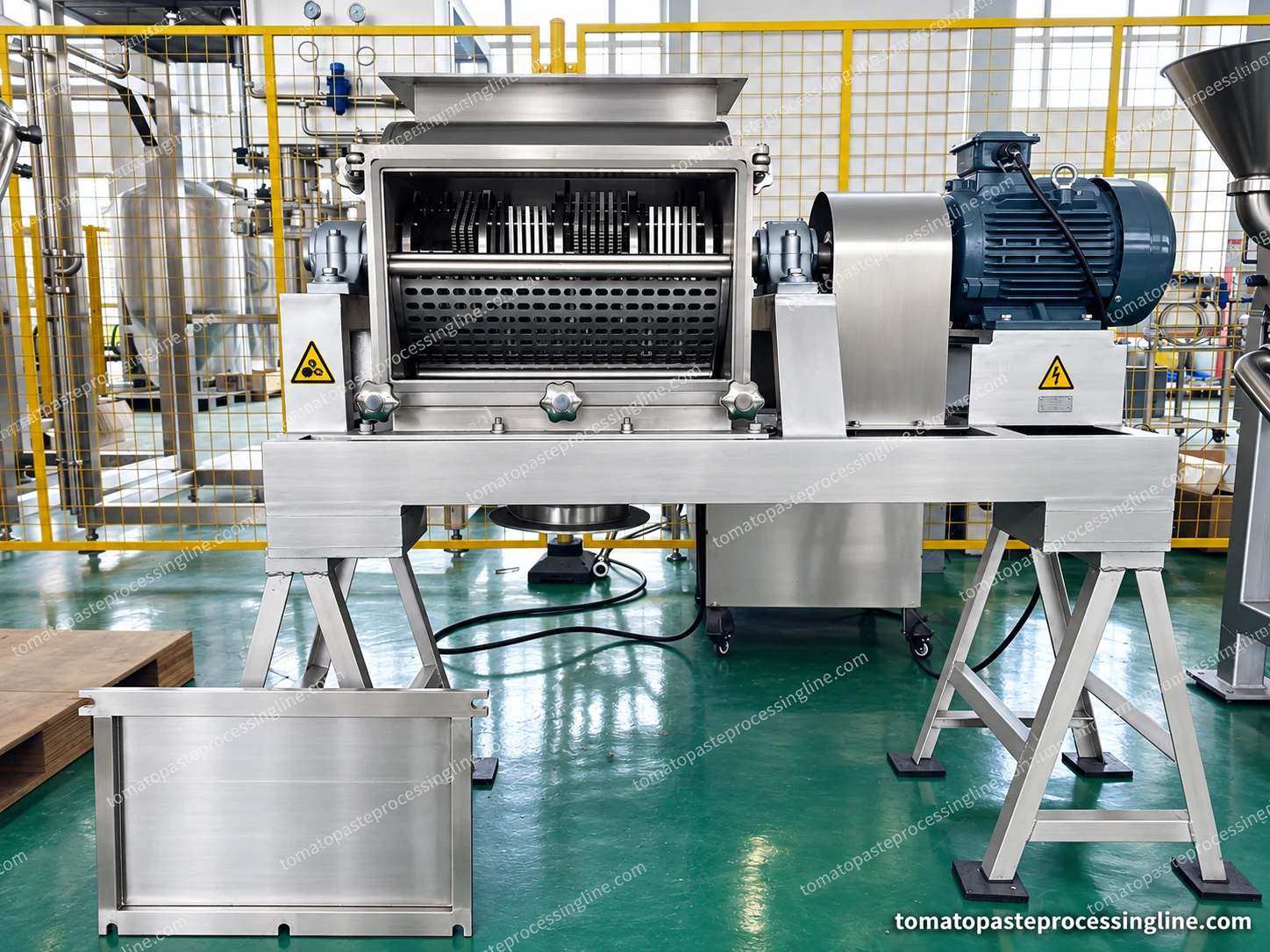
A horizontal driven knife rotor reduces prepared tomatoes before preheating and pulping. The opened machine view reveals the cutting elements, perforated lower basket and discharge below the housing. Selecting the crusher around a consistent downstream feed is more useful than treating motor power as a finished-paste capacity.
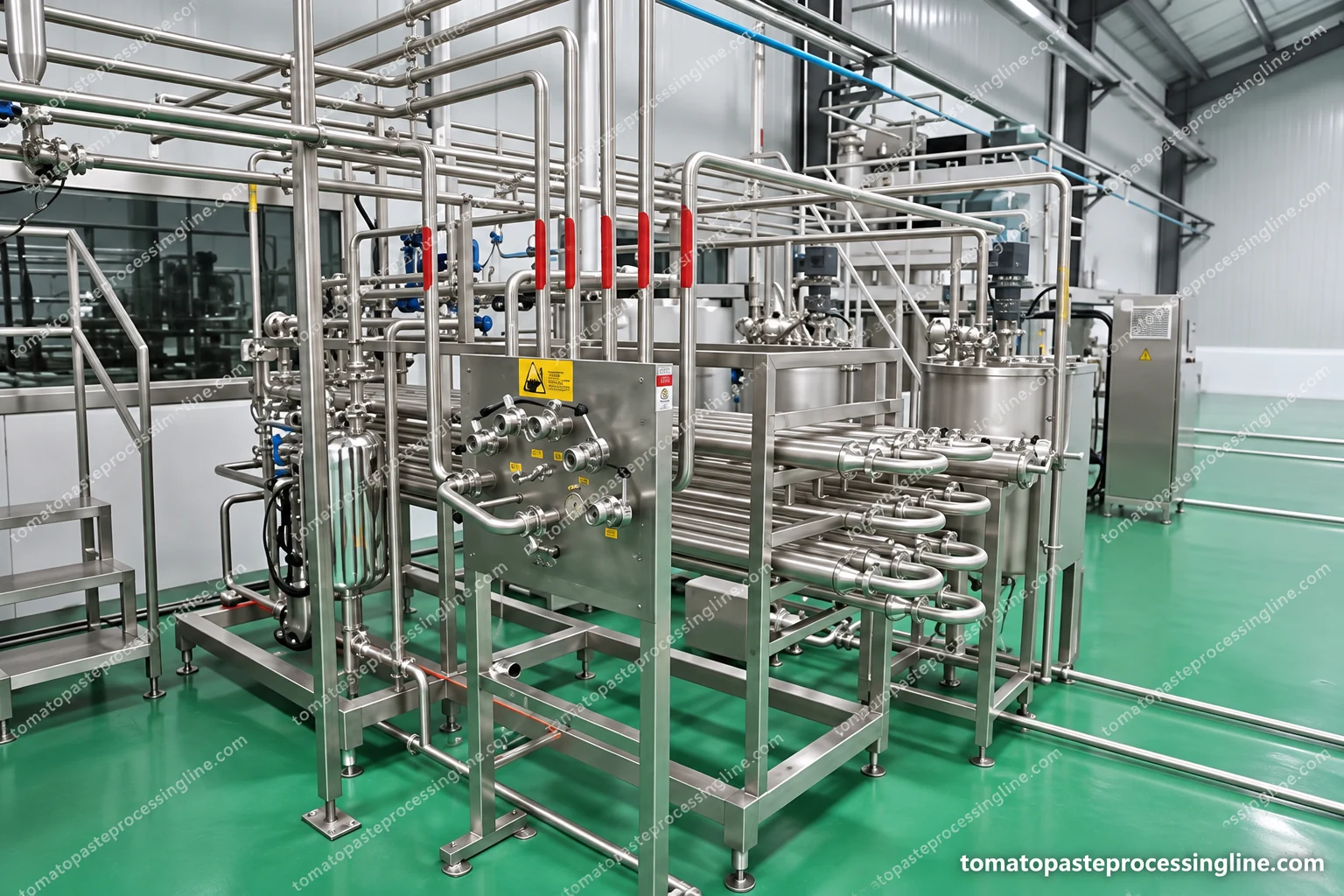
The preheater transfers heat into the crushed tomato stream before pulping and refining. A bank of tubes, connecting bends and product transfer hardware provide the physical heat-treatment section. Hot and cold break describe how the process is operated to obtain the intended consistency; they are not separate finished products.
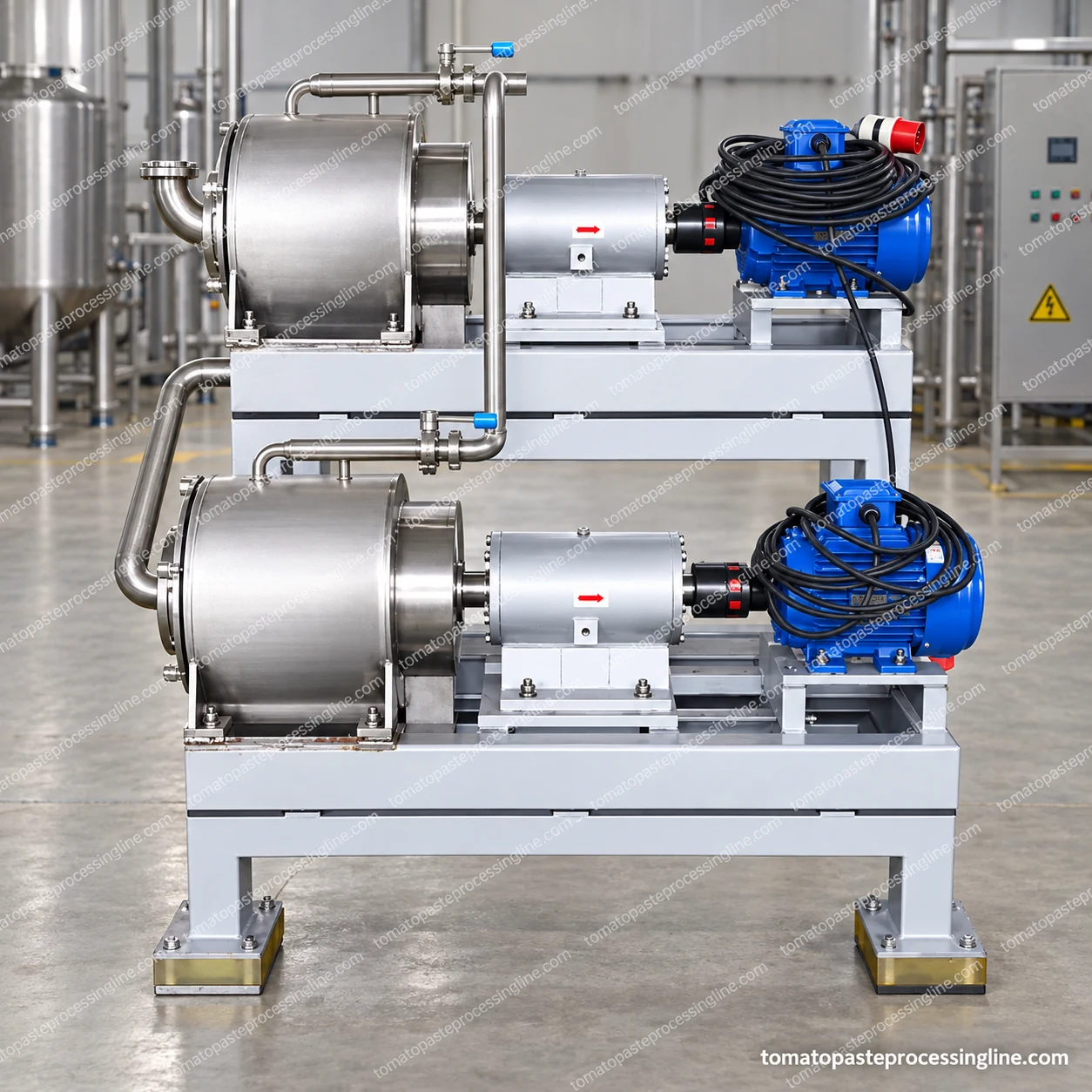
Two screened chambers on one frame provide successive pulping and finishing duties. Prepared tomato material enters the first stage; accepted pulp moves through the selected refining arrangement while coarse material leaves through its reject route. Screen choice and operating condition determine the balance between texture and recovered pulp.
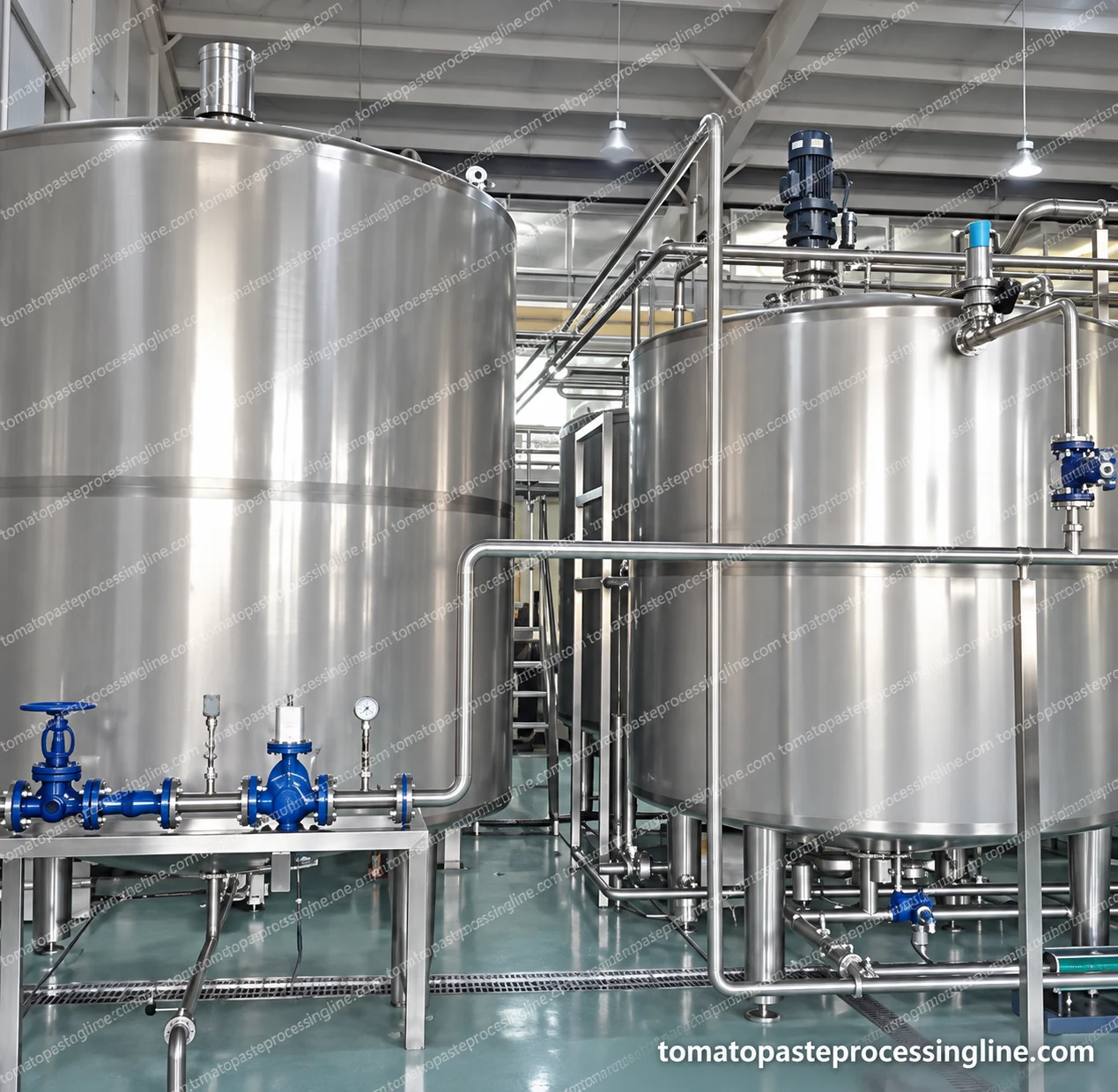
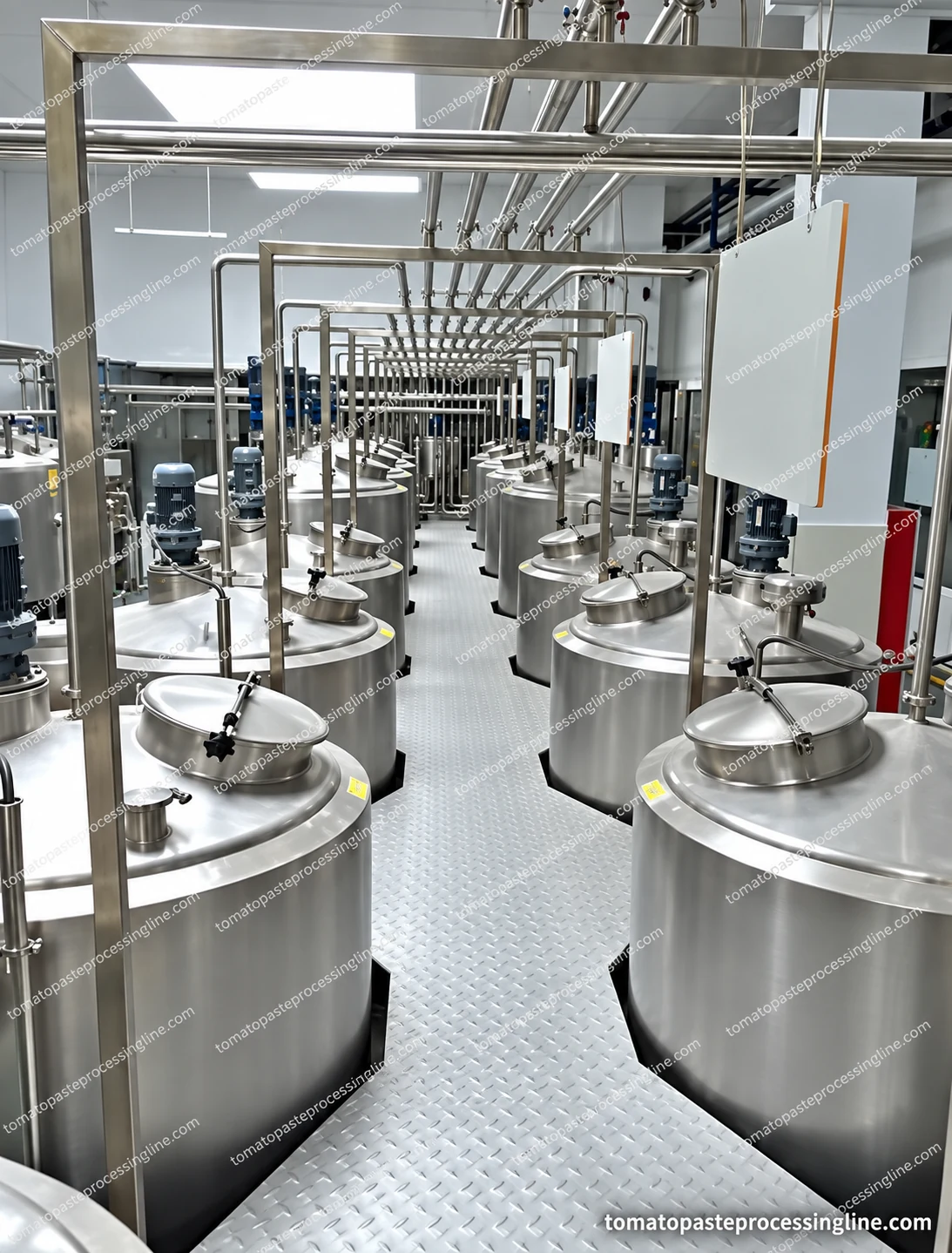
Buffer vessels absorb short differences between pulp preparation and downstream demand. Transfer equipment then supplies the next machine at the condition it needs. The tank’s useful level range, product viscosity and receiving-machine pressure requirement belong in the same selection, especially when a line alternates between production and cleaning.
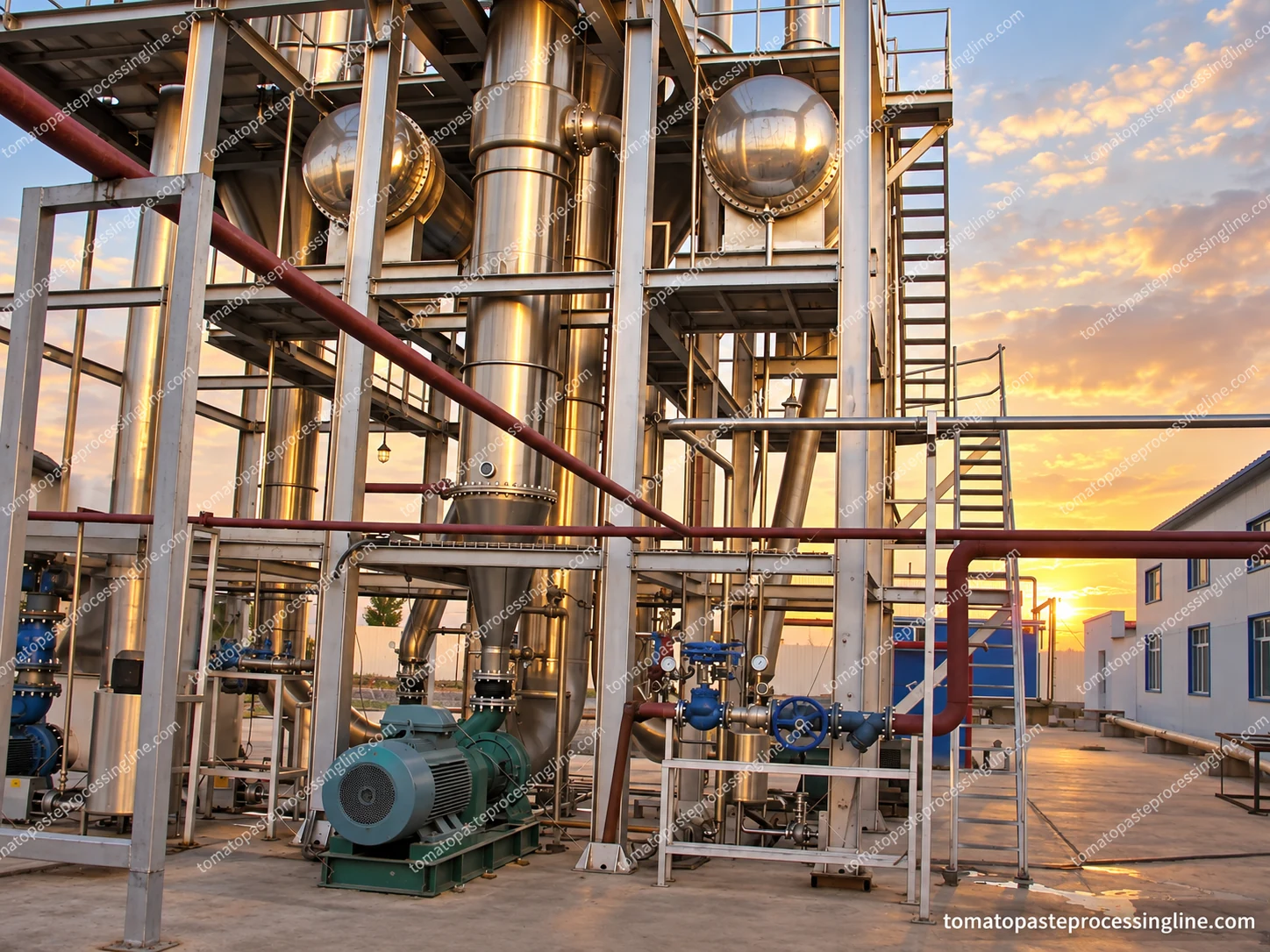
The evaporator receives a defined refined tomato stream and removes water to reach the selected concentrate. As solids and viscosity increase, circulation, heat transfer and cleaning become central equipment decisions. The system is sized from feed and outlet conditions, with evaporated water and finished paste reported separately.
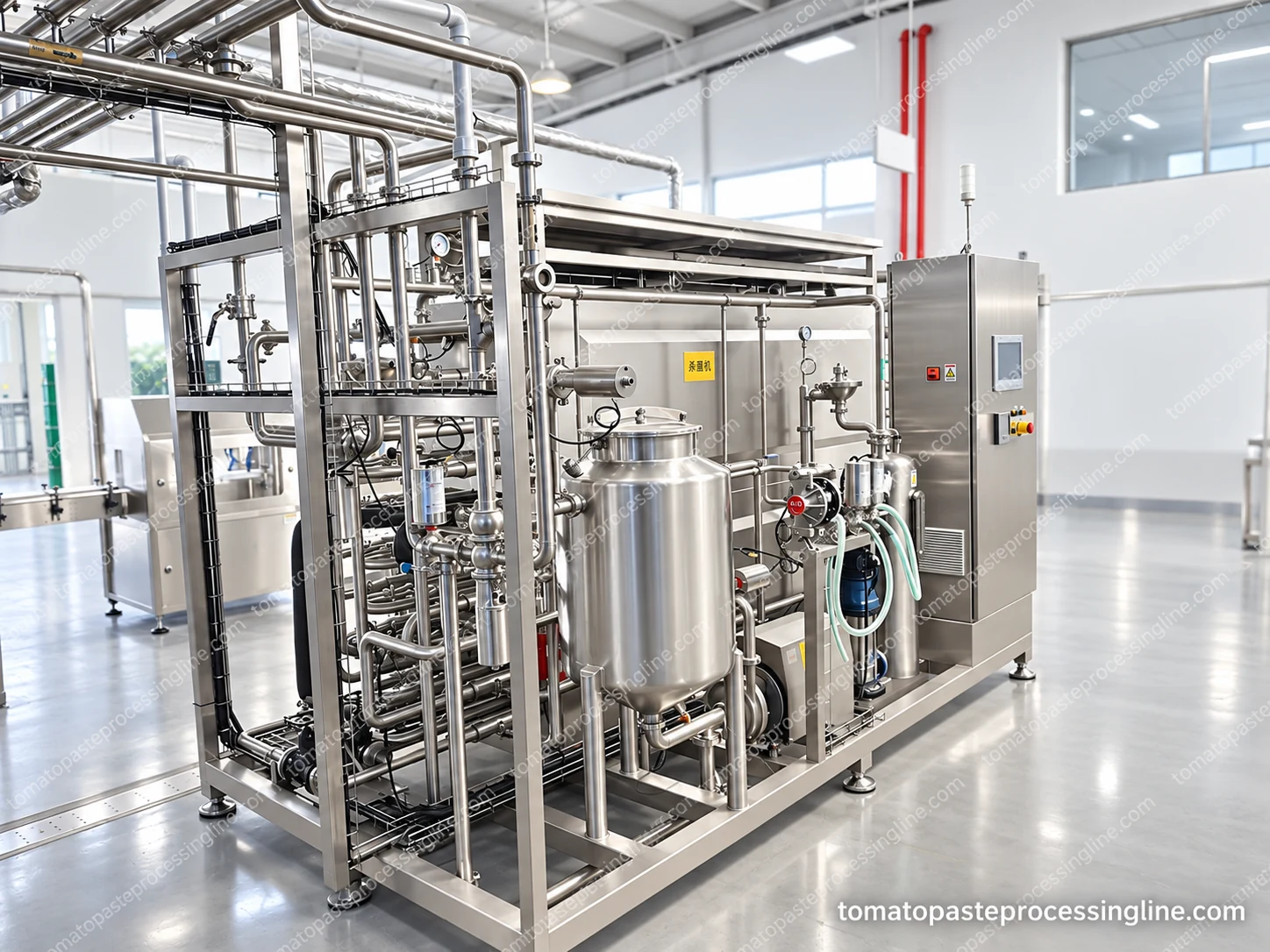
Tomato paste needs a product circuit that remains controllable as viscosity and particle content change. Tubular and tube-in-tube configurations provide family options for heating, holding and cooling such streams. Select the passage, pumping and controls around the validated product process and the package that follows.
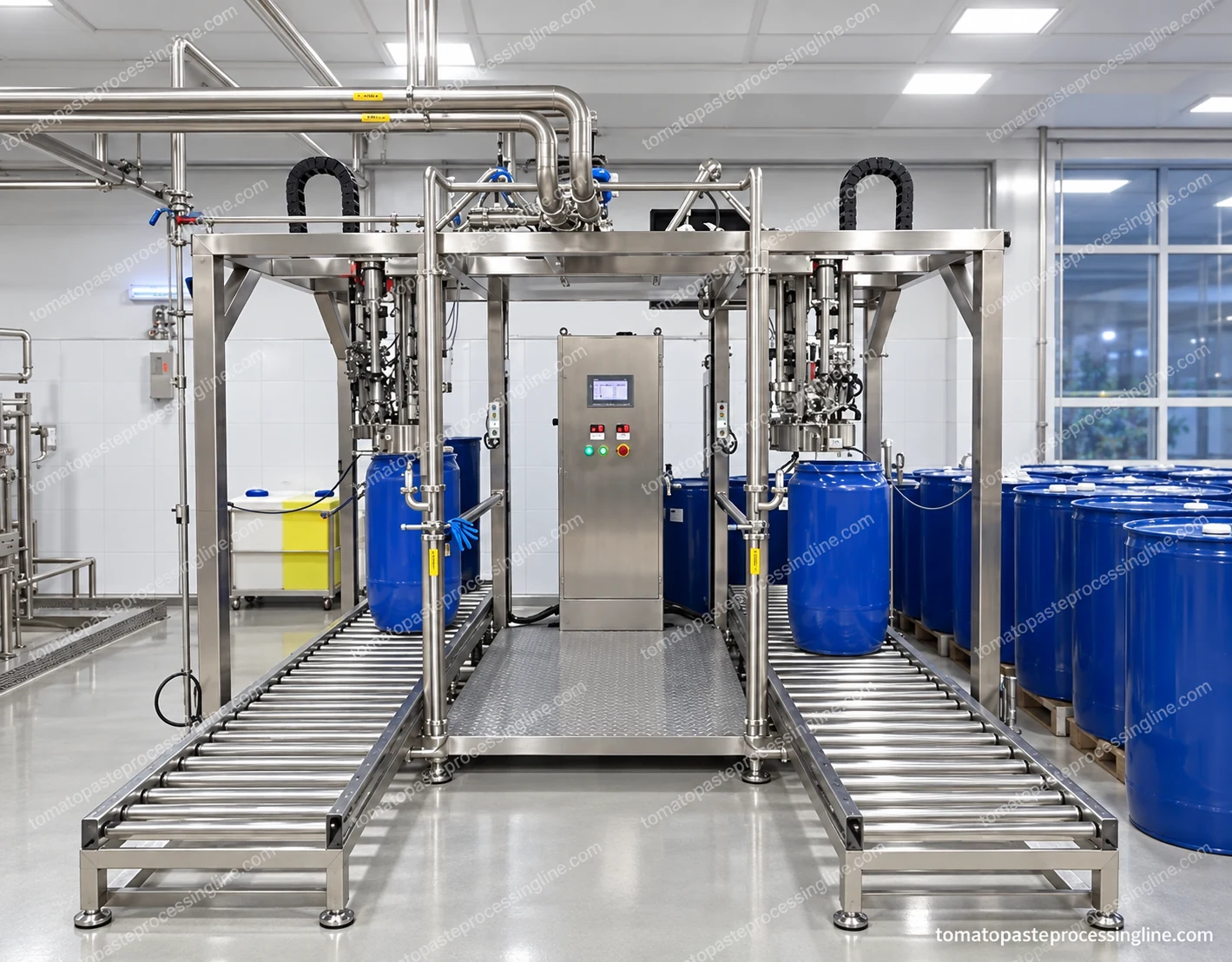
The bag filler transfers suitably processed tomato paste into a compatible aseptic package. The illustrated system has two drum positions, individual roller lanes and overhead filling-head supports. Its useful output depends on product delivery, metering and the complete bag-change cycle, not just the flow while a head is open.
Combine purchased tomato paste with the ingredients required by the sauce formulation. Top-driven process vessels provide a mixing platform, with heating and dosing options selected around dissolution, product viscosity and the batch cycle. This route begins with a prepared base rather than a fresh-tomato washing and extraction section.
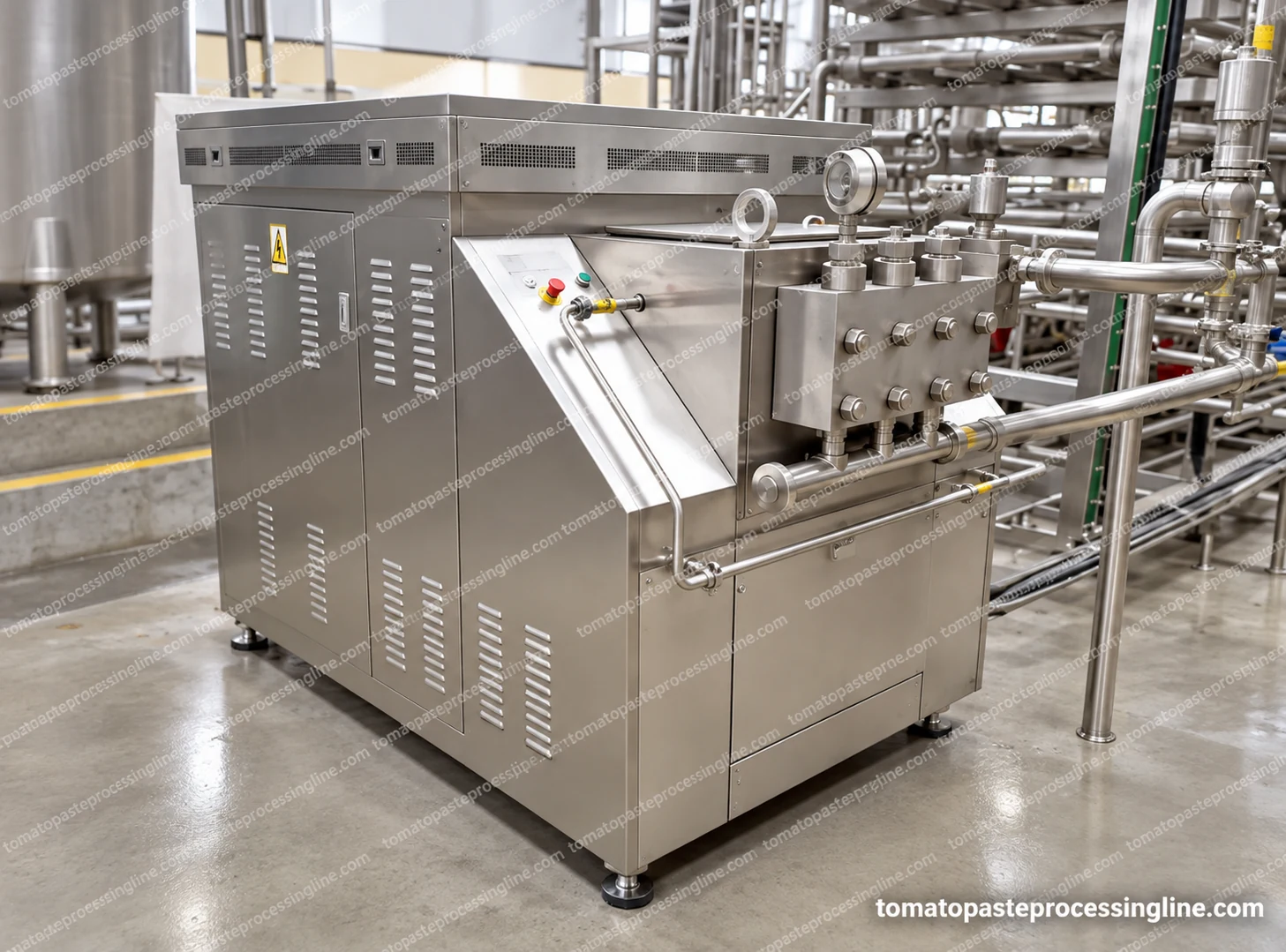
A pressure-driven homogenizing unit treats a suitable prepared sauce through its valve assembly. The industrial machine shown combines a cabinet base, external pump and valve components, gauges and process connections. Evaluate the treatment against the intended sauce texture and stability before assigning operating pressure or throughput.
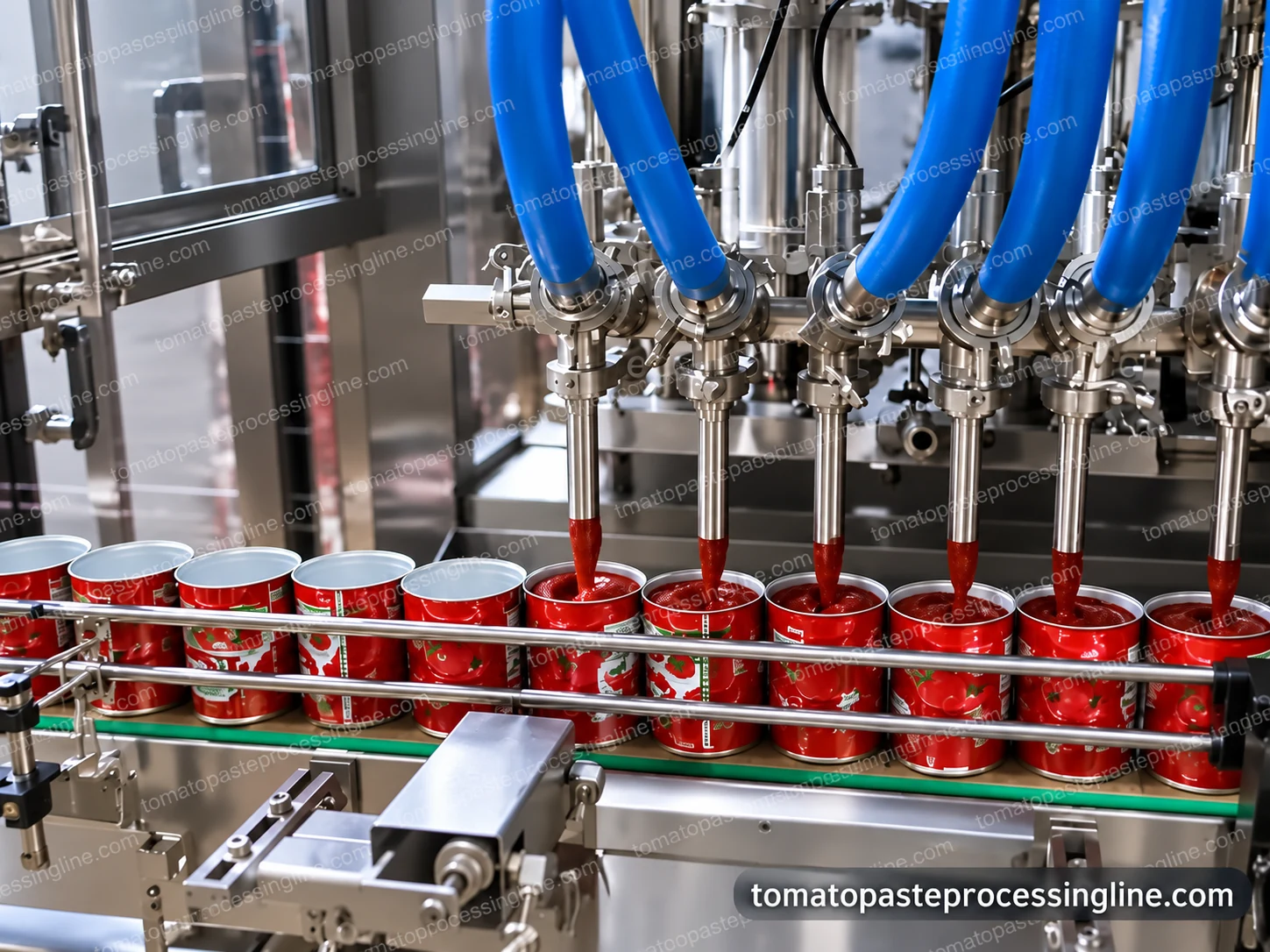
The filling section doses prepared tomato product through several nozzles into cans on a guided conveyor. It belongs within a packaging sequence that also defines closure, any required postfill treatment, cooling and handling. The can format and product condition determine the selected filling and finishing duty.
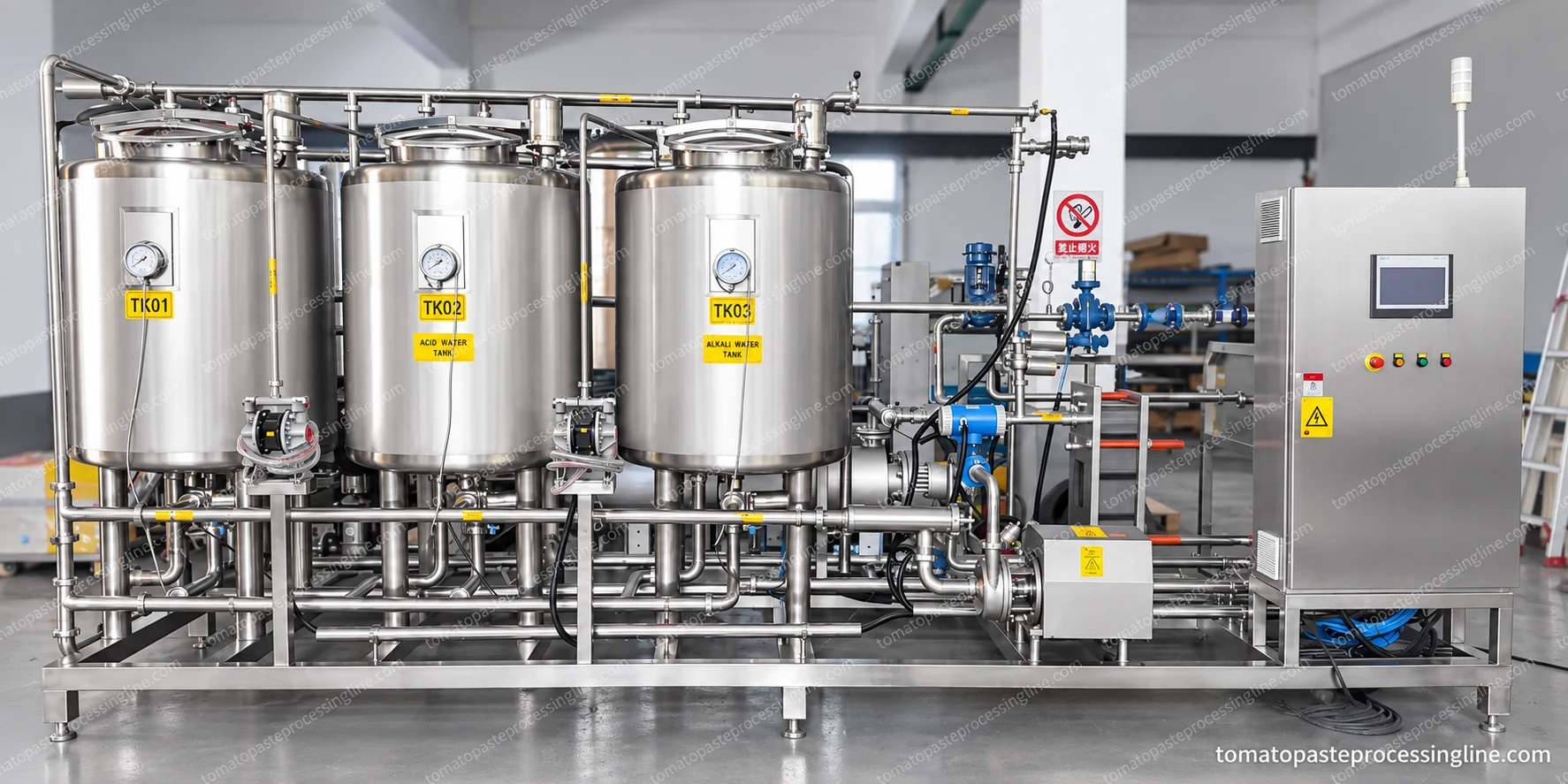
The CIP station supplies cleaning media to selected tanks, pipework and process equipment, then receives or routes the return. The illustrated skid brings three tanks, circulation pipework, pumping and controls together. Select its duty from the circuits and residues that actually need cleaning.