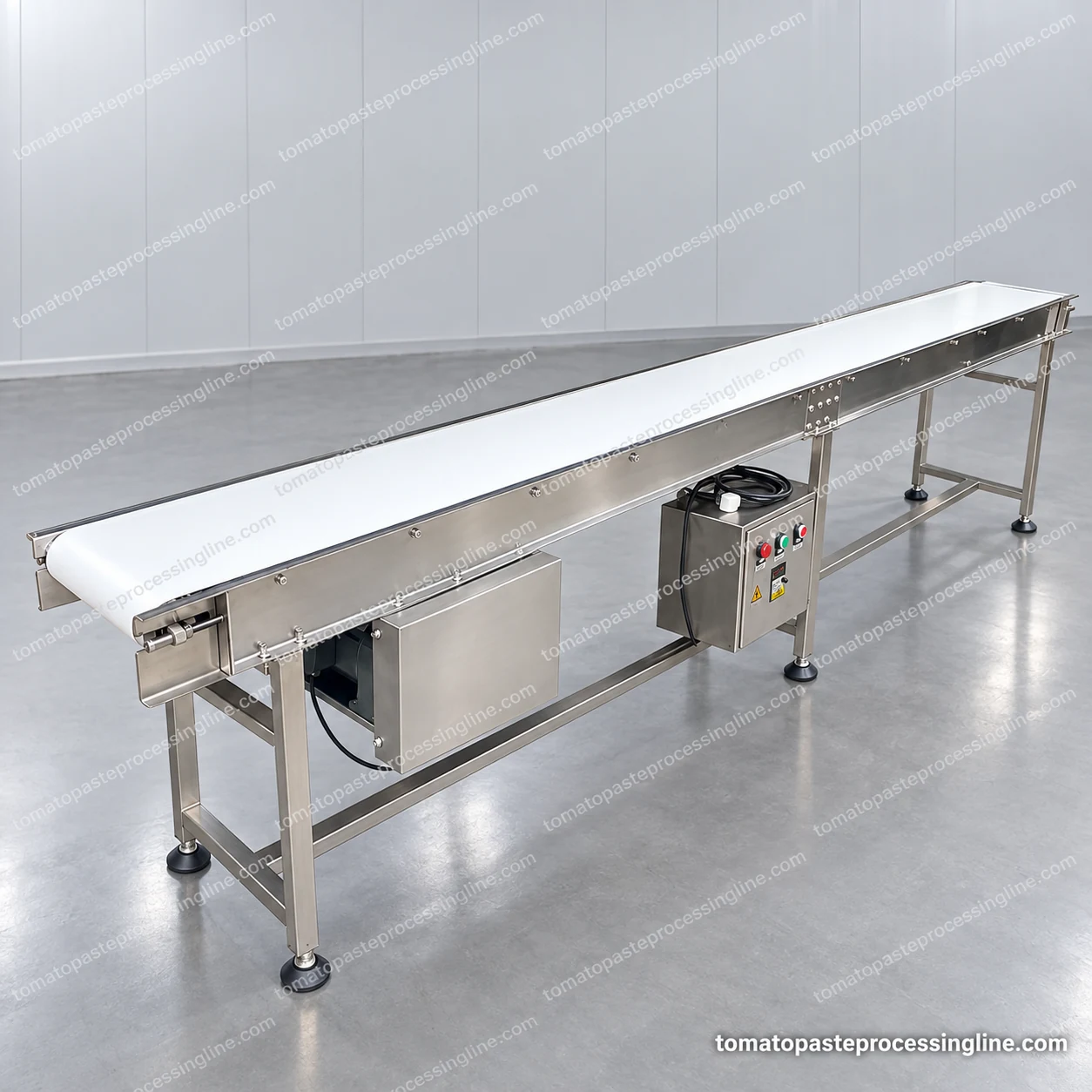
Make the inspection area usable
A shallow, evenly distributed load gives operators a clearer view of the tomatoes. A narrow pile in the middle can hide defects even when the belt has ample nominal width. Coordinate the washer discharge chute with the chosen inspection zone.
Provide an accessible location for rejected fruit and debris. Reject containers should be removable without reaching over accepted tomatoes or obstructing drive covers and the belt return. Staff reach, lighting and working height are part of this station’s layout.
Keep inspection synchronized with crushing
The conveyor’s local controls and drive are located on its supporting frame. Select operating speed around the inspection task and the crusher’s feed demand. Surges at discharge can undo an otherwise orderly inspection section by piling tomatoes at the inlet.
Define the response when either adjoining machine stops. The receiving section should not continue adding fruit into an inspection area that has no safe discharge route.
A practical inspection specification
| Selection item | Define for the station | Check |
|---|---|---|
| Belt width and loading | Usable inspection area and fruit depth | Visibility across the full width |
| Inspection length and positions | Operator access and time on the belt | Trial the actual defect-removal task |
| Discharge height | Crusher or intermediate chute interface | Fruit does not rebound or accumulate |
| Cleaning access | Rails, underside and drive-cover clearance | No inaccessible wet residue traps |
Clean both the carrying surface and the return
Fruit leakage and leaves can collect along guides and under the belt. The open conveyor should be cleaned and inspected with the return surface accessible, following the selected drive and electrical protection requirements.
This configuration supports manual inspection. If a defect requires camera analysis or an automatic ejector, that is a different equipment scope rather than an implied feature of the belt.
Further detail
Questions about this equipment and process
Can inspection be omitted because tomatoes have been washed?
Washing and inspection address different conditions. The decision depends on incoming defects and the required accepted fruit quality, not only on surface cleanliness.
Is the smooth belt an optical sorter?
No. The machine shown is a transport and manual inspection platform. Automated sensing and rejection would need their own equipment and acceptance specification.