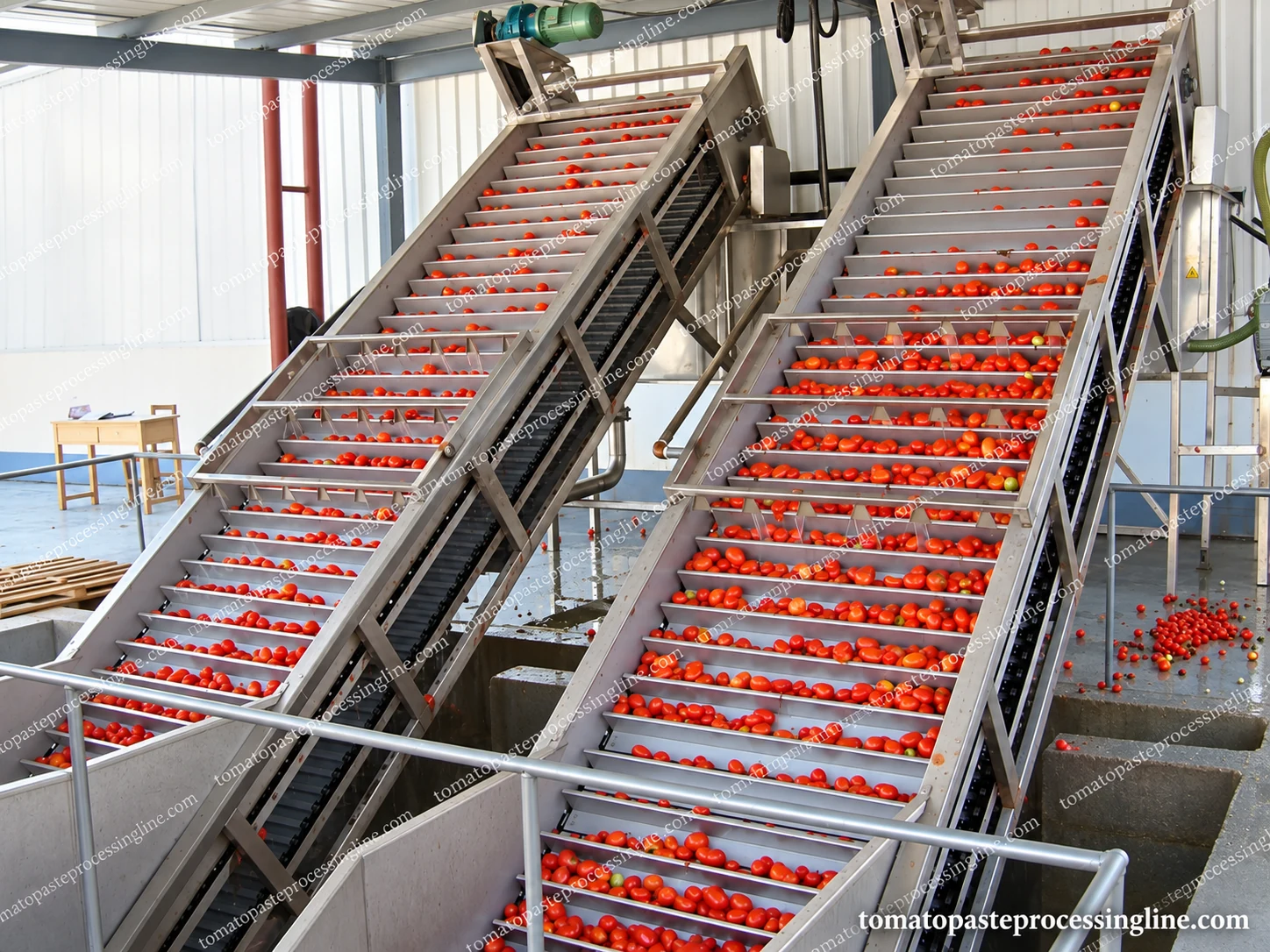
Fresh tomatoes become a screened feed
Elevation, spray washing and inspection deliver suitable fruit to the knife crusher. Crushing opens the tomatoes; controlled preheating or break treatment then conditions the pulp before screening. The operating sequence links fruit condition, transfer time, heating and the desired finished consistency.
The pulper separates skin, seeds and coarse material from the screened pulp. A finisher can provide a second screening stage in the same assembly. The outgoing pulp is buffered and transferred at a stable rate. Rejected fruit and pulper residue leave this route as separate streams, so their mass does not remain available for paste production.
Screened pulp becomes concentrated paste
The evaporator removes water from the prepared feed under the selected vacuum and circulation conditions. The required water removal depends on inlet flow and concentration, not just the target paste flow. Product thickening also changes pump and heat-transfer duties as it moves through the system.
The concentrated stream passes to final thermal processing and the selected filling system. Temperature and flow monitoring, the holding arrangement and any cooling section belong to that defined product process. In an aseptic route, the final thermal outlet and filler must remain coordinated through normal running, stoppages and restart.
Bulk paste becomes a formulated retail product
A ketchup route starts with unloading purchased paste and preparing the other recipe ingredients. Mixing establishes the product formulation. Heating, homogenization and deaeration are selected and ordered around the required texture and packaging process; they are not compulsory additions to every recipe.
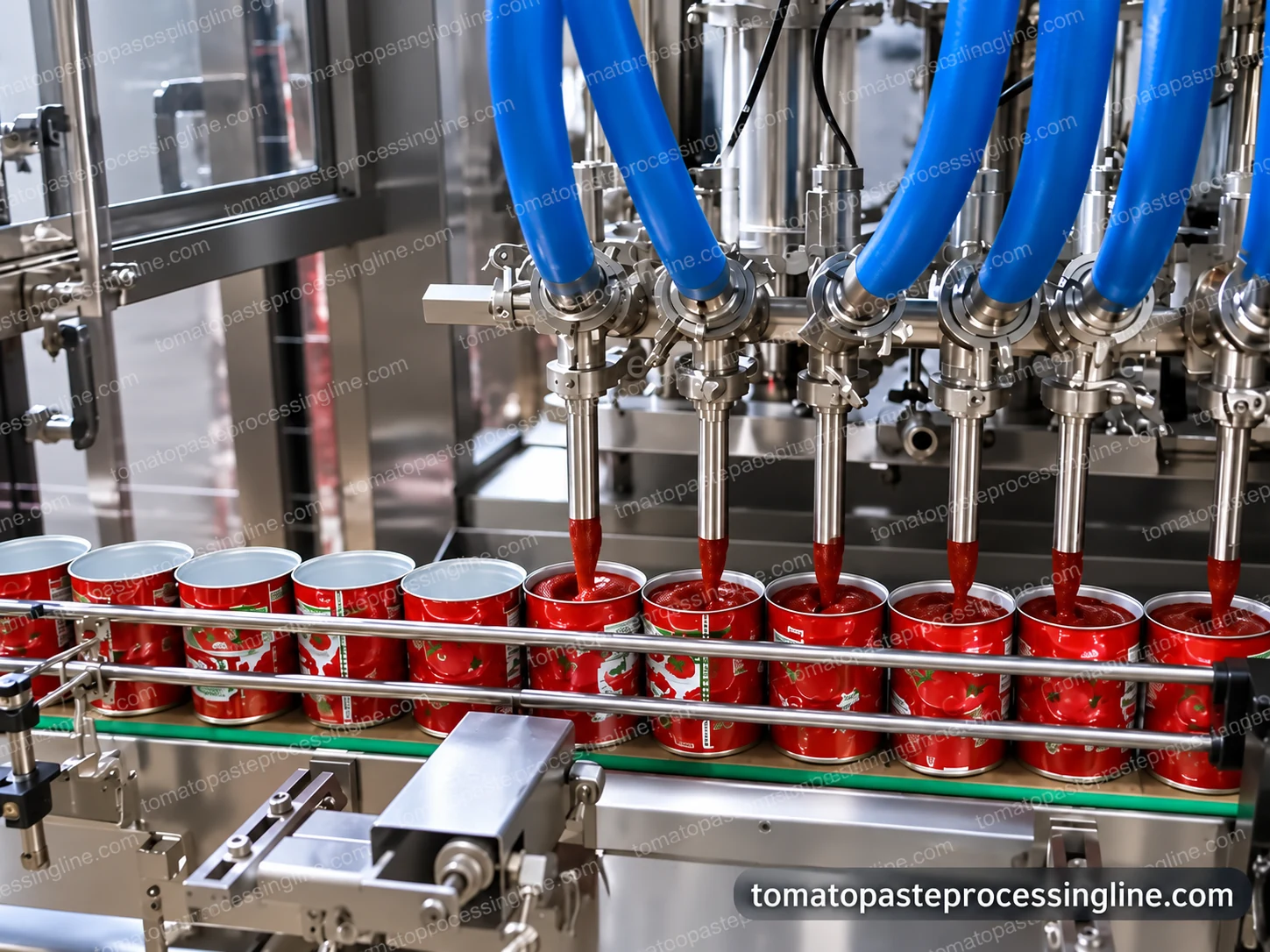
The filling section meters the product into the chosen retail container. Closure, any postfill treatment, cooling and handling are part of that packaging route. A product flow expressed in kilograms per hour must be converted using actual fill weight before it is compared with a packaging machine rated in containers per hour.
Utilities, controls and cleaning run alongside the product
Product arrows alone do not describe an operable plant. The steam or hot-water supply, cooling, clean water, electrical services, instrument air and drainage must be available at the relevant equipment. Peak demand can occur during startup or cleaning rather than at the normal product rate.
CIP returns should be planned with the supply circuits and valve states. Open fruit conveyors and screen removal areas need their own cleaning access and drainage. The layout also leaves working space for bulk-container exchange, ingredient addition, screen extraction and routine service.
Further detail
Questions about this equipment and process
Where can an existing plant connect?
At a defined process interface such as washed fruit, screened pulp, bulk paste unloading or the outlet of final thermal treatment. Flow, temperature, particle condition, controls and cleaning boundaries must describe that interface together.