Define the product at both ends of concentration
An evaporator receives refined tomato pulp and delivers a more concentrated, more viscous product. Supply the inlet flow and composition together with the intended outlet °Brix. Feed temperature and changes across the harvest season also affect the duty that the equipment must sustain.
Selecting by a nominal flow number alone can hide the difference between product throughput and evaporated water. Ask for both quantities, on a stated mass or volume basis. The final paste condition should govern circulation, outlet pumping and cleanability rather than the easier condition at the inlet.
Compare circulation and heat transfer together
Forced circulation is a relevant arrangement for viscous tomato concentrates: pump-driven flow keeps product moving through the heat-transfer circuit and connected vessels. Falling-film arrangements address lower-viscosity duties within the wider evaporation family. The suitable choice depends on the complete concentration range and product behaviour.
Single- and multiple-effect arrangements should be compared against the available heating and cooling services and the intended water-removal duty. Do not infer a guaranteed steam consumption or product quality from the number of effects alone. Require an operating description linked to the actual feed and utility conditions.
Include the equipment around the vessels
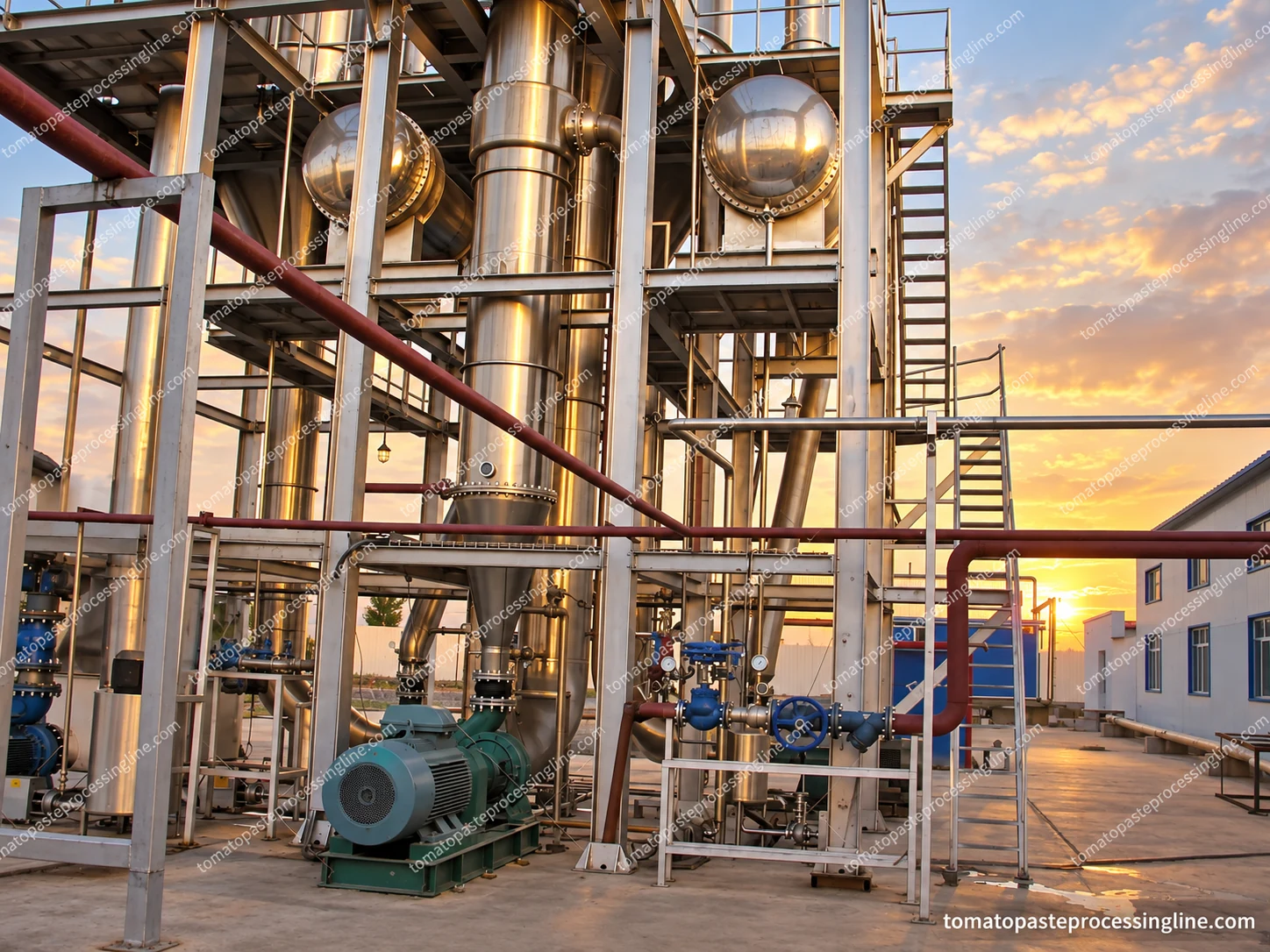
The concentration assembly needs a controlled feed, usable vacuum and condensation services, a stable outlet route and appropriate cleaning circuits. Buffering can help separate upstream interruptions from the evaporator operating point, but its useful volume and controls must be specified.
Check access to circulation pumps, instruments and lower connections as well as the elevated vessels. Allow for product recovery and cleaning returns at startup and shutdown. The quotation should identify scope boundaries, service requirements and the process basis for sustained operation.
Further detail
Questions about this equipment and process
Is forced circulation always required?
It is an equipment-family option for viscous concentrate duty. Final selection depends on the feed, target concentration, heat transfer, fouling and operating range.
Can two evaporators be compared by outlet tonnes per hour alone?
No. Compare inlet and outlet solids, feed temperature, water removed and available utilities on the same basis.