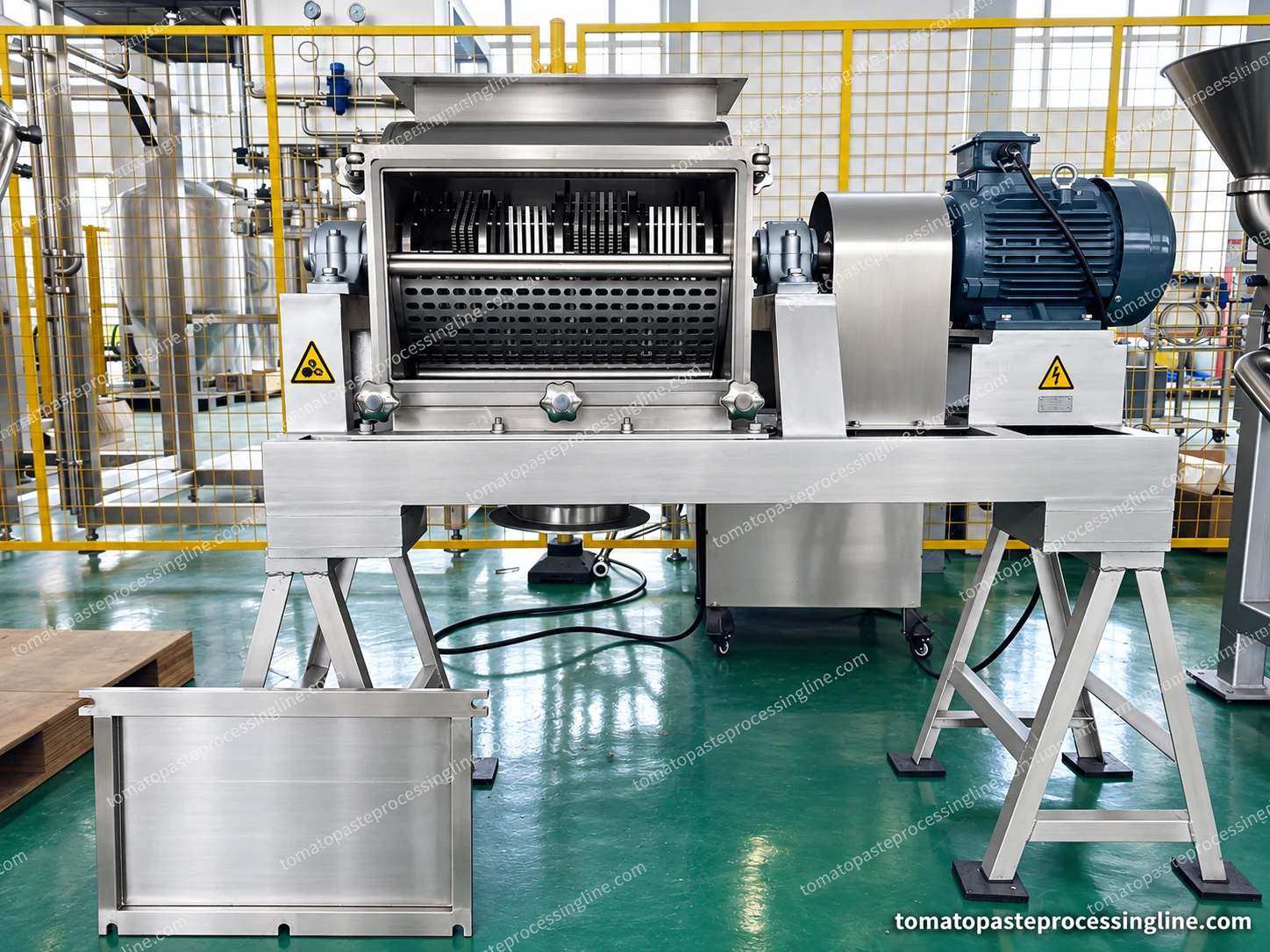
Match the construction to its process duty
A fruit conveyor needs suitable transfers, drainage, guards and accessible cleaning surfaces. A pulper needs accurately seated screening components and separate product and residue paths. A closed process vessel needs appropriate product connections, service access and a workable cleaning arrangement.
For heating and concentration equipment, the product condition informs flow passages, circulation, pumps and instrument positions. Material selection is established for product contact, cleaning conditions and the particular component. An equipment schedule and drawings keep these decisions attached to the supplied configuration.
Build the interfaces into the assembly scope
An evaporator installation includes more than the visible vessels. Product and utility piping, support structure, access, pumping, controls and cleaning returns connect it to the plant. A mixing section likewise needs an ingredient-handling arrangement and a defined transfer to the next process.
Process drawings and a coordinated layout identify equipment boundaries and connection points. The scope distinguishes machine assemblies from plant services and packaging interfaces. This lets a new section work with retained equipment without assigning the same responsibility to two different packages.
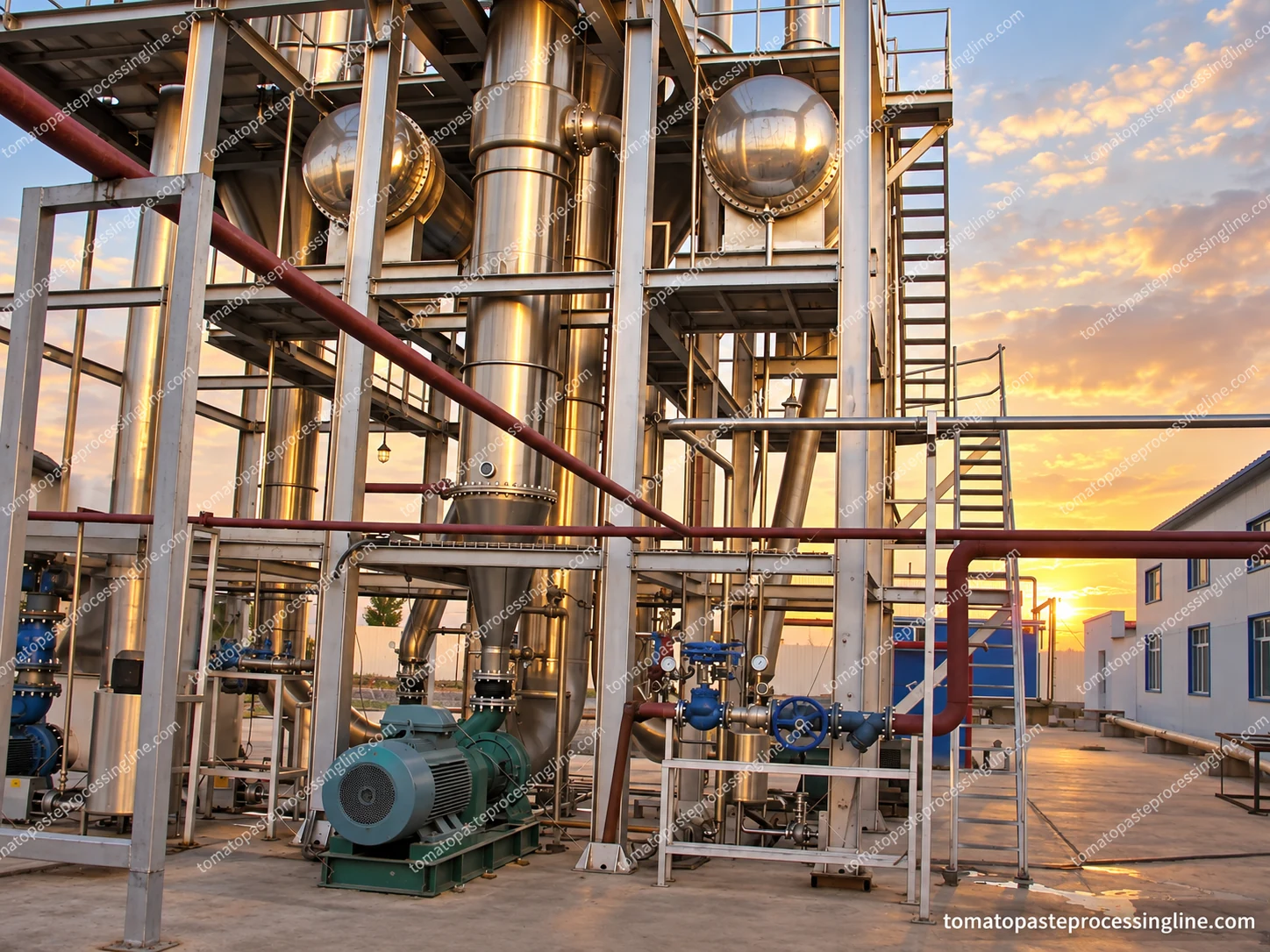
Use checks that answer a specific acceptance question
Inspection can address dimensions, materials records, component identification, assembly, guarding and access against the agreed equipment documents. Functional checks address the relevant drives, controls, valves, instruments and operating sequences. Their extent is set for the supplied system.
A product run answers a different question from an assembly inspection. Representative tomato or recipe material, defined feed conditions and measurable output targets are needed to assess throughput, texture, thermal behaviour and packing. Factory and site acceptance records should state the tested scope and conditions.
| Stage | Useful scope | Record to carry forward |
|---|---|---|
| Equipment inspection | Configuration, access, connections and identified components | Agreed drawings and inspection results |
| Functional verification | Controls, sequences and equipment response | Settings, observations and outstanding adjustments |
| Integrated product run | Defined material through the connected process | Flow, quality, losses, stops and packed output |
| Handover | Operation, maintenance and cleaning information | Operating documents, component references and training scope |
Make operation and service part of the handover
Engineering services can include process design, layout, equipment supply, utility integration, installation and commissioning, operator training and after-sales support. The project scope identifies which work and documents are included for the selected line or machine.
Maintenance information follows the actual configuration: screen and seal identification, drive and pump references, instrument information, access requirements and the agreed spare-parts list. Service planning also depends on location, the work required and the installed operating history. These details give support a practical starting point when a process changes or a component needs attention.
Further detail
Questions about this equipment and process
Does a factory test replace site commissioning?
No. Factory work can address the agreed equipment and functional checks. Site commissioning also involves installed utilities, connected equipment, actual materials, controls and the packaging process at the plant.