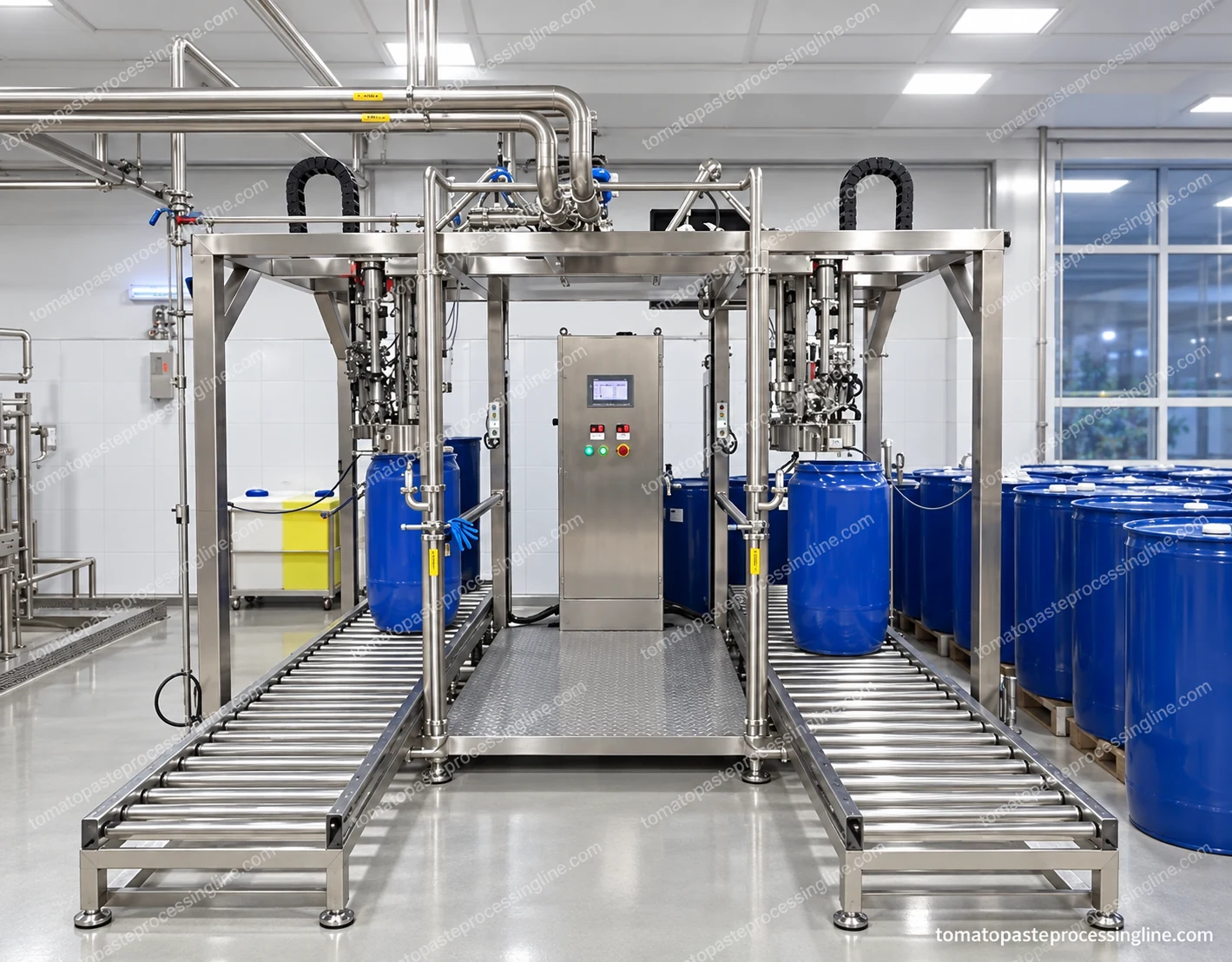
Aseptic bulk bags connect to an established product boundary
The selected bag and spout must match the filling head and the way the bag is opened, filled and closed. Drum or box handling sets the physical working space and exchange cycle. Product metering is selected for the actual flow properties and pack format.
Upstream thermal processing and the filler operate as connected systems. Startup readiness, product diversion or holding strategy, interruptions and restart conditions belong in the control definition. Cleaning and sterilization functions are specified for their respective parts of the system rather than inferred from the presence of a stainless enclosure.
Retail filling continues through closure and handling
For cans, filling is followed by the selected seaming operation and the remaining treatment and handling sequence. The product supply condition, net fill, headspace, nozzle behaviour and conveyor timing affect the transfer between these machines. Closure inspection is a separate control from fill quantity.
The reported Niger line uses purchased paste as its input and cans as its output. Its process includes mixing, heating, filling, seaming and postfill pasteurization and cooling. That sequence is an application example; a different recipe or container needs its own defined process.
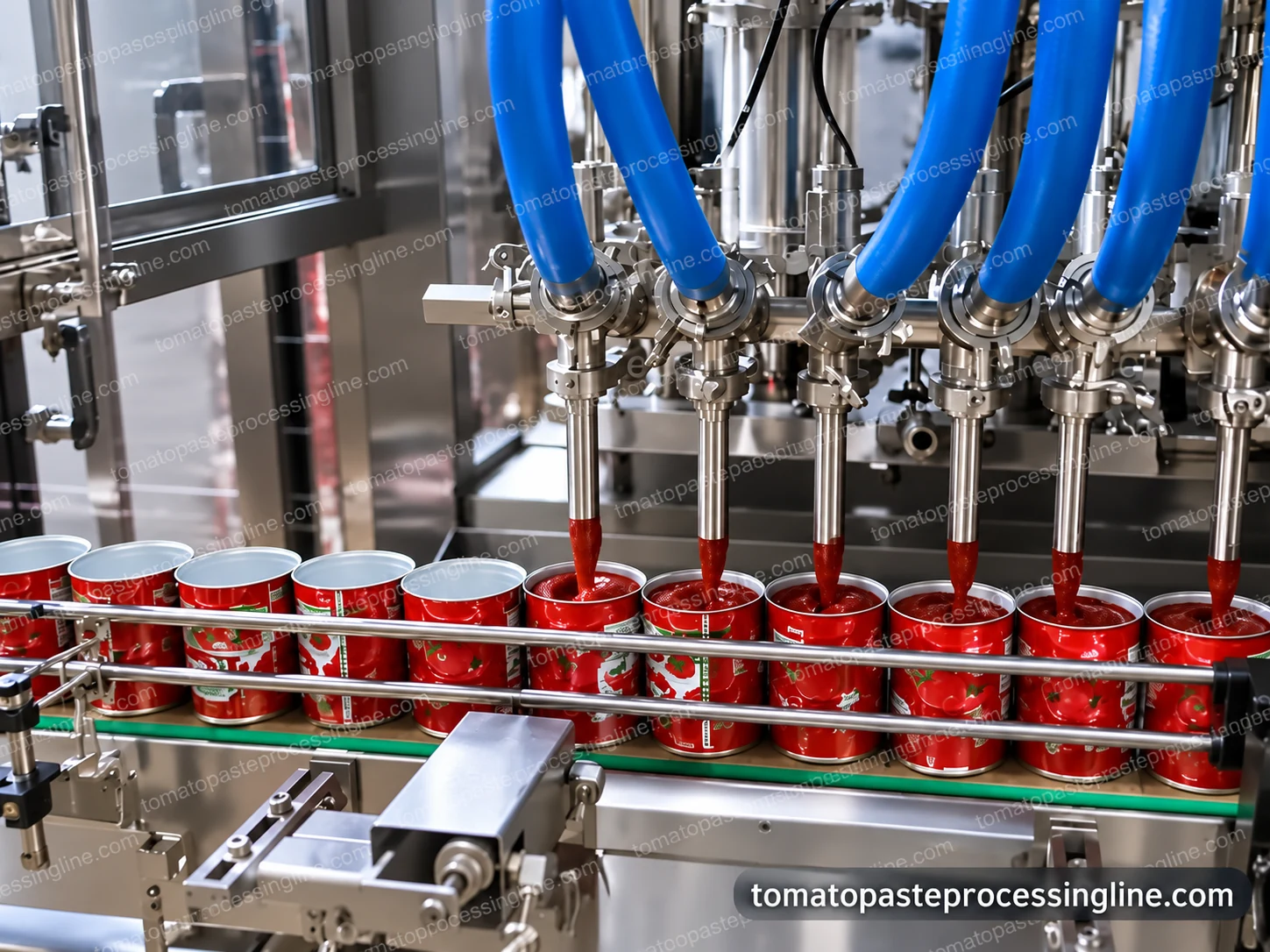
Convert packing rate on the selected net fill
Pack count and product flow describe different quantities. To compare them, multiply net fill mass by containers per hour, then account for the operating period and interruptions used in the rate definition. A change from a small can to a larger one changes the mass flow associated with the same container count.
Volumetric product flow requires density before conversion to a mass rate. Film changes, bag or drum exchange, container supply and downstream accumulation can also affect sustained output. Compare a complete operating cycle, not the highest instantaneous movement of the filler.
| Interface | What must align | Typical effect if mismatched |
|---|---|---|
| Thermal unit to filler | Product condition and accepted flow | Surging feed or repeated line interruptions |
| Filler to closure | Container geometry, fill condition and timing | Product on sealing surfaces or transfer disruption |
| Closure to cooling/handling | Defined process and container stability | Uncontrolled residence or packaging damage |
| Format change | Parts, settings and verification procedure | Longer downtime or inconsistent fill |
Verify the whole packaging sequence on the intended product
A packaging trial should use the selected container and a product condition representative of production. Checks include metered quantity, dripping or stringing, closure condition, transitions between containers and the downstream treatment and cooling sequence.
The final process definition links the product’s composition and physical properties to the package and its intended storage conditions. A filler description alone does not establish a shelf life. Operating records should preserve the relevant thermal, filling and closure information for the batch.
Further detail
Questions about this equipment and process
Can a bulk aseptic filler also make small retail sachets?
A bag-spout filler and a sachet forming, filling and sealing system are different packaging machines. The container construction, closure and product process determine the appropriate equipment.