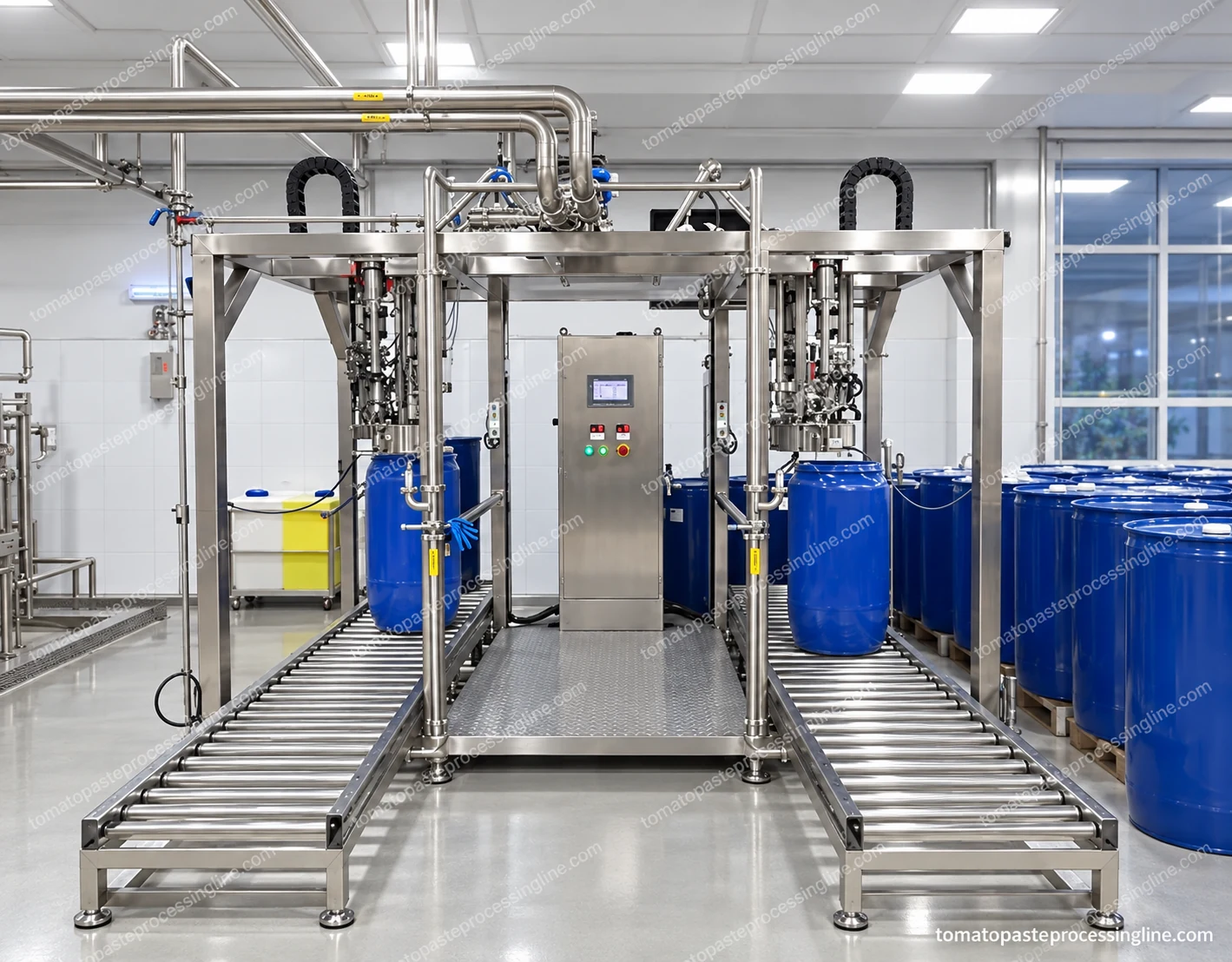
Accept a connected product and package process
The upstream thermal state, product connection, filling head and compatible bag fitment form one operating boundary. A machine head count or a nominal bag volume does not prove a sustained line output.
The Niger can-line starts with paste received in 200 L / 220 L aseptic bags, then produces retail cans. Those input bags do not identify an aseptic filling station supplied within that can-packing project.
Separate mechanical checks from process-validation evidence
A useful acceptance protocol identifies the supplied bag and fitment, container handling, instrument status, product sampling and the observation period. Record startup, bag changes, interruptions, deviations and the agreed disposition of product. Cleaning and sterilization boundaries require named responsibilities.
| Acceptance area | Record or responsibility |
|---|---|
| Equipment and format | Offered configuration, bag/fitment specification, drum or box handling |
| Product handover | Upstream thermal system, sterile transfer and inlet conditions |
| Observed operation | Run period, filled net quantity, bag changes, stops and deviations |
| Process and package evidence | Agreed validation owner, package integrity, release criteria and signed records |
Keep proposed criteria distinct from passed acceptance
The current project material does not supply independent FAT/SAT sheets, package-integrity results, microbiological release data or a validated shelf-life claim for this filling configuration. A supplied equipment photograph is a presentation reference; the blank download is a planning record.
For a new purchase, define the test material and acceptance basis with the responsible process owner. Preserve the result and deviations when the actual run takes place, rather than converting a proposed condition into an earlier project result.