Name the stream reaching the pulper
A pulper receives prepared material with a particular crushing and heat history. Record that inlet condition and the measurement point before comparing screen configurations. Whole-tomato intake, pulper feed and accepted puree output are different streams.
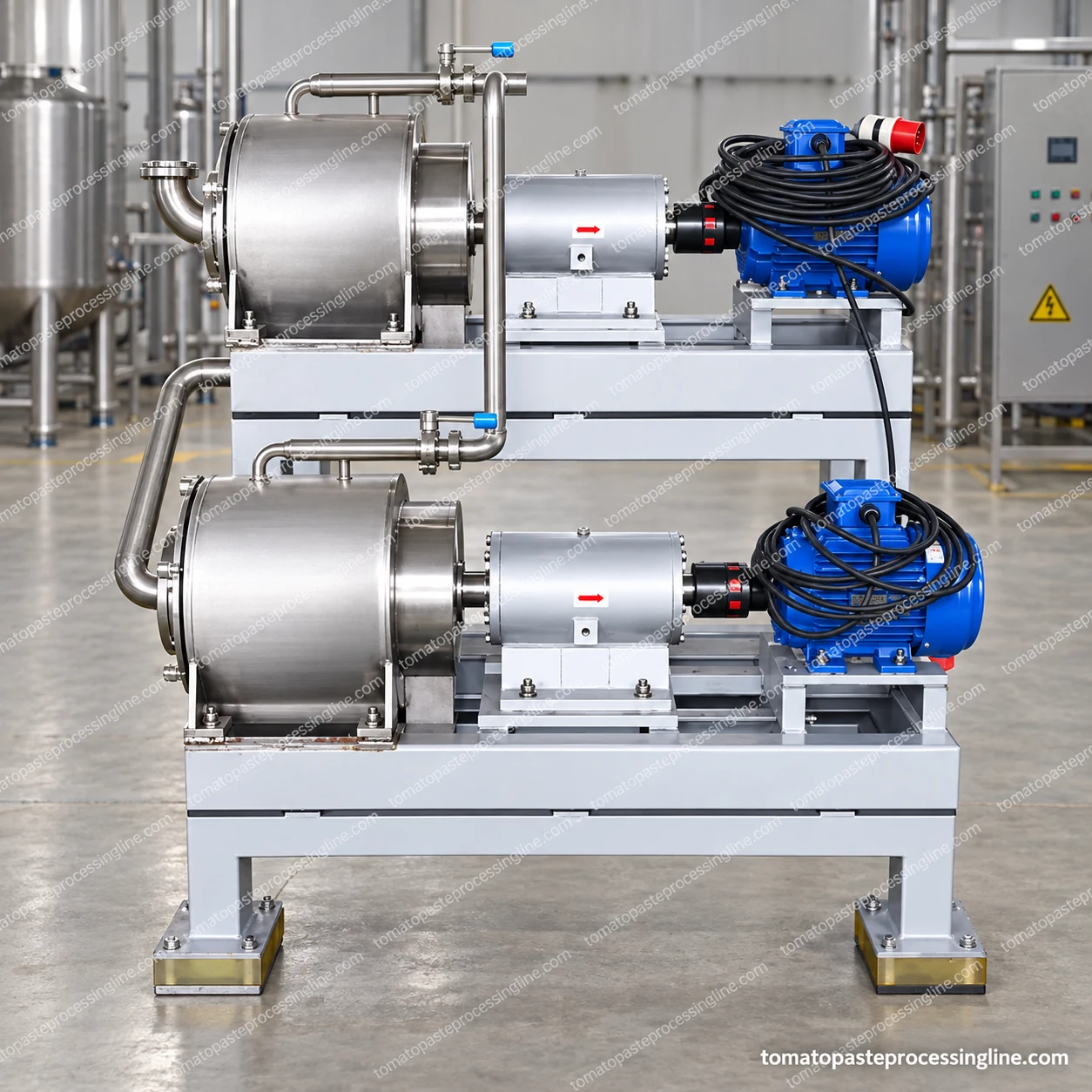
The Moldova reference uses a single-stage pulper within a multi-material front end. The two-stage equipment shown here is another configuration; the photograph does not turn that installation into a two-stage trial or establish a preferred tomato screen.
Keep the accepted pulp and each reject sample together
For a two-stage configuration, identify each stage rather than reporting only the final screen. Compare labelled product samples with the retained skin, seed and coarse material from the same period.
| Sample or observation | Basis to retain |
|---|---|
| Incoming material | Tomato lot, prior break history, flow and temperature |
| Accepted pulp | Mass or volume on a named basis; sample temperature and consistency method |
| Stage rejects | Separate weighed skin/seed residue where practical; moisture and attached-pulp observations |
| Screen and access | Screen identification, integrity, cleaning state and changes during the run |
A screened texture and a recovery ratio answer different questions
A smaller opening changes what can pass through the screen. Assess the desired texture together with product flow and residue, while keeping the feed and measurement method comparable. Added water and unreconciled hold-up can distort a simple product-to-fruit mass ratio.
No measured screen-trial result or universal separation efficiency is claimed here. Select the screen and acceptance criteria for the intended puree, paste or downstream process, then retain the actual samples and operating record.