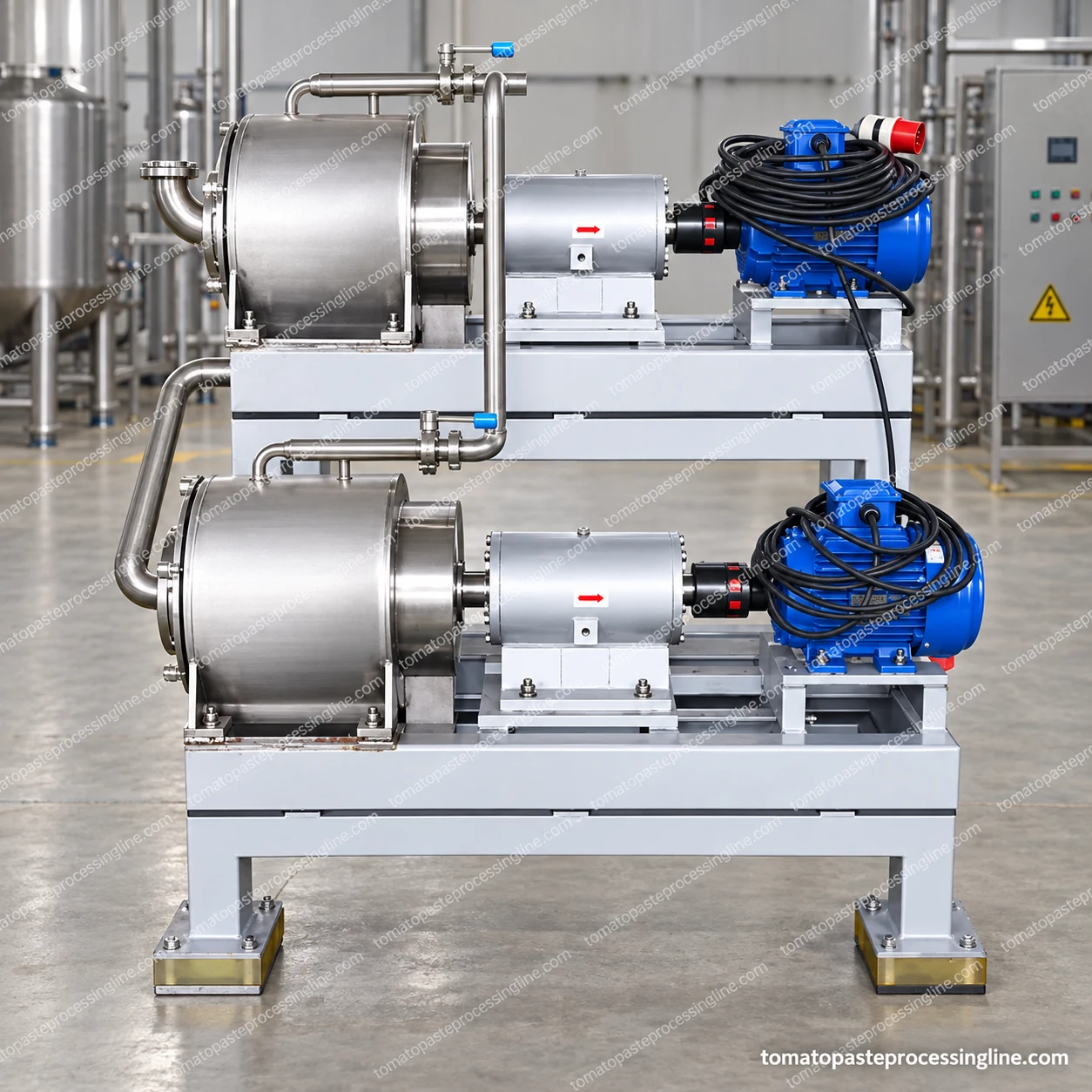
Separate rejects from saleable paste at the machine boundary
A pulper or finisher separates screened pulp from skins, seeds and coarse material. Mark the physical point where that stream leaves the product route and give it a name that operators use consistently. A reject that is quietly returned to the product, washed into a drain or mixed with floor waste cannot be measured or managed.
The FAO tomato pulp flow sheet describes an extractor separating pulp from seeds and skin, which is a useful process boundary even though equipment arrangements differ. In a modern line, the reject may leave at more than one stage. Record which stage produced it, because the composition and moisture of coarse pulper reject can differ from the output of a later finisher.
Measure wet mass and the contamination boundary
Record wet mass over a stated production period, together with a dry-matter or moisture sample if the downstream use depends on it. A wet mass alone can mislead a storage or transport plan. Also record the fruit lot and screen configuration in use, since both can change the amount and condition of the reject stream.
Contamination is part of the boundary. Soil, plastic, metal, cleaning chemicals and foreign material can enter a reject stream through spills, maintenance or poor separation. Sample for the contaminants that matter to the intended destination rather than assuming the stream is pure skin and seed. UNIDO’s small-scale processing guidance treats quality assurance as part of production; a co-product stream needs the same discipline.
A single sample is not a stream description. Record how the sample was taken, over what period and from which point. If the reject mass is weighed by difference rather than directly, say so. Those details let a later reader judge whether a change in wet mass reflects the fruit, the screen or the measurement method.
Plan storage and removal before volume accumulates
Reject material accumulates at the rate the line produces it, not at the rate a removal contractor arrives. Define a temporary storage point with drainage, access, pest control and a practical removal frequency. If the material is wet, plan for seepage and odour. If it is held in a container, label the container and keep it separate from product and packaging areas.
Decide whether removal is on-site treatment, off-site collection or a permitted sale. Each route needs an owner, a record and a contingency for a missed collection. The plan should also cover startup, shutdown and cleaning, when the reject stream may change composition or stop altogether.
Choose storage materials and surfaces that can be cleaned or replaced. A container that is difficult to empty becomes a contamination source, and a temporary pile becomes a permanent one. Mark the storage area on the layout with its access route so that a later equipment addition does not block removal.
Require evidence for any downstream use
Lycopene recovery, seed oil, animal feed, compost and energy recovery are different propositions with different evidence requirements. Each needs a defined feedstock, a tested process, a safe product or disposal route, and a real offtake arrangement. A laboratory result on one sample does not establish an industrial operation.
The FAO flow sheet notes that tomato seeds from pulp processing can be reused as seed if they have not been heat treated. That is a narrow, condition-dependent example, not a general valorisation claim. Treat any proposed use as a separate project with its own sampling, trials, permits and commercial evidence. Do not put a revenue figure into the line brief before those exist.
Write the handoff into the project scope
The equipment scope should state where the reject stream ends and who takes responsibility after that point. Include the expected wet mass range, storage volume, removal frequency, cleaning access and any sampling point. If a downstream use is included, define its acceptance criteria and the evidence that will be required before it is connected.
A clear reject handoff protects the product route and makes the environmental and commercial questions visible. It also prevents a late change from turning a simple separation duty into an unplanned process project. The first step is not a valorisation brochure; it is an honest boundary.
Sources
Primary documents used for this analysis. Read the named section in context before applying it to a project.
- UNIDO, Small-scale fruit and vegetable processing and productsUnited Nations Industrial Development Organization
- FAO Fruit and vegetable processing, Appendix I: tomato pulp and dried tomato flow sheetsFood and Agriculture Organization
Source links are provided for verification. Inclusion does not imply endorsement of this site or of any equipment configuration.
Discuss this topic
Connect the note to your own line brief.
Share the incoming material, the product identity you need and the packaging boundary. We can help frame the equipment scope without pretending that an article replaces a trial or a food-safety review.